Most people choose the furnace or heat pump after the house is drawn. That is backwards. In a new Canadian home built to today's insulation levels, the shape of the plan, the basement and the number of exterior corners often decide whether you need a 2-ton heat pump or a 4-ton one, and that difference can be worth $5,000 to $10,000 at installation and hundreds of dollars a year to run.
Some rough 2025 numbers set the stage. A ducted cold-climate air-source heat pump for a new build typically costs about $12,000 to $25,000 installed. A ground-source (geothermal) system usually runs $30,000 to $60,000 or more once the loop is drilled or trenched. A high-efficiency gas furnace with central air often lands around $8,000 to $15,000, plus the cost of bringing a gas service to the lot. Operating costs depend almost entirely on your province: cheap hydro in Quebec and Manitoba favours electric heat, while low natural gas prices in Alberta and Saskatchewan still make gas hard to beat on the monthly bill. Here are seven design ideas that tilt the decision your way.
1. Start with a simple rectangle
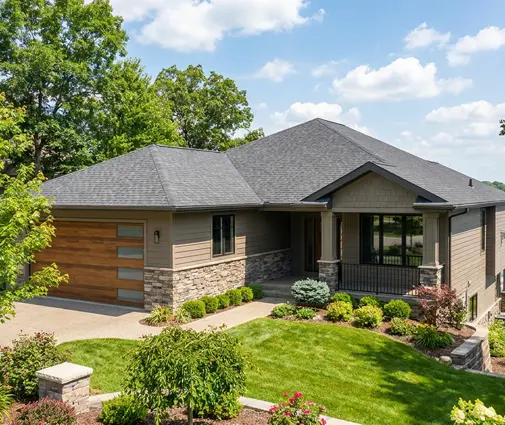
Every jog, bump-out and extra corner adds wall area, framing that interrupts insulation, and spots where air leaks. A compact footprint loses less heat per square foot, which is exactly what a heat pump wants. This 1522 sq ft Craftsman bungalow with 3 bedrooms and a basement keeps the living space under one simple roof, so a properly done heat-loss calculation (in Canada, usually to CSA F280) can come in low enough for a modest cold-climate unit.
Ask your designer or HVAC contractor for that calculation before anyone quotes equipment. Rules of thumb like "one ton per 500 sq ft" come from leaky older houses and lead to oversized systems that short-cycle and feel uneven.
2. Put the basement to work as the mechanical room
A full basement below the frost line is standard across much of Canada, and it is the ideal home for the air handler, the HRV, the water heater and, with geothermal, the heat pump itself. Short, straight duct trunks running up into the main floor deliver warm air with fewer losses. The Prairie-style bungalow of 1634 sq ft with 3 bedrooms over a full basement stacks its rooms neatly above one level of mechanical space, which keeps duct runs short.
Insulate the basement walls and the slab edge well; a basement that sits at 18°C on its own makes every system work less. For more options built around this layout, browse plans with a basement.


3. Stack the rooms for less roof and less foundation
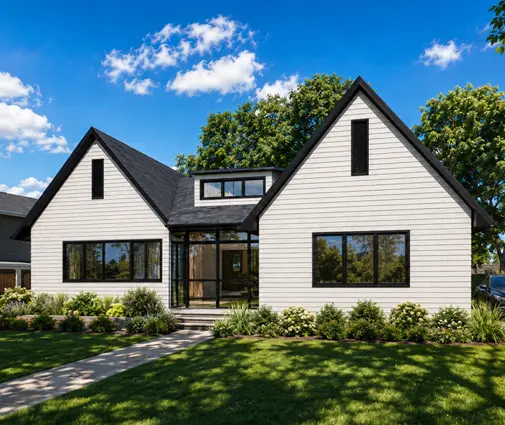
A two-storey home puts the same floor area under a smaller roof and on a smaller foundation, the two surfaces that lose the most heat. The Modern Farmhouse two-storey plan of 2150 sq ft with 3 bedrooms is a good example of a family-sized home that stays compact on the lot, useful on a suburban lot where frontage is tight.
The trade-off is comfort between floors: warm air rises, so bedrooms upstairs can overheat in summer and run cool in winter if all the supply comes from one zone. A variable-speed heat pump with a two-zone damper system, or a ducted unit plus a ductless head upstairs, solves most of that.
4. In Alberta, consider dual fuel instead of either-or
Where gas is cheap and winters regularly reach -30°C, a dual-fuel setup pairs a heat pump with a gas furnace. The heat pump handles the shoulder seasons and most of the winter; below a set outdoor temperature, the furnace takes over. Since April 2025, when the federal consumer carbon charge was set to zero, gas heating has become cheaper again for many Prairie households, which makes this hybrid approach attractive.
A one-storey plan like this 4-bedroom Prairie home of 1655 sq ft with a basement fits a dual-fuel system well: one furnace cabinet in the basement, one outdoor unit, and a thermostat that switches between them. If you go all-electric instead, the backup is usually electric resistance strips inside the air handler, which cost more to run on the coldest nights.
5. In Quebec or Manitoba, go all-electric and keep it compact
With residential hydro rates among the lowest in North America, Quebec and Manitoba homeowners can heat a well-built house electrically for a fraction of what it costs elsewhere. Modern cold-climate air-source heat pumps keep delivering heat at -25°C, typically at an efficiency of roughly 1.5 to 2 times that of baseboard heat, and many models are rated to operate down to -30°C or lower. Below that, a small electric backup carries the load for the few hours it is needed.
This Craftsman bungalow of 1649 sq ft with 4 bedrooms and a basement shows the kind of single-level, family-sized home that runs well on a single ducted heat pump. Many other one-storey plans follow the same logic.
6. Plan the HRV from the first sketch
A tight new home needs mechanical ventilation, and in Canada that usually means an HRV, or an ERV in homes that tend to be dry in winter or humid in summer. Builders in Ontario, BC under the Energy Step Code and most other provinces now build so airtight that a balanced ventilation system is effectively part of the code package; check the exact requirement with your municipality.
The more people, the more ventilation. The Modern Mountain bungalow of 1492 sq ft with 5 bedrooms and a basement packs a big household into a small footprint, which is great for heating but means the HRV must be sized for the occupancy, with exhaust pickups in every bathroom and a fresh-air supply to each bedroom. Draw those duct paths early so they do not end up crammed into a bulkhead.
7. For a cottage or acreage, think ductless or geothermal
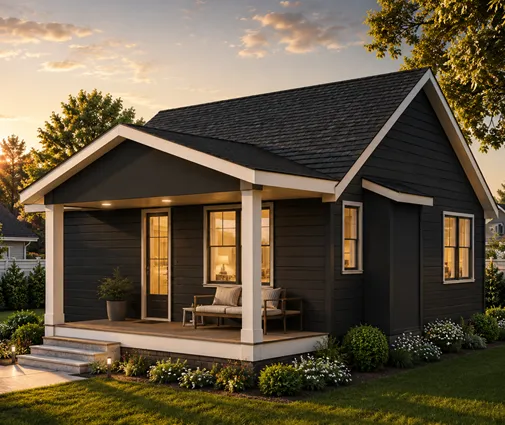
Small cottages often do best with no ducts at all. A single ductless wall unit, or two, can heat a compact open plan, and electric baseboards in the bedrooms can cover backup. The 2-bedroom rustic cabin of 1085 sq ft is the kind of open cottage layout where one or two heads reach every room.
On a larger rural acreage with room for a horizontal loop, geothermal becomes more realistic: trenching is cheaper than drilling, and a ground-source system holds its efficiency on the coldest days because the ground stays near the same temperature all winter. The upfront cost is high, so it pays off best in a house you plan to keep for decades.

A word on rebates
Incentive programs change often. The federal Canada Greener Homes Grant closed to new applicants in 2024, and most remaining programs target retrofits rather than new builds. Some provinces and utilities, for example in BC, Quebec, Ontario and Nova Scotia, have offered rebates or financing for heat pumps or for homes that beat code efficiency. Check your provincial energy agency and your electric and gas utility before you sign an HVAC contract, as some programs require pre-approval.
The cheapest kilowatt is the one you never need. Pick a compact plan, put the basement and the HRV to work, insist on a real heat-loss calculation, and the heat pump-versus-furnace question becomes much easier, and much cheaper, to answer. Browse the 1500 to 2000 sq ft plans for more homes that hit that sweet spot.