Most fights over a custom home in Canada start with three words nobody read twice: "as per drawings." Which drawings? The catalogue version, the permit set, or the revision your designer emailed after the energy model came back? The contract you sign decides who pays for the gap between them, and the type of contract decides how much of that risk lands on you.
Two formats cover most residential builds here. A fixed-price contract (also called stipulated-sum or lump-sum) sets one price for a defined scope. A cost-plus contract has you pay the actual cost of labour and materials plus a builder's fee, either a percentage or a fixed amount. Below they go head to head, clause by clause, with the standard terms and the red flags for each, and a checklist at the end to take to your lawyer.
| Clause | Fixed-price contract | Cost-plus contract | Red flag in either |
|---|---|---|---|
| Scope and drawings | Needs a complete permit set and detailed specifications | Can start with a scope still being refined | "As per drawings" with no list of documents and dates |
| Deposit and payments | Stage payments against a fixed total | Draws based on invoices plus the fee | Large deposit before work starts, payments by calendar date |
| Change orders | Priced one by one, often with markup | Simply added to cost, plus the fee | Verbal changes accepted, no price before work |
| Price increases | Through allowances and escalation clauses | You carry them automatically | Open-ended escalation with no baseline or cap |
| Completion and delays | Firm dates and penalties easier to negotiate | Rarely firm; delay raises your cost | No completion date at all |
| Insurance | Same requirements: liability, workers' compensation, course-of-construction | Silence on who insures the structure | |
| Warranty enrolment | Same: the home must be enrolled where your province requires it | No builder registration number in the contract | |
| Disputes | About scope and extras | About whether costs were reasonable | No right to audit, builder picks the arbitrator |
Scope and the drawings the contract refers to
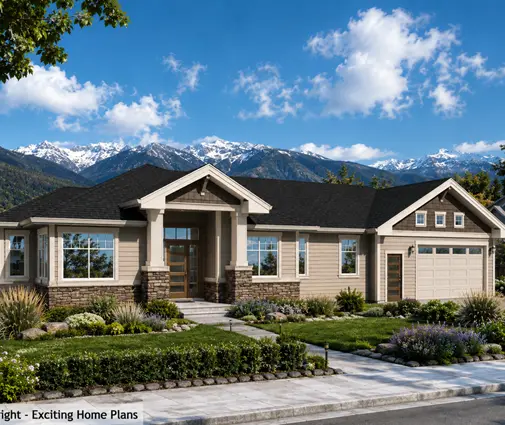
The contract should list every document it includes by title, sheet number, revision and date: architectural drawings, structural and truss drawings, specifications, site plan and any energy model. If you start from a catalogue plan, expect it to be adapted to your provincial code before a permit is issued: footings below frost depth, roof framing for your snow load, wall assemblies and windows for the energy requirements. A Craftsman bungalow that already sits on a full basement is close to what most Canadian builders expect, while a three-level modern design drawn without one will need its foundation reworked. The contract must point to the adapted, permit-ready set, not the original.
Specifications matter as much as drawings. "Hardwood flooring" means nothing; "3/4-inch site-finished white oak, 5-inch width" means something. Anything left vague becomes an allowance or an argument.


Verdict: fixed price only works with complete drawings; cost-plus tolerates an unfinished scope, but you pay for that flexibility.
Deposit and payment schedule
The standard pattern is a modest deposit, then progress payments tied to stages (foundation, framing, closed-in, mechanical rough-in, drywall, substantial completion) or monthly draws checked against work done. Your lender will release construction mortgage draws on its own schedule after an inspection, so line the contract up with the bank before signing, or you may have to bridge the gap yourself.
Most provinces have lien legislation that requires the owner to hold back part of each payment, often 10%, for a set period after completion so unpaid trades and suppliers can register a lien. On an $800,000 build that is $80,000 you don't hand over right away. The contract should say how the holdback is kept and when it is released. Quebec handles this differently, so get local advice there.
- A deposit well above 10% before any work is done on site
- Payments due on dates rather than on completed stages
- No mention of the holdback
- Requests for cash or payment to a personal account
Verdict: a tie on structure, but under cost-plus every draw must come with invoices and receipts.
Change orders and price increases
Every change should be a written change order signed by both sides before the work is done, showing the price, the effect on the schedule and the builder's markup. A clause stating that verbal instructions are not binding protects you as much as the builder.
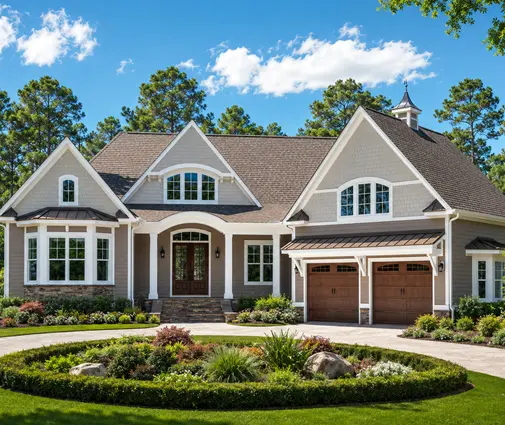
Allowances are where fixed prices quietly rise. If the kitchen allowance is $25,000 and the cabinets you choose cost $40,000, you pay the difference plus markup. Compare each allowance with real 2025–2026 quotes in your area. A larger home with many finish choices, like this modern farmhouse spread over two floors with a big kitchen and four suites, can hide a dozen allowances.
Escalation clauses let the builder pass on increases in lumber or other materials. After the swings of recent years they are common, but a fair one names the materials, sets a baseline (a dated supplier quote or index), applies a threshold before it kicks in, has a cap, and works in your favour if prices fall.
Verdict: fixed price wins on predictability, but only with realistic allowances and a capped escalation clause.
Completion dates and delays
The contract should give a start trigger (permit issued, financing in place), a duration or target date, and a definition of substantial completion and occupancy. Winter is a real factor: excavation, concrete and exterior finishes slow down or stop in much of the country, and permit and inspection wait times vary by municipality. A good builder puts that in the schedule instead of claiming it as an excuse later.
Standard terms allow extensions for causes outside the builder's control, such as abnormal weather, permit delays or your own changes, each notified in writing within a set number of days. Delay penalties are less common on custom homes than on commercial jobs, but you can negotiate a daily amount that covers your rent and storage. Watch for contracts with no date at all, or a force majeure clause so broad it covers "market conditions."
Verdict: fixed-price builders accept firm dates more readily; under cost-plus, each extra week also adds to your bill.
Insurance
Ask for the builder's certificate of commercial general liability insurance and check the limit, and get a clearance letter from the provincial workers' compensation board. The contract must say who carries course-of-construction (builder's risk) insurance on the house while it goes up, against fire, theft and storm. If that falls to you, call your insurer before the foundation is poured, and make sure your lender is named where required.
Verdict: identical for both contract types; the red flag is a contract that doesn't say who insures the structure.
Warranty enrolment
In several provinces a new home built by a builder must be enrolled in a mandatory warranty program, and the builder must be licensed or registered. Coverage is usually layered: a short period for workmanship and materials, a longer one for mechanical systems and the building envelope, and the longest for major structural defects. The contract should show the builder's registration number, confirm the home will be enrolled, and state whether the enrolment fee is included in the price. Verify the registration yourself with the provincial regulator. If you act as your own builder, the rules and coverage change, so check them before you decide.
Verdict: no difference by contract type, but a big one between a registered builder and an unregistered one.
Dispute resolution
A typical clause steps through negotiation, then mediation, then arbitration or court. Arbitration is private and usually faster, but you share the arbitrator's fees. Check which province's law applies, who pays costs, and that the clause doesn't cut off your rights under the warranty program. Red flags: arbitration in a distant city, the builder choosing the arbitrator alone, or a right to stop work over any disputed amount without notice.
Verdict: cost-plus disputes are harder because they turn on whether costs were reasonable, so keep a right to audit the books.

Who should choose what
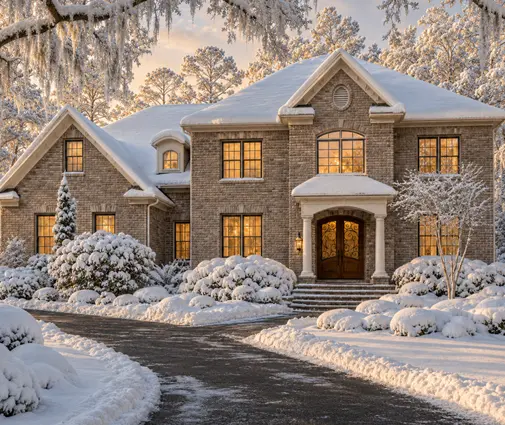
- Fixed price suits you if your permit drawings and specifications are complete, your lender wants a firm number, and the design is straightforward, such as a symmetrical Georgian with a simple roof or a compact Cape Cod under 2,300 square feet. Many two-storey plans with a rectangular footprint fall in this category.
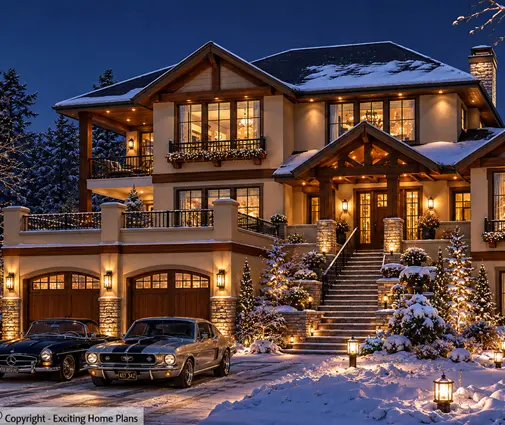
- Cost-plus with a guaranteed maximum price suits complex builds: a sloped lot, a custom envelope or extensive finishes, as with a mountain-modern home with five bedrooms and walls of glass.
- Open cost-plus only makes sense with a builder you know and trust, full access to invoices, and a contingency of 10–15% in your own budget.
- Owner-builders sign separate trade contracts, so each one needs the same scope, insurance and payment clauses, and the warranty question must be settled first.
Whichever you choose, a design that already includes a full basement reduces the number of changes between the plan you picked and the set the builder prices.
Printable checklist to review with your lawyer
- Every drawing and specification is listed by title, revision and date, and matches the permit set.
- Allowances are itemized and checked against current local quotes.
- The deposit is modest and payments follow completed stages that match the lender's draws.
- The lien holdback is stated, with how and when it is released.
- Change orders must be written, priced and signed before work starts, with the markup stated.
- Any escalation clause names materials, a baseline, a threshold and a cap.
- Start trigger, completion date, notice rules for extensions and any delay penalty are clear.
- Certificates for liability insurance and workers' compensation are attached; course-of-construction coverage is assigned.
- The builder's registration number and warranty enrolment are in the contract and verified.
- Under cost-plus: the fee, what counts as cost, and your right to audit are defined.
- Dispute steps, governing law and the choice of arbitrator are fair to both sides.
- Termination rights for both parties, and what happens to deposits and materials on site.