Most people who regret their builder did check them. They looked at the website, toured a finished show home, liked the person across the table and got a price that felt right. What they skipped was the dull part: the provincial registry, the warranty enrolment, the insurance certificate, the phone call to a client from three years ago. That dull part is what protects you when a basement wall cracks or the company folds halfway through framing.
This guide walks through the checks that matter in Canada, in roughly the order you should do them. None of them takes long, and most cost nothing. Together they will tell you far more than a polished sales meeting.
Start with the provincial licence
In several provinces, building new homes is a licensed activity, and an unlicensed builder is not just a risk but often operating illegally. The rules differ from province to province, so start by finding out who regulates builders where your lot is, not where the builder's office is.
The main regulators
Ontario licenses new home builders and vendors through the Home Construction Regulatory Authority (HCRA), which publishes a searchable directory. In British Columbia, residential builders are licensed through BC Housing's licensing and registry branch. Quebec contractors need a licence from the Régie du bâtiment du Québec (RBQ), with a subclass that must match the work. Alberta requires a residential builder licence for anyone building new homes. Other provinces handle it differently, and some have no builder licensing at all, which makes the other checks in this guide even more important.
| Province | Who licenses builders | New home warranty |
|---|---|---|
| Ontario | HCRA (Ontario Builder Directory) | Tarion, mandatory for most new homes |
| British Columbia | BC Housing, Licensing and Registry | Third-party home warranty insurance, mandatory |
| Quebec | RBQ | Mandatory guarantee plan for many new homes |
| Alberta | Residential builder licence (provincial) | Mandatory new home warranty |
| Other provinces | Varies, often none | Varies, often voluntary programs |
Rules change, and coverage depends on the type of project, so confirm the details with your provincial regulator before you rely on this table.
What to look for in the record
Don't stop at "licensed: yes". Look at the exact legal name and compare it with the name on the quote and the contract. A builder who trades under one name and signs under a numbered company you can't find in the registry is a problem worth asking about. Check how long the licence has been active, whether it carries conditions, and whether the regulator lists any conduct issues, charges or refusals. In Ontario, the public directory also shows a builder's history with warranty claims and past homes, which is worth reading line by line.
Confirm the house will actually be enrolled in the warranty
A builder being registered with a warranty provider is one thing. Your specific house being enrolled is another. Warranty coverage in most provinces is tied to the home, and the builder must enrol it before construction starts, usually by paying a fee that ends up in your price.
Ask the builder directly: "Will this home be enrolled, and when?" Then ask for proof once it is done, such as an enrolment number or certificate. Read what the coverage includes in your province. Programs typically follow a tiered pattern: a short period for workmanship and materials, a longer one for systems such as plumbing, electrical and heating, a longer one again for the building envelope in some provinces, and the longest for major structural defects. The exact years vary, so get them in writing for your province.
This matters even if you own the land and are hiring a builder for a custom home. In several provinces a contracted custom build on your own lot can still be covered, but only if the builder is properly registered and enrols it. If the builder suggests skipping enrolment "to save you a few thousand dollars", walk away.
Check insurance and workers' compensation
When someone falls off your roof trusses, the question of who pays should already have a clear answer. Two documents settle it.
Liability insurance
Ask for a certificate of insurance showing the builder's commercial general liability coverage, the insurer, the policy number and the expiry date. Many homeowners and lenders expect at least $2 million in coverage, but discuss the right amount with your own insurer. Call the insurer or broker to confirm the policy is active; certificates are easy to print and easy to let lapse. Also ask your own insurer how to insure the house under construction, since course-of-construction coverage is often arranged by one side or the other and must not fall through the gap.
WSIB, WCB and their equivalents
Every province runs a workers' compensation board: WSIB in Ontario, WorkSafeBC, CNESST in Quebec, WCB in Alberta and the other provinces. Ask for a clearance certificate or letter showing the builder is registered and in good standing. Most boards let you request or verify one online, and a fresh one can be pulled every few months during a long build. If a builder's workers are not covered and someone is injured, the homeowner can end up exposed. Ask the same about the main subtrades: framing, roofing and excavation crews are where accidents happen most.
Talk to past clients, and ask the right questions
Any builder can give you three happy names. Ask for more, and ask specifically for clients whose homes were finished two to five years ago. That is when settlement, drainage, ice damming and the first warranty disputes show up. A family that moved in last month knows how the build went, but not yet how the house performs through a winter.
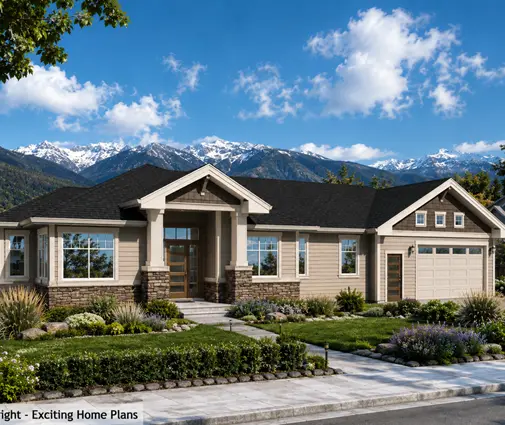
Try to talk to someone whose house resembles yours. If you are planning a bungalow over a full basement, like this Craftsman bungalow with five bedrooms and a finished lower level, a reference who built something similar can tell you how the builder handled the foundation, waterproofing and basement windows. If you are leaning toward something bigger and more complex, say a three-storey contemporary home of 4075 sq ft, you want a reference who went through a similar scale of project.
Questions worth asking:
- Did the final price match the contract, and how were changes priced?
- Was the schedule realistic? What caused the delays?
- Who was on site day to day, and how easy was it to reach them?
- Did the inspections pass the first time?
- How did the builder handle deficiencies and warranty calls after move-in?
- Have you had problems with the basement, the attic or the windows since?
- Would you hire them again for your next house?
Listen for hesitation as much as the answers. "They were fine, I guess" after a long pause tells you something.
Visit a site under construction
A finished show home tells you about finishes. An active job site tells you about the company. Ask to visit a house the builder is building right now, ideally at framing or just before drywall, when the structure and the insulation are still visible.
What to look at
- Order on site. Materials stacked off the ground and covered, waste in a bin, a clear path. A messy site usually means messy scheduling.
- Weather protection. Lumber and sheathing left soaking, or an open roof through a week of rain, is a bad sign anywhere in Canada.
- The basement. Look for damp-proofing or waterproofing on the foundation walls, drainage at the footings and sensible backfill.
- The envelope. Neat air barrier and vapour barrier work, sealed penetrations and properly fitted insulation matter for comfort and for the energy targets many provinces now set.
- Safety. Guardrails at openings, people wearing hard hats and harnesses on the roof. A site that ignores safety tends to ignore other rules too.
- The permit. It should be posted on site. Ask to see it.
Notice who shows you around. A site supervisor who knows the house in detail, and who you could reach during your own build, is worth a lot. If the builder only ever offers a show home and never a live site, ask why.


Bungalows with full basements, like the ones above, look simple on paper, but much of their quality sits below grade. That is exactly the part you want to see on someone else's site before trusting it on yours. Browse more plans with a full basement to see how much of the house depends on that foundation.
Red flags that should stop you
Some warning signs are worth walking away over on their own.
- A big deposit, especially in cash. A reasonable deposit covers the early costs of a project, not a large share of the house. Pay by traceable methods, tie later payments to completed stages and inspections, and be wary of anyone who offers a "cash price".
- "You pull the permit." When the homeowner applies for the building permit, the homeowner can become legally responsible as the builder. That can mean losing warranty coverage, taking on safety and workers' compensation duties, and carrying the liability for code compliance. A real builder pulls the permits for work they build.
- No written contract, or a vague one. The contract should name the parties, the plans and specifications, the price, the payment schedule, the timeline, the way changes are priced, the warranty and who handles permits and inspections.
- Pressure to sign fast. "The price goes up Friday" is a sales tactic, not a reason.
- A price far below everyone else's. If three quotes for the same plans land near each other and one sits well below, something is missing from it.
- No licence where one is required, or a licence under a different name than the contract.
Putting it together before you sign
Do these checks with two or three builders, using the same set of plans so the quotes are comparable. Having your plans chosen first makes everything easier: the builder prices the same house, the references can be matched to it, and you can judge experience against something concrete. A builder comfortable with a compact one-level home with four bedrooms may not have done a large modern farmhouse over three levels, and the reverse is just as true.
Keep a simple file for each builder: registry printout, warranty status, insurance certificate, clearance letter, notes from reference calls and site visits. When you compare the quotes, the file usually decides it. If you're still choosing a design, it helps to look at one-storey plans and two-storey options side by side and ask each builder which they build most often.
Finally, have a lawyer read the contract before you sign. In 2026 a lawyer's contract review usually costs a few hundred to a few thousand dollars, depending on the province and the complexity. On a house that costs several hundred thousand dollars, that is cheap insurance.
Frequently asked questions
Is a builder's licence the same as warranty registration?
No. The licence allows the builder to build new homes in that province. Warranty registration means the builder can enrol homes with the warranty program, and each home must then be enrolled individually. Check both, and get proof that your house is enrolled.
Am I covered by the new home warranty if I build on my own land?
Often yes, if you hire a licensed builder who enrols the home. If you act as your own builder or pull the permit yourself, you are usually not covered. Confirm the rules for your project with your provincial warranty provider.
How much deposit is normal for a custom home?
There is no single number across Canada. A modest deposit followed by payments tied to stages, such as foundation, framing, lock-up and final, is the usual structure. Any request for a large upfront sum, particularly in cash, deserves a hard look.
What if my province doesn't license builders?
Then the other checks carry the weight: insurance, workers' compensation, references, site visits, a detailed contract and any voluntary warranty program the builder belongs to. Check with your municipality's building department as well; inspectors often know which builders pass inspections without trouble.