You have just landed in Calgary on a work permit, or you are a family in Europe that has spent years planning a move to Nova Scotia. You find a serviced lot at a fair price, and someone at a barbecue tells you that "foreigners can't buy property in Canada anymore." That is partly true. The federal foreign buyer ban is real, but it has exemptions, and buying vacant land to build a home works differently from buying an existing house. This guide explains what the law covers in 2026, who is exempt, which provincial taxes can still apply, and how to move from a lot to a finished house once you are eligible.
One note before you start: this is general information, not legal advice. The rules have been amended several times since 2023. Confirm your own situation with a real estate lawyer (a notary in Quebec) before you sign an offer.
What the foreign buyer ban actually covers
The Prohibition on the Purchase of Residential Property by Non-Canadians Act took effect on January 1, 2023. It stops non-Canadians from buying residential property in Canada, either directly or through a corporation they control. The fine for breaking it can be up to $10,000, and a court can order the property sold. The buyer, and anyone who knowingly helps them, can be fined.
Who counts as a "non-Canadian"
The law covers anyone who is not a Canadian citizen, a permanent resident, or a person registered under the Indian Act. It also covers corporations formed outside Canada and Canadian corporations controlled by non-Canadians. Refugees and protected persons are not covered. The exemptions for temporary residents are explained further down.
Which properties are covered
"Residential property" means buildings with up to three dwelling units, such as a detached house, a semi-detached house, a rowhouse unit or a condo. The ban applies only inside census metropolitan areas and census agglomerations, which are Statistics Canada's urban areas. Recreational property in many rural areas, such as a lakeside cottage far from a city, falls outside the ban. However, census boundaries can be wider than people expect, so always check the exact location.
The vacant land exemption: why building can be your route in
In March 2023, the federal government amended the regulations. Since then, the ban no longer applies to vacant land zoned for residential or mixed use, and buyers may use that land for any purpose, including building a house. For many non-Canadians, this is the most important rule in the law. You may not be able to buy a finished house in a Halifax or Kelowna suburb, but you may be able to buy an empty lot there and build on it.
There are some catches to watch for:
- Vacant really means vacant. A lot with an old bungalow you plan to tear down is residential property, not vacant land. The demolition plan does not change that.
- Some new-build packages are risky. If a builder sells you a lot and a finished home in a single contract, the deal can look like the purchase of a house. Keep the land purchase and the construction contract separate, and have your lawyer review both.
- Zoning matters. The exemption depends on how the land is zoned. Agricultural land has its own rules, and some provinces limit foreign ownership of farmland. For example, Saskatchewan, Alberta, Manitoba, Quebec and Prince Edward Island all have rules of this kind, though they differ.
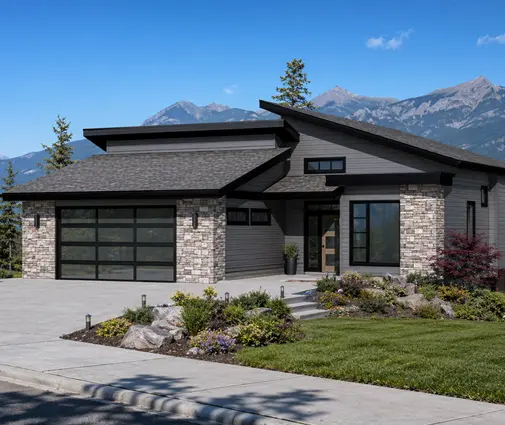
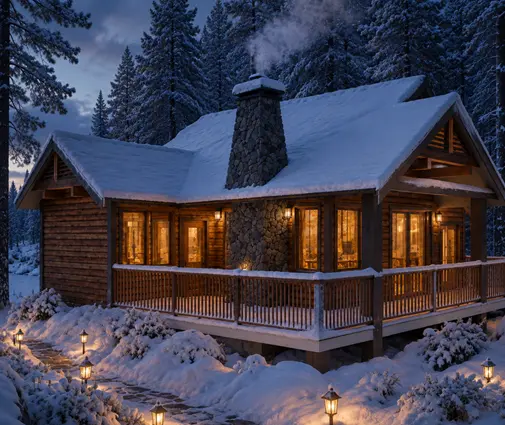
Once you own the lot, you need a design that suits it. On a typical suburban lot, a compact family plan keeps costs under control. This two-storey plan with 4 bedrooms in 1,916 sq ft fits a standard frontage. On a sloping acreage lot, a 1,676 sq ft one-storey home with a basement and 5 bedrooms uses the lower level well. In much of the country, a full basement makes sense anyway, because footings must go below the frost line. The basement plans collection is a good place to start.
Exemptions for newcomers, work-permit holders and students
If you are not yet a permanent resident, you may still be exempt and able to buy an existing home. These are the main categories as they stood in 2026:
| Who you are | Status under the ban | Key conditions (check current rules) |
|---|---|---|
| Canadian citizen or permanent resident | Not covered | None. You can buy like any Canadian |
| Refugee or protected person | Exempt | Status under immigration law |
| Work-permit holder | Exempt, with conditions | At least 183 days of validity left on the permit on the purchase date; no more than one residential property |
| International student | Exempt, with strict conditions | Years of tax filing and physical presence in Canada, a purchase price cap (around $500,000), one property only |
| Spouse or common-law partner of a Canadian or PR | Exempt when buying together | Purchase made jointly or as set out in the regulations |
| Any non-Canadian | Can buy vacant residential or mixed-use land | The land must be truly vacant and zoned accordingly |
Most temporary residents qualify through the work-permit exemption. Before the 2023 amendments, buyers also needed a work history in Canada. That requirement was removed, and the remaining validity on your permit is now what counts. If your permit renewal is pending, talk to your lawyer about timing before you remove conditions on an offer.
How long the ban is set to last
The ban was originally set for two years. In 2024, the federal government extended it to January 1, 2027. In late 2026, that end date is close, and Ottawa could let it expire, extend it again or change it. If you are planning a purchase for the first half of 2027, do not assume the ban has ended. Check the Canada Mortgage and Housing Corporation and Department of Finance announcements, or ask your lawyer, just before you commit.
Also remember that even if the federal ban ends, the provincial taxes described below are separate laws and will stay in place.
Provincial and municipal taxes that still apply
Being allowed to buy is only part of the picture. Some provinces and cities charge extra taxes on foreign buyers or on homes left empty. These taxes can also apply to the lot you are building on.
British Columbia
- Additional Property Transfer Tax. Foreign buyers pay 20% on top of the regular property transfer tax in specified areas, including Metro Vancouver, the Fraser Valley, the Capital Regional District, the Central Okanagan and Nanaimo.
- Speculation and Vacancy Tax. This is an annual tax on residential property, including many vacant residential lots, in designated areas. Foreign owners and "satellite families" pay a much higher rate than Canadians, and the province raised the rates starting with the 2026 tax year. Some exemptions exist for land where a home is being built, but they are limited in time. Check the province's current conditions before you count on one.
- Empty Homes Tax. Vancouver charges its own tax on homes left empty, separate from the provincial tax.
Ontario
The Non-Resident Speculation Tax is 25% province-wide on purchases by foreign nationals and foreign entities. It applies to land with one to six single-family residences. A vacant lot is generally not covered, but have your lawyer confirm this for the specific property. Toronto, Ottawa and some other municipalities also charge vacant home taxes once you own a house.
Elsewhere
Other provinces charge higher land transfer taxes for non-residents or have rules on farmland ownership. Nova Scotia is one example. The federal Underused Housing Tax affected non-resident owners for several years, and Budget 2025 proposed ending it. Confirm how it applies to the years you owned the property. Your lawyer or accountant should give you a full list of taxes for your province and municipality before you buy.
Steps to buy a lot and build once you are eligible
- Confirm your status. Determine whether you are a Canadian citizen or permanent resident, exempt, or limited to vacant land. Get this confirmed in writing by a lawyer.
- Arrange financing early. Non-residents and new arrivals usually face larger down payments and stricter lender checks. Construction mortgages are paid in draws as the work progresses, so your lender needs to approve both the lot and the build budget.
- Check the lot before you make an offer. Review the zoning, setbacks, servicing (municipal water and sewer, or a well and septic system on an acreage), the soil, conservation authority limits and any building scheme. Make your offer conditional on these checks.
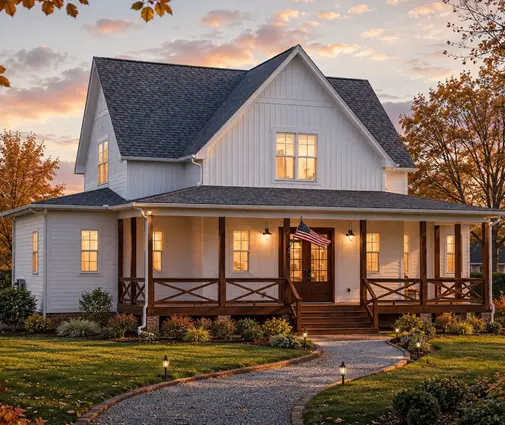
- Choose a plan that suits the lot and the code. Start with the lot width, the slope and the family's needs. A farmhouse such as this two-storey plan with 4 bedrooms and 2,449 sq ft works on a wide rural lot. On tighter suburban lots, a 2,209 sq ft Craftsman with 4 bedrooms can make good use of the space. For a recreational property, a 1,085 sq ft cottage with 2 bedrooms keeps things simple.
- Adapt the plan locally. A designer or engineer licensed in your province adjusts the plan for snow loads, frost depth, insulation levels (R-values) and ventilation, such as an HRV. In BC, they also adapt it to the Energy Step Code level your municipality requires. Construction drawings almost always need a local seal or a qualified designer's stamp.
- Apply for the building permit. Apply to the municipality, or to the regional district in rural BC. Depending on the place and the season, approval takes from a few weeks to several months.
- Hire a builder and schedule inspections. Check that the builder is licensed or registered where that is required, for example with Tarion in Ontario or BC Housing. Also confirm the new-home warranty coverage.
Construction costs vary a lot across the country. In 2025, a typical wood-frame family home cost roughly $250 to $450 per sq ft to build, with higher prices in Vancouver and the GTA. This excludes the land. Get local quotes rather than relying on national averages. If you are comparing sizes, the 1,500 to 2,000 sq ft plans are a realistic starting point for many first builds.
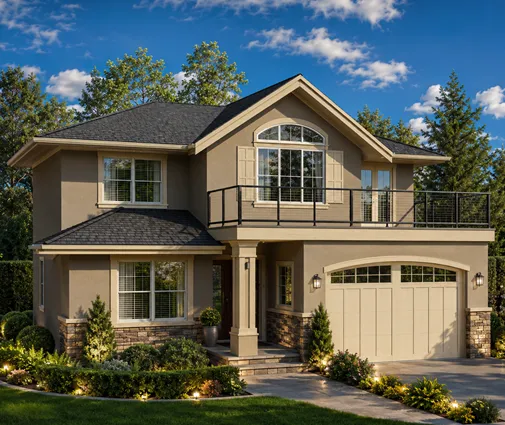

Larger families may want more bedrooms. This 5-bedroom Modern Craftsman with 2,444 sq ft is one example. It still has a modest footprint, which helps keep foundation and roof costs down.
FAQ
Can I buy a vacant lot in Canada as a foreigner living abroad?
In most cases, yes. Vacant land zoned for residential or mixed use is exempt from the federal ban. However, provincial transfer taxes, BC's Speculation and Vacancy Tax, and farmland ownership limits may still apply.
I am on a work permit. Can I buy a house instead of building one?
Usually yes, if your permit has at least 183 days of validity left on the purchase date and you own no other residential property in Canada. Confirm with a lawyer before you remove conditions on an offer.
Does the ban end on January 1, 2027?
That is the current end date, but it has already been extended once. Check for federal announcements close to your purchase date.
If I build a house on my lot, do I break the law?
No. The amended regulations allow non-Canadians to use vacant residential land for any purpose, including building a home. You still need a building permit from the municipality and must follow the building code, just like any other owner.