It is late March. The basement hole was dug two weeks ago, the forms are up, and overnight the snowmelt and a cold rain have turned the excavation into a pond. The same night, someone backs a pickup to the lot and drives off with half the lumber package. You call your home insurer, and the agent asks a question most first-time builders cannot answer: which policy is supposed to cover a house that does not exist yet?
In Canada the answer is usually a course-of-construction policy, also sold as builder's risk, combined with the contractor's liability insurance and, if anyone is working on site, provincial workers' compensation coverage. Other countries split the same risks differently, and comparing them shows where Canadian owners most often leave gaps. This guide looks at Canada next to the United States, Germany, Poland and Romania, and ends with a checklist to use before work starts.
What can go wrong between excavation and possession
A new house carries more risk while it is being built than at almost any time afterwards. It is open to the weather, unlocked or barely locked, full of portable equipment and materials, and visited every day by people who are not the owner.
In a Canadian build the typical losses fall into a few groups:
- Damage to the work itself: fire in a wood frame, wind lifting sheathing or roof trusses before they are braced, snow loading on a roof that is not yet finished, water in an open basement.
- Theft and vandalism: lumber, windows, copper wiring, heat pump units and appliances that are delivered before the doors are locked.
- Liability to others: a neighbour's foundation cracked by excavation, a child who climbs into the hole on a weekend, a delivery driver who falls on site.
- Injury to workers: trades, labourers and the friends who come to help with framing.
Wood frame matters here. A framed house with no drywall burns fast, and winter work in much of the country means propane heaters running inside to cure concrete or dry drywall. That is one reason Canadian builder's risk premiums tend to be higher than in countries where the shell is masonry.
Canada: course of construction, liability and the lender
Why your regular home policy does not apply
A standard homeowner policy is written for a finished, occupied dwelling. A vacant building under construction is a different risk, and most home policies either exclude it or limit cover sharply once a house is unoccupied. If you already own a house and are building a second one on an acreage, do not assume your existing policy extends to the new lot.
Who buys the builder's risk policy
It depends on the contract. When a general contractor builds under a fixed-price contract, the contractor often carries the course-of-construction cover and builds the cost into the price. When you act as your own general contractor, or hire trades separately, the policy is yours to buy. The contract should say in writing who insures the work, for what amount, and who is named on the policy. If it says nothing, assume nobody does.
The policy usually insures the building for its completed value, including materials on site and sometimes materials in transit or stored elsewhere. Look for the theft conditions: many insurers cover stolen materials only if they were installed or kept in a locked container, and some exclude theft until the building is closed in.
Liability and workers' compensation
Your general contractor and each major trade should carry commercial general liability, commonly with limits of $2 million to $5 million in 2025. Ask for a certificate of insurance before they start, and a clearance letter from the provincial workers' compensation board showing their account is in good standing. If you act as owner-builder and pay workers directly, you may have to register with that board yourself. Rules differ by province, so confirm with the board before the first day on site.
What the lender requires
A draw mortgage will not release the first advance without proof of a course-of-construction policy that names the lender as first mortgagee or loss payee, usually for the full completed value. The lender wants the house insured at every draw, because each advance is secured by a building that is only partly there.
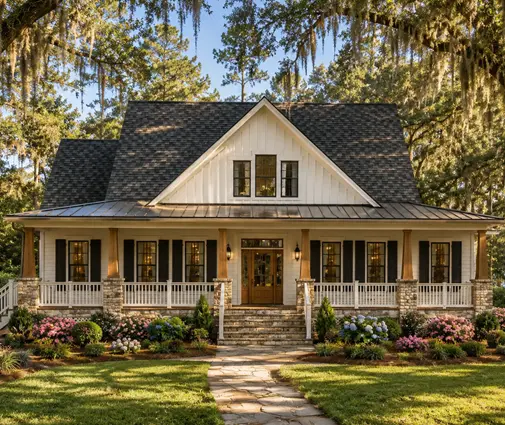
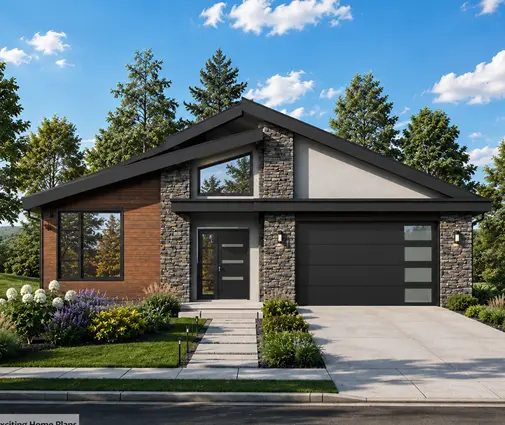
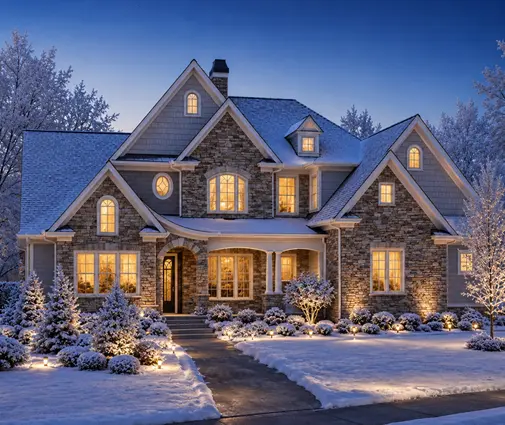
A modest bungalow and a large custom home are priced very differently. A one-storey design such as this Craftsman bungalow with a full basement means a deep excavation and a lot of concrete, but a compact frame to insure. A large modern mountain home like this five-bedroom design with big glazed walls has a much higher completed value and expensive windows sitting on site for weeks. As a rough guide, in 2025 many owners building a single-family home were quoted somewhere between $1,500 and $5,000 or more for a 12-month course-of-construction term. Location, frame type, security, the deductible and the claims history of the area all move that number.
United States: almost the same model
Americans use the same tools under nearly the same names. Builder's risk covers the structure during construction, the contractor carries general liability, and workers' compensation is set by each state. Construction-to-permanent lenders require builder's risk naming the lender, just as Canadian draw lenders do.
The differences that matter to a Canadian are mostly about hazards. In coastal states, wind and flood are often excluded from builder's risk and must be bought separately, sometimes through public programs. In Canada, overland water and sewer backup are also frequently separate endorsements on finished homes, and some course-of-construction policies treat flood narrowly. If your lot is near a river or in a low area, ask in writing whether flood in the excavation is covered.
Germany: the owner is liable for the site
Germany is the most instructive comparison, because it places the legal duty squarely on the owner. A German Bauherr is responsible for keeping the site safe for the public, even when a contractor does the work. That is why the first policy many German owners buy is Bauherrenhaftpflichtversicherung, an owner's liability policy for the build, usually a one-time premium of roughly 100 to 300 euros for a family house in 2025.
The damage to the house itself is covered by a separate product, Bauleistungsversicherung, which pays for storm damage, vandalism, theft of installed parts and construction accidents. Fire is often handled on its own: many insurers include fire cover for the shell at no charge if the owner signs up for the later building policy with them. Friends helping on site must also be registered with the construction trade association's accident insurance.
The lesson for Canada: even when your contractor is insured, you as owner can still be sued for an accident on your lot. Ask your insurer whether your personal liability cover extends to a property under construction, and for what limit.
Poland and Romania: cheap cover and a mandatory policy later
Poland
Polish owners usually buy a policy for a house under construction from the same insurers that sell home cover, often for a few hundred to around 1,500 złoty a year in 2025, depending on the value and the stage of work. Conditions are strict: theft of materials is commonly covered only if the site is fenced and the materials are locked away. The site manager, who must be licensed, carries professional liability, and contractors carry their own civil liability (OC). A bank financing the build normally takes an assignment of the policy, the same idea as a Canadian lender being named as loss payee.
Romania
Romania uses construction all-risks policies for the build and expects contractors to carry liability insurance. What makes it different is a mandatory home policy, PAD, that covers earthquake, flood and landslide for completed dwellings, at a small fixed premium. It only applies once the house is finished and recorded, so during construction the owner relies on the builder's and their own optional cover.
Both countries mostly build in masonry, which is one reason construction premiums there look low next to Canadian quotes for wood frame. That is not a sign Canadian insurers overcharge; it reflects how quickly an unfinished wood house can be lost.
The countries side by side
| Country | Cover for the house during the build | Who is liable for the site | What the lender wants | Rough premium (2025) |
|---|---|---|---|---|
| Canada | Course of construction / builder's risk | Contractor's CGL, owner if self-managing | Policy naming the lender before the first draw | About $1,500 to $5,000+ per year |
| United States | Builder's risk, wind and flood often separate | Contractor's general liability | Builder's risk naming the lender | Varies widely by state and hazard |
| Germany | Bauleistungsversicherung, fire cover for the shell | Owner, through Bauherrenhaftpflicht | Fire and building cover | A few hundred euros in total |
| Poland | Policy for a house under construction | Contractor's OC, licensed site manager | Assignment of the policy to the bank | A few hundred to about 1,500 zł |
| Romania | Construction all-risks | Contractor's liability | Assignment of the policy to the bank | Modest; mandatory PAD once completed |
Treat the premiums as orientation only. They change every year and depend heavily on the project.
When to switch to a regular home policy in Canada
The switch should happen the day the risk changes, not the day the course-of-construction term runs out. In practice that is when you take possession or move in, which in most municipalities follows the occupancy permit or final inspection. Many insurers will not let you live in a house on a builder's risk policy, and many home policies will not start on a house that is still a construction site. Line them up so there is no gap of even one night.
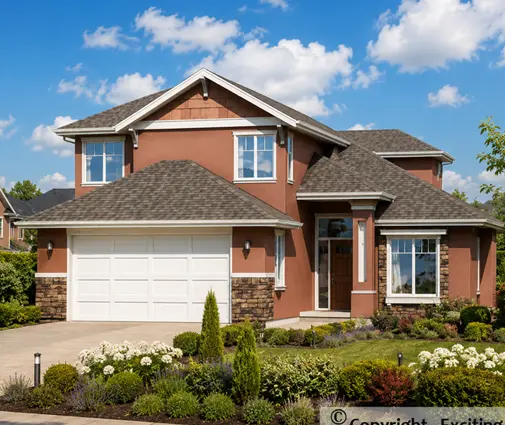
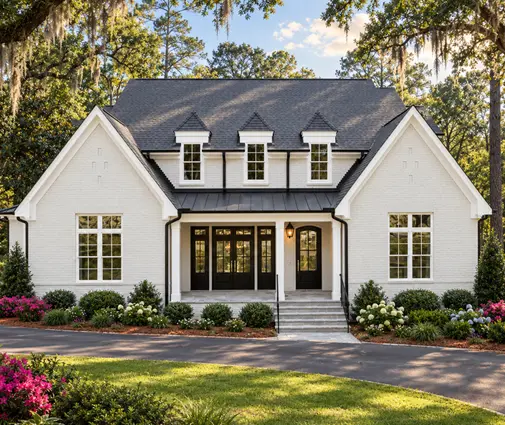
Plan the switch early if you are moving in before everything is finished, which is common with plans with a basement where the lower level is finished later. Tell the insurer what is incomplete. The same applies to a large two-storey modern farmhouse with four bedrooms where the exterior and landscaping often lag months behind the interior, or a phased build like a compact Cape Cod with a single-car garage where the garage is finished last.

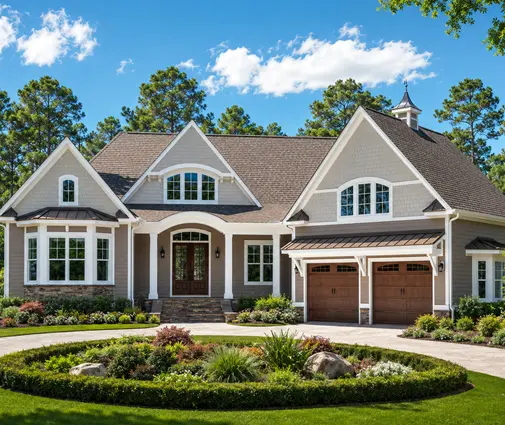

A simpler house is also simpler to insure. A single-level mid-century plan without a garage can be closed in quickly, which shortens the most exposed stage. A larger Shingle-style home over two floors takes longer to dry in, so ask how the premium changes if the build runs over schedule. If you are still choosing between layouts, browsing one-storey plans next to two-storey ones with the build time in mind is worth an afternoon.
Checklist before work starts
- Read the construction contract and confirm in writing who buys the course-of-construction policy, for what amount, and from what date.
- Get certificates of insurance from the general contractor and major trades, with liability limits you are comfortable with.
- Get workers' compensation clearance for every company on site, and ask the provincial board whether you need your own account.
- Check theft conditions: locked storage, fencing, cameras, and whether uninstalled materials and appliances are covered.
- Ask specifically about water in an open excavation, snow load, and heaters running in winter.
- Confirm the lender is named correctly before the first draw.
- Ask your insurer whether your personal liability covers you as owner of a site under construction.
- Book the date of the switch to a homeowner policy, and tell your insurer about anything unfinished at move-in.
- Check the current rules with your municipality, insurer and architect, since requirements differ by province.
FAQ
Does my current home insurance cover a house I am building on my own lot?
Usually not. Home policies are written for finished, occupied dwellings. A new build on a separate lot, or a vacant structure under construction, normally needs its own course-of-construction policy.
If my contractor is insured, am I protected?
Partly. The contractor's liability policy covers damage and injury they cause, but it may not cover the building itself, theft of your materials, or claims against you as owner. Check what their builder's risk covers and who it names.
Who covers friends who help with framing on weekends?
That is a real gap for owner-builders. Unpaid helpers may not be covered by workers' compensation or by the contractor's policy. Ask the provincial board and your insurer before anyone picks up a nail gun.
Can I live in the house before it is finished?
Only once the municipality allows occupancy, and only after you switch to a policy that covers an occupied home. Tell the insurer what is still incomplete, so a claim is not refused later.