Here is a common scene. The building permit has arrived from the municipality, the excavator is booked for Monday, and the owner thinks the next invoice will be for digging. Then come the requests: a stake-out from the surveyor, a locate ticket, a temporary hydro service, a gravel pad so the concrete truck does not sink, a rented toilet, maybe a soil engineer because the inspector did not like the look of the clay. None of it is glamorous and all of it costs money. It helps to see how other countries handle the same weeks, because some of them make these steps compulsory where Canada leaves them to the owner's judgment.
Below are the myths we hear most often from first-time builders in Canada, checked against practice in the United States, Germany, Poland and Romania.
Myth 1: After the permit, the next cheque goes to the excavator
Fact: There is a whole pre-construction phase in between, and it rarely appears in the first budget. On a typical Canadian suburban lot or acreage in 2025, the items covered in this article together often came to somewhere between $5,000 and $20,000 or more, depending on distance to the hydro line, the length of the driveway and whether an engineer is needed. In Germany, builders treat this as a named budget line, the Baunebenkosten, and banks expect to see it. Canadian lenders are less strict, which is exactly why the money gets forgotten. Put a separate line for it in your estimate before you sign anything with a contractor.
Myth 2: Soil reports are for apartment towers, not houses
Fact: For many single-family homes in Canada the code lets the designer use standard assumptions about soil bearing, so no formal report is demanded. But that changes quickly on sloped lots, filled ground, near ravines, on sensitive marine clays or where groundwater sits high, and some municipalities ask for a geotechnical letter before they release the permit. Compare that with Romania, where a studiu geotehnic is normally part of the permit file, partly because much of the country is seismic. In Poland, the designer must determine the geotechnical category of the site, so badania geotechniczne with a few boreholes are routine. In Germany a Baugrundgutachten is not always a legal requirement for a house, yet most owners order one because foundation risk is otherwise theirs. In parts of the US with expansive clay, such as areas of Texas and Colorado, a soil report is effectively standard. For a Canadian with a full basement, which puts footings well below the frost line, a few test pits and an engineer's opinion (roughly $1,500 to $5,000 in 2025) is cheap insurance against wet walls and cracked slabs.
Myth 3: The builder can lay out the house with a tape and some string
Fact: The batter boards and string lines are the builder's job, but the corners they hang from should come from a licensed land surveyor, especially where setbacks are tight. Many Canadian municipalities also want a foundation location or "form" survey before framing continues, proving the walls sit where the site plan said. Poland goes further: by law the stake-out must be done by a licensed geodeta, who records it in the site logbook. In Germany the Vermessungsingenieur usually does a rough layout for digging and a precise one for the foundation. A Canadian stake-out generally ran $800 to $2,500 in 2025. Moving a poured foundation that encroaches by half a metre costs far more.
Myth 4: On a rural acreage, nothing is buried, so locates can be skipped
Fact: Rural lots hide gas lines, fibre, old drainage tile and hydro feeds just like city lots, sometimes in places no one remembers. Every province has a free locate service, and the excavator operator will normally refuse to dig without a valid ticket. Request it at least a week ahead; in spring, demand is heavy. Germany and Poland have comparable utility-mapping procedures, and the principle is the same everywhere: the person digging pays for the damage.
Myth 5: Temporary power just means running an extension cord
Fact: Saws, compressors and, later in a Canadian winter, heaters for curing concrete or drywall need a proper temporary service: a pole or pedestal, a meter base and an inspection before the utility connects it. If the line is close, expect a modest fee; if the house sits far back on an acreage, new poles or trenching can push the cost into the thousands. Germans order a Baustromkasten from the utility or rent one, and Poles apply for a temporary connection that can take weeks. In all three countries, apply early, because the utility's calendar, not yours, sets the start date.
Myth 6: Toilets, fences and gravel are pocket change
Fact: Individually they are small, together they are not. In 2025 a rented portable toilet in Canada usually cost about $150 to $300 a month with service, and a house build can easily last eight to twelve months. Rented construction fencing, required by some municipalities on urban infill lots, adds hundreds to a few thousand dollars. A compacted gravel entrance and driveway base often cost $2,000 to $6,000 and protect the road from mud, which bylaw officers do notice. Romanian and Polish owners frequently pay less in labour for the same items, but they share the same list. Get quotes for all of them at once, not one at a time as each need appears.
Myth 7: The season does not matter until the walls go up
Fact: In Canada it matters from the first day. Frozen ground is slower and costlier to dig, and many provinces impose spring load restrictions on rural roads, which can keep heavy trucks off your road for weeks during the thaw. Pouring footings in the cold means blankets, heat and additives. Germans and Poles face milder versions of this; Romanians in the lowlands rarely do. If your schedule slips into late autumn, budget for winter measures or move the dig to spring.
Myth 8: Once the permit is issued, the drawings stay in the folder
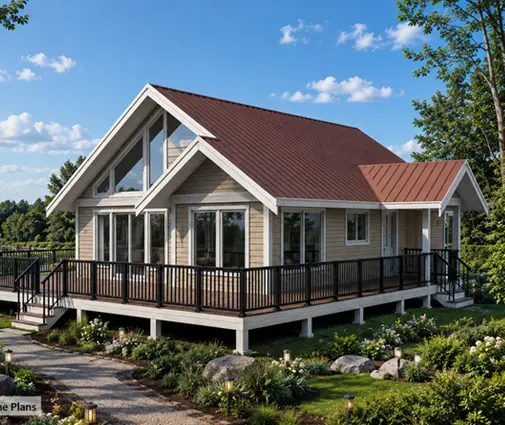
Fact: This is when the drawings work hardest. The surveyor reads the footprint dimensions and the site plan to set the corners; the excavator needs the basement depth and the overdig; the concrete contractor uses the foundation plan for footing sizes, wall heights, window openings and step-downs. A compact bungalow such as the modern mountain plan with five bedrooms on about 1,500 sq ft has a simple rectangle to stake, which keeps survey and digging time short. A wider one-level layout like the farmhouse with everything on one floor covers more ground, so expect more digging, more footing and more gravel. On a lot that falls away, the three-bedroom Craftsman with a basement shows how a lower level can step with the grade instead of fighting it.
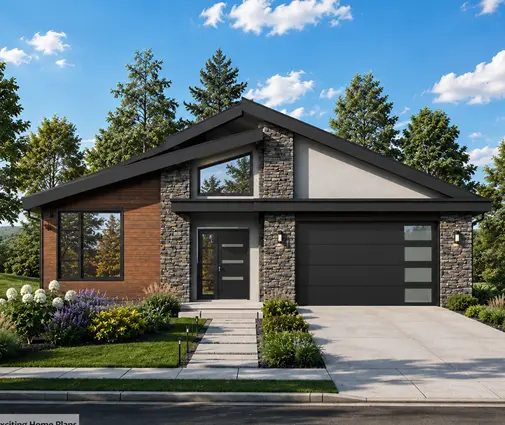


Larger homes raise the stakes. The two-storey country house with a full basement and no attached garage leaves the garage as a separate decision, which can simplify the first stake-out. A very large footprint such as the six-bedroom Tudor-inspired estate almost certainly justifies a geotechnical investigation before anyone pours concrete. For something in between, the Northwest-style bungalow with a lower level is the kind of foundation most Canadian crews build week after week. You can browse more options in our basement plans, and if your land slopes, start with the sloped lot collection.
Before the excavator arrives: a short checklist
- Building permit and approved site plan, with setbacks and grades marked
- Geotechnical report or engineer's letter, if the lot, the municipality or your lender calls for one
- Surveyor's stake-out of the corners and an agreed benchmark elevation
- Valid utility locate ticket
- Temporary power application and inspection booked
- Water source for the site: municipal connection, well or delivered water
- Portable toilet, fencing and gravel entrance ordered
- Foundation drawings and footprint dimensions printed for the crew
- Booking for the foundation location survey before framing
What this means for your build in Canada
Poland and Romania write many of these steps into law; Germany leaves some to the owner but expects them anyway; the US varies by state and soil. Canada sits closer to the German model: fewer mandatory reports for an ordinary house, more responsibility on you. That freedom only saves money if you use it wisely. Order the survey and the locates early, decide on soil testing based on the lot rather than hope, set aside a real budget for site services, and keep the foundation drawings within reach. The first shovel goes in much more smoothly when everything before it has been paid for and planned.