Twenty years. That is roughly how long the asphalt shingles on a new Canadian home last before a roofer starts talking about a full tear-off. The roof is usually the first big bill, but not the last. Within the first three decades most owners also replace a water heater, a furnace or heat pump, some windows and probably a floor or two. The mortgage pays for the house. These repairs are paid separately, out of your own pocket, and many first-time builders never plan for them.
Comparing Canada with the places it borrows ideas from shows where the money goes. The United States builds almost the same way we do. Germany and Poland build heavy masonry homes that last longer and cost more to build. Each approach sets a different maintenance timeline. Seeing them side by side helps you choose materials for your own build.
The comparison at a glance
| Component | Canada | United States | Germany | Poland |
|---|---|---|---|---|
| Typical walls | Wood frame, 2x6, exterior insulation increasingly common | Wood frame, 2x4 or 2x6 depending on region | Masonry (brick, sand-lime or aerated block) or prefab timber panels | Masonry (ceramic or aerated concrete block) |
| Typical cladding | Vinyl, fibre cement, brick veneer, stone on the front | Vinyl, fibre cement, stucco in the South and West | Render over exterior insulation, clinker brick | Render over polystyrene or mineral wool, clinker accents |
| Typical roof and lifespan | Asphalt shingles, about 15–25 years; metal 40+ | Asphalt shingles, about 15–30 years | Concrete or clay tile, often 50+ years | Ceramic tile 50+ years; steel tile sheet about 30–50 |
| Windows | Vinyl, double or triple glazed, about 20–30 years | Vinyl or aluminum, about 20–30 years | uPVC or wood, triple glazed, about 30–40 years | uPVC, double or triple glazed, about 25–35 years |
| Heating | Gas furnace or cold-climate heat pump, about 15–20 years; HRV | Furnace, heat pump or AC, about 15–20 years | Heat pump with underfloor heating, about 18–25 years | Gas boiler or heat pump, about 15–20 years |
| First big repair | Water heater at 10–15 years, roof at 18–25 | Similar to Canada, earlier in hot climates | Heating system or repainting the render at 15–20 | Render repainting and boiler at 15–20 |
| Common savings rule | Usually the US 1% rule, or 1–3% of value | 1% of home value per year | A per-square-metre reserve that rises with age | Informal estimates around 1% of build cost per year |
The figures are typical ranges from practice, not guarantees. Lifespans depend on installation quality, exposure and how well you look after things. Ask your builder and the manufacturers for the warranties on the products actually installed.
Roof: the first big cheque
Asphalt shingles dominate Canadian roofs because they are cheap and quick to install. The packaging may promise 30 years or more. In practice, freeze-thaw cycles, ice dams and hail mean that 18 to 25 years is the realistic window in much of the country. German and Polish homes mostly use clay or concrete tiles. Those can stay on for half a century, and the underlay and flashing usually wear out first. US roofs follow the Canadian pattern, but Southern heat ages shingles faster.
In 2026, re-roofing a simple bungalow in Canada with architectural shingles typically costs somewhere around $10,000 to $20,000. Steep pitches, valleys and dormers push the price higher. A standing-seam metal roof costs roughly two to three times more up front, but you may never have to replace it.
Verdict: Europe wins on lifespan. Canada can close most of the gap with metal roofing and a simple roof shape.
Facade: vinyl versus render versus brick
Vinyl siding needs almost no care beyond a wash. It lasts about 25 to 40 years, although panels can crack in deep cold or warp near a barbecue. Fibre cement lasts longer but needs repainting every 10 to 15 years. Brick veneer can outlast the house, apart from repointing the mortar decades later. The German and Polish standard is render over exterior insulation. It looks crisp, but it usually needs cleaning and repainting every 15 to 20 years. Woodpeckers and algae on north walls are also a known nuisance. Clinker brick, which is common on northern German homes, is close to maintenance-free.
Verdict: a draw. Vinyl is cheapest to own over 30 years, and brick lasts longest in any country.
Windows and sealants
Canadian vinyl windows usually start failing at the glass. After 15 to 25 years the seals of some insulated glass units give way, and the panes fog between the layers. You can often replace just the sealed unit, which costs much less than a new window. German windows tend to have heavier frames and hardware that can be adjusted. Owners there often get 30 years or more from them.
Exterior caulking is where neglect costs most in a wood-frame house. Joints around windows, doors, vents and hose bibs need checking every year and redoing every 5 to 10 years. A failed bead lets water into the wall assembly, and a masonry wall tolerates that far better than a wood-frame one.
Verdict: Germany leads on window lifespan. A Canadian house depends on annual caulking more than any other house in this comparison.
Heating, ventilation and hot water
Mechanical systems wear out on the same schedule everywhere, roughly 15 to 20 years for a furnace, boiler or heat pump. The difference is how many systems a house has. A typical new Canadian home has a furnace or ducted heat pump, often with a separate air conditioner. It also has an HRV, a water heater, and in many basements a sump pump. Each of these is a separate future replacement. Tank water heaters last about 10 to 15 years. HRV filters need cleaning every few months, and the motor or core may need attention at 15 years or so.
A German new build more often has one heat pump that heats the house and the water through underfloor heating, so there are fewer parts to replace. In 2026, replacing a ducted cold-climate heat pump in Canada typically runs about $10,000 to $20,000. Check federal, provincial and utility rebate programs before you replace one, because the rules change often.
Verdict: Germany's simpler systems are cheaper to keep running. In Canada, plan on replacing several systems every 15 years or so.
Floors and interior finishes
Finishes wear out on similar timelines everywhere. Carpet lasts roughly 10 to 15 years. Luxury vinyl plank lasts 15 to 25 years. Solid hardwood can be sanded and refinished several times. Canadian homes have one extra risk: the finished basement. One flooded basement can cost more than all the upstairs floors combined. Good grading, downspout extensions and a working sump pump do more for long-term costs than any flooring choice. Tile over a concrete slab, which is common in Poland and Germany, needs little more than regrouting.
Verdict: similar costs everywhere, but a Canadian basement needs active water management.
Savings rules: 1% versus a reserve per square metre
Most Canadian advice repeats the American rule of thumb of setting aside 1% of the home's value each year. In Toronto or Vancouver, much of that value is land, and the land never needs a new roof. In those markets the rule tells you to save far more than you need. In rural areas it may tell you to save too little. The German habit makes more sense: base the reserve on floor area and age, starting low for a new house and rising as components age. Polish and Baltic advisers give similar informal figures, often expressed against the cost of construction rather than the market price.
For a Canadian house, a practical approach is to save about 1% of the replacement cost of the building each year. Leave the land out, and increase the amount after year 15.
Verdict: the German method suits Canadian houses better than the 1% rule.
A 30-year timeline for a Canadian bungalow
Take a single-storey, wood-frame home of about 1,300 sq ft with a gable roof and vinyl siding, similar to this three-bedroom ranch with a straightforward rectangular footprint. In 2026 dollars, a rough timeline looks like this:
- Years 1–10: caulking, gutter cleaning, HRV filters, deck staining. About $500–1,500 a year.
- Years 10–15: water heater ($1,500–3,500), first carpet replacement, sump pump, possibly a new garage door opener.
- Years 15–20: heat pump or furnace ($8,000–20,000), re-roof ($10,000–20,000), exterior paint on trim.
- Years 20–25: sealed glass units or several windows, second water heater, kitchen appliances, deck boards.
- Years 25–30: full window replacement ($20,000–40,000), flooring, possibly siding on the weather side.
Altogether, many owners spend somewhere between $90,000 and $150,000 over 30 years, or roughly $3,000 to $5,000 a year on average. Most of that money is spent after year 15. A comparable German masonry house usually costs less each year but more to build. Its biggest bills are the heating system and refreshing the facade.

Design choices that keep maintenance low
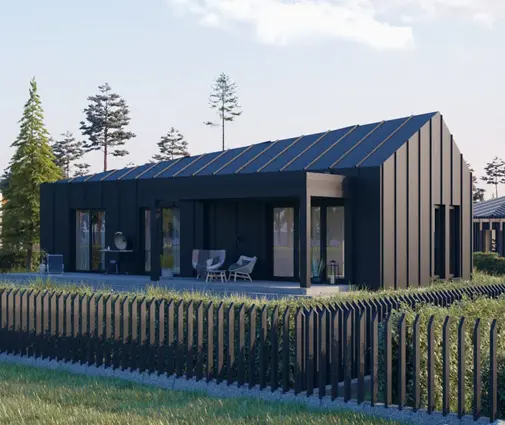
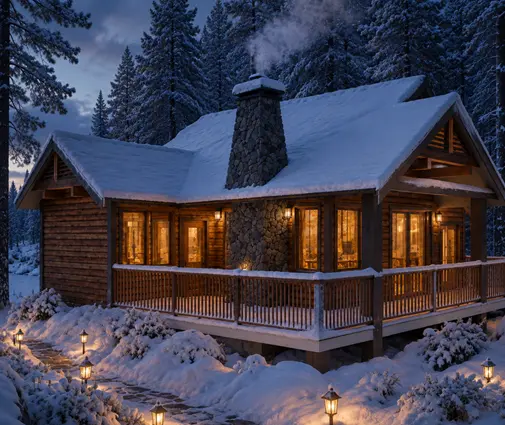
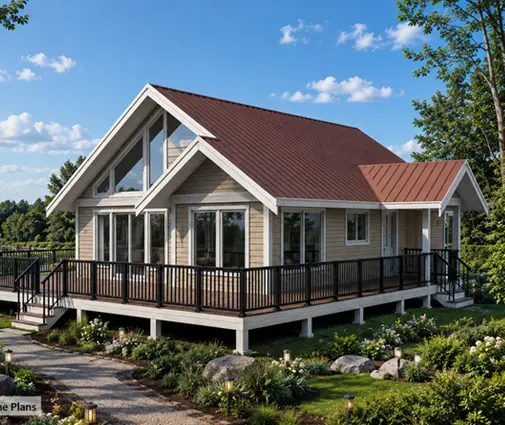
The cheapest repair is the one the design avoids. A simple gable roof with no valleys has fewer weak spots for ice dams and leaks. Gable-roof plans are also cheaper to re-shingle. Overhangs of 18 to 24 inches keep rain off the siding and window joints and protect them for decades. The compact Scandinavian-style home of 857 sq ft shows how far a plain shape can go, with three bedrooms in a footprint that is easy to roof and clad. For a cottage lot, this two-bedroom lake cabin keeps the same simple roofline. Its rustic cousin, a mountain-style cabin with exposed timber character, deserves a durable stain on its wood details.
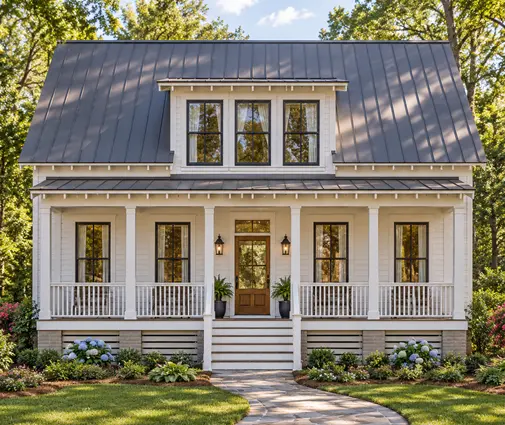
Durable facade materials pay off over decades. Brick or stone on the lower walls withstands snow piles and lawn mowers. Fibre cement or metal above lasts longer than vinyl. The European-flavoured traditional bungalow with a symmetrical front suits masonry veneer. The minimalist modern three-bedroom with clean, uninterrupted walls has few joints to caulk. Single-storey living also means every gutter and window is reachable from a ladder, which is one more reason one-storey plans are popular with buyers thinking about retirement.


Who should choose what
- Tight build budget, long horizon: standard wood frame with vinyl siding and shingles, plus a roof and furnace fund that grows after year 10.
- Want to replace as little as possible: a metal roof, brick or fibre cement cladding, wide overhangs and triple-glazed windows from a manufacturer with good service.
- Retiring in the house: one storey, a simple footprint and one ducted heat pump rather than several systems.
- Admire German or Polish durability: borrow the logic rather than the masonry. Use exterior insulation, a rainscreen gap and a reserve based on floor area. Confirm the wall assembly with your designer and the municipal building department.
- Building with a full basement: spend the money first on drainage, waterproofing and a backup sump pump. That is where Canadian homes face their biggest single risk.