Roughly $5,000 against $20,000. That is the gap many builders in Quebec, Manitoba and New Brunswick quote between wiring a new house with electric baseboards and putting in a ducted cold-climate heat pump. When hydro is cheap, that gap is hard to ignore, and it is why baseboards are still installed in new subdivisions and on rural acreages across these provinces. The real question is whether the gap closes once you add up a few decades of electricity bills, the ventilation the code now expects, the rebates aimed at heat pumps, and the summers that keep getting hotter.
This breakdown uses a typical new home of about 1,500 sq ft above grade, built airtight to current code, with prices as they stood in 2025. Treat every number as a range to test against local quotes, not as a price list.
The cost items side by side
| Item (about 1,500 sq ft, 2025, CAD) | Electric baseboards | Ductless heat pump (multi-head) | Ducted heat pump |
|---|---|---|---|
| Heating equipment, installed | $3,000 – $7,000 | $10,000 – $20,000 | $14,000 – $28,000 |
| Ductwork for heating | None | None | Included above, or $4,000 – $8,000 separately |
| HRV or ERV with its own ducts | $3,000 – $7,000 | $3,000 – $7,000 | $2,500 – $5,500 (can share some runs) |
| Backup heat for the coldest days | Not needed | A few baseboards, $500 – $2,000 | Electric strip in the air handler, often included |
| Summer cooling | Separate units, $1,000 – $6,000 | Included | Included |
| Heating electricity per year, low-rate province | $600 – $1,300 | $300 – $650 | $300 – $650 |
| Typical yearly maintenance | Close to nil | $150 – $300 | $150 – $300 |
The running costs assume a space-heating need of roughly 7,000 to 12,000 kWh a year for resistance heat in a new code-built house, depending on how cold the region is, and household electricity rates around 8 to 11 cents per kWh, which is the 2025 range for most homes in Quebec and Manitoba. In New Brunswick and parts of BC the rate is higher, and every gap in the last rows widens accordingly.
The biggest item: the heating system itself
Baseboards are cheap for a simple reason: each one is a heater, a wire and a thermostat. An electrician wires them while roughing in the rest of the house, and nothing else on site depends on them. The main thing to plan is the electrical service. A whole house on resistance heat needs a 200 A panel with room for many double-pole breakers, and on larger homes with a basement your electrician may push for more. Ask about this before you sign the quote.
A ductless system replaces most of the heaters with one or more wall heads fed by an outdoor unit. Open main floors suit it well: one head can carry a kitchen, dining and living area. Bedrooms behind closed doors are the weak point, which is why so many installers leave a small baseboard in each bedroom. A ducted heat pump sends air to every room, but it needs a mechanical room, duct chases and careful design, and it only makes sense if the plan leaves space for all of that.
Running costs: where cheap hydro changes the math
A cold-climate heat pump delivers on average two to three units of heat for every unit of electricity across a Canadian winter, less in a deep cold snap and more in the shoulder seasons. Baseboards deliver one. So the heat pump roughly halves the heating part of the bill. At low-rate hydro prices, half of a small number is still small: in a tight new house the annual saving often lands between $300 and $700.
Set that against an extra $8,000 to $15,000 of installed cost and the simple payback stretches past 15 years, close to the life of the outdoor unit. That is the honest reason baseboards survive in Quebec and Manitoba. In New Brunswick, or wherever rates sit nearer 14 to 16 cents, the saving grows and the payback shortens. The other thing that shortens it is cooling: if you would buy air conditioning anyway, the heat pump gets you both for one price.
Energy codes and rebates
The national and provincial codes do not ban resistance heating. But under the performance paths that more provinces and municipalities now use, including the Step Code tiers adopted by many BC municipalities, a house with baseboards has to earn its energy rating through the envelope alone. In practice that means more insulation, better windows or a tighter air barrier than the same house with a heat pump. On a small, simple house that may cost little; on a larger one with a lot of glass it can cost more than the heat pump would have.
Provincial utilities and governments have also spent the last several years offering rebates and low-interest loans for heat pumps, and some programs target new construction. The amounts and conditions change often, sometimes year to year, so check what your utility and province offer in the year you build, before you choose a system. A rebate of a few thousand dollars can turn a 15-year payback into a much shorter one.
Pairing baseboards with an HRV
A new airtight house needs mechanical ventilation whatever heats it, and with baseboards the HRV is the only air system in the house. That has two consequences.
- It needs its own ducts. Plan small supply runs to the bedrooms and the living area and exhausts from the bathrooms and kitchen. Most of these fit in floor or ceiling joists if they are drawn early.
- It has to be balanced and commissioned. Without a furnace fan to mix the air, a poorly balanced HRV leaves stale corners and cold drafts at the supply grilles. Ask for the measured airflows in writing at handover.
In very cold, dry regions such as the Prairies, consider an ERV instead: it keeps more winter humidity indoors. And place the baseboards under windows where you can, so the warm air rising off them offsets the cold glass and the incoming ventilation air.
Where baseboards still make sense: small, compact houses
The smaller and tighter the house, the smaller the heating bill, and the smaller the bill, the less a heat pump can save. In a compact cottage like this 750 sq ft two-bedroom cabin, the yearly heating cost on baseboards may be only a few hundred dollars, so an expensive multi-head system will rarely pay for itself. The same logic fits a one-bedroom retirement home such as this single-level farmhouse under 1,000 sq ft, or a lake cottage like this rustic two-bedroom plan that sits empty part of the winter. In seasonal cottages, a thermostat that holds each room at a low setback temperature is a real advantage.
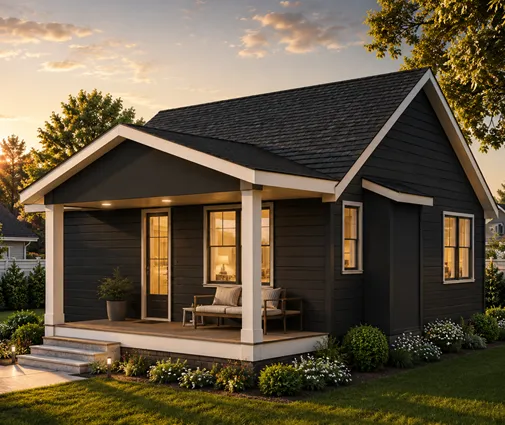
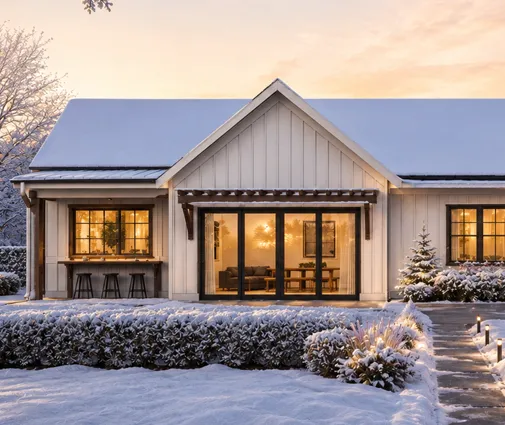
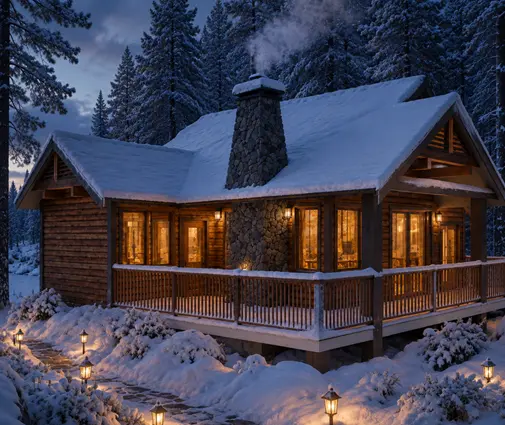
Browse the tiny house plans and the 1000 to 1500 sq ft range for this kind of footprint. A simple rectangle with a gable roof and few corners is easier to insulate well, which is exactly what a baseboard house relies on. A three-bedroom bungalow of about 1,300 sq ft sits right at the threshold: baseboards work, but a single ductless head in the open living area starts to pay. A narrow stacked design like this three-level modern plan has many small rooms on separate floors, a layout where room-by-room baseboard control works better than one wall head trying to reach upstairs.
Where a heat pump earns its cost: basements and larger floor plans
A bungalow with a full basement effectively doubles the heated area. A plan like this four-bedroom one-storey with a basement may have 3,000 sq ft or more under heat once the lower level is finished, and the yearly baseboard bill grows with it. Here a ducted heat pump, with the air handler in the basement mechanical room, is usually the better long-term buy, and the basement makes the ductwork easy to run. Larger two-storey family homes such as this four-bedroom farmhouse with almost 1,950 sq ft fall into the same category, especially once summer cooling for the upper bedrooms is on the list.
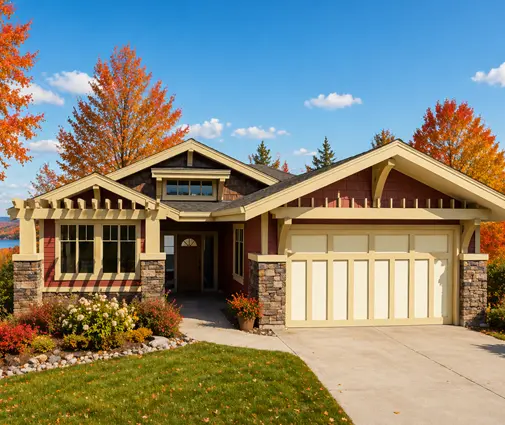
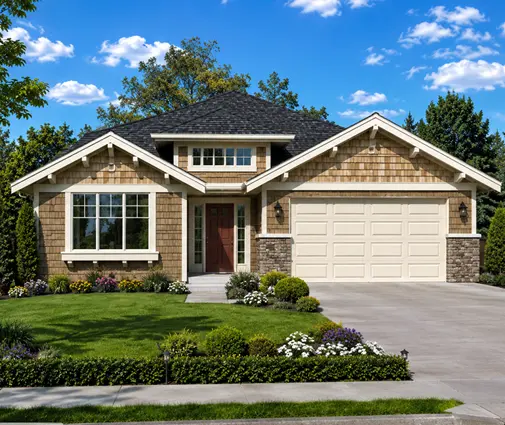

Many of the plans with a basement are drawn with a central mechanical room, which is the first thing to check if you lean towards ducted heat.
How to save
- Go hybrid. One ductless head for the open main floor plus baseboards in the bedrooms and bathrooms often costs $6,000 to $10,000 in total and captures most of the heat pump savings.
- Spend on the envelope first. Extra wall and attic insulation and a well-sealed air barrier reduce the bill for any system, and they last the life of the house.
- Rough in for later. Leave a 240 V circuit and a sleeve through the wall where a future heat pump head would go. It costs little during framing and a lot afterwards.
- Size the panel once. Plan for heat, an EV charger and cooling now, so you do not pay for a service upgrade in five years.
- Apply for rebates before buying. Many programs require approval or an energy evaluation before installation.
In short
- Baseboards cost about $3,000 to $7,000 to install; a heat pump costs $10,000 to $28,000 (2025 ranges).
- At low hydro rates, a heat pump saves roughly $300 to $700 a year in a new airtight house, so payback is long without rebates.
- Every new house still needs an HRV or ERV; with baseboards, it needs its own balanced ducts.
- Baseboards stay a sound choice for small, compact, well-insulated homes and seasonal cottages.
- Basement bungalows, larger two-storey homes and anyone who wants cooling should price a heat pump, and confirm the current code path and rebates with the municipality or an energy advisor.