Ask three builders in Canada which roof to put on a new house and you may get three answers. The roof is one of the few parts of a home you will see every day for decades, and it carries a heavy load: snow, ice, wind, hail and a lot of temperature swings. Here are the questions homeowners ask most often when they choose between architectural asphalt shingles, steel roofing and cedar shakes, with answers based on how houses are actually built and permitted here.
How much does each roofing material cost per square in Canada?
In 2025, architectural asphalt shingles typically cost about $500 to $800 installed per square (100 sq ft), screw-down steel about $700 to $1,100, cedar shakes about $1,000 to $1,800, and standing-seam steel about $1,200 to $2,000 or more. These are broad ranges for new construction; prices in the Greater Toronto Area, the Lower Mainland and remote regions sit at the high end, and steep or complex roofs cost more in every material.
To estimate your own roof, take the roof area from the plan rather than the floor area. A 1,800 sq ft bungalow with a 6/12 pitch and overhangs often has 22 to 26 squares of roof, so the difference between shingles and standing seam can reach $15,000 to $30,000. Get at least two written quotes based on the actual roof plan.
How long does each roof really last in a freeze-thaw climate?
Expect roughly 20 to 30 years from architectural shingles, 25 to 40 years from well-maintained cedar shakes, and 40 to 60 years or more from steel. Manufacturer warranties on shingles often say "lifetime", but that word is about the warranty terms, not how long the granules survive repeated freezing, thawing and UV on a south-facing slope.
Freeze-thaw cycles hurt materials that absorb water. Shingles slowly lose granules and become brittle; cedar can cup, split and grow moss in humid coastal or shaded areas. Steel does not absorb water, so its life depends mostly on the coating and on the fasteners, which on screw-down panels need inspection over time.
Which roof handles heavy snow best?
Steel lets snow slide off fastest, especially standing seam with concealed fasteners on a pitch of 6/12 or steeper. Shingles and shakes have a rough surface that holds snow in place, which is not a problem on its own: Canadian roof framing is designed for the local snow load set out in the building code, whatever the covering.
The real question is where the snow goes. A steel roof can release a large slab at once, so plan where it lands. Shingles keep snow on the roof longer, which can feed ice dams if the attic is warm. Either way, good attic insulation and ventilation matter more than the covering for keeping the roof cold and the ice under control.
What does the building code say about eave protection and ice-and-water membranes?
In most of Canada the code requires eave protection on shingle and shake roofs, usually a self-adhered ice-and-water membrane running from the roof edge up the slope at least 900 mm and at least 300 mm past the inside face of the exterior wall. The National Building Code and the provincial codes (Ontario, BC, Quebec and others) set the details, and there are exceptions for some mild coastal areas and some low-slope or specific roof types.
Many builders go further than the minimum and add membrane in valleys, around skylights and chimneys, and at roof-to-wall joints. Steel roofs follow the manufacturer's underlay requirements, which often include a high-temperature membrane at the eaves too. Rules change between code editions, so confirm the current requirements with your municipality or your designer before you finalize the roof details.
Do I need snow guards on a metal roof?
Yes, wherever sliding snow could land on a door, a walkway, a deck, a driveway or a lower roof, snow guards are strongly recommended and some municipalities and insurers expect them. A sheet of wet snow and ice coming off a two-storey steel roof is heavy enough to injure someone or damage a car.
The cheaper solution starts on the plan. Put the front entry under a gable end rather than under the eave, cover the door with a porch roof, and keep the garage doors away from the drip line. Where that is not possible, plan rows of snow guards or a continuous bar above entries and driveways, fixed to the seams or the structure as the manufacturer specifies.
How do the materials compare for wind and hail?
Steel and Class 4 impact-resistant shingles are the strongest choices for hail, while standard shingles and cedar are more vulnerable. Shingles carry wind ratings from standard tests, and the better architectural products are rated for high winds when installed with the specified number of nails.
In hail-prone areas such as Calgary and much of the Prairies, impact-rated shingles or steel are now common, and some insurers offer lower premiums for them; ask yours before you decide. Keep in mind that hail can dent steel without causing leaks, which is a cosmetic issue many warranties do not cover. Check the hail and wind ratings on the specific product, not just the material.
Is a metal roof noisy in rain?
No, not on a normal house. When steel is installed over solid plywood or OSB sheathing with underlay, and there is an insulated attic below, rain sounds about the same as on shingles.
The noise people remember comes from steel fastened directly to purlins over an uninsulated space. In a house with a vaulted ceiling and steel roofing, the insulation layer is thinner and closer to the roof, so ask your designer about sheathing, underlay and insulation thickness there.
Which roof shapes suit standing seam, screw-down steel or shingles?
Simple roofs with long, uninterrupted slopes suit steel best, while complex roofs with many valleys, dormers and hips are easier and cheaper to cover with shingles. Every cut, valley and penetration on a steel roof takes custom flashing and labour, which is why standing seam is most cost-effective on clean gables.
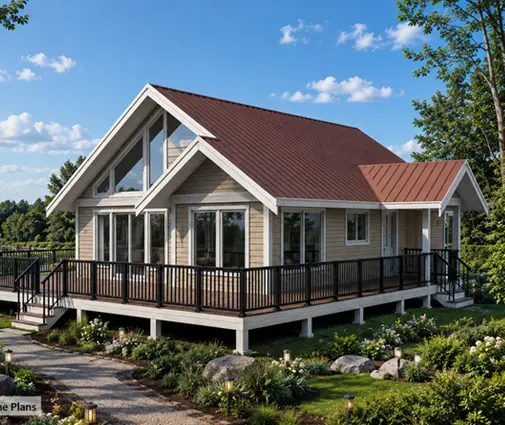
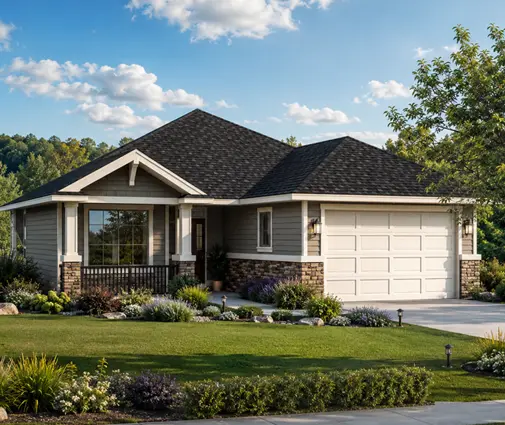
A one-storey design with a straight roofline is a natural candidate for steel. The 3-bedroom Craftsman mountain bungalow with a basement (1745 sq ft) and the 1707 sq ft modern farmhouse bungalow both have the simple forms that steel panels love, and you can browse more in the gable roof plans.


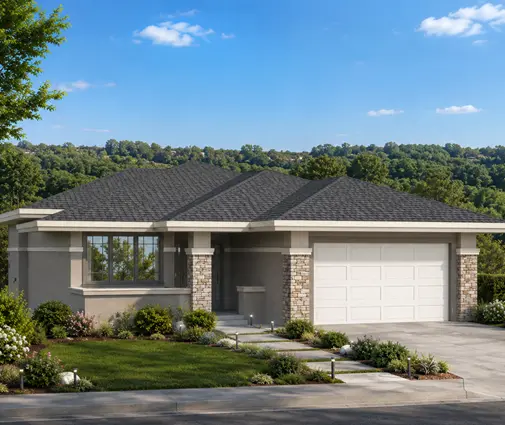
Hipped and multi-gable roofs are a different case. The three-storey French Country design with Modern Tudor details (4277 sq ft) or the two-storey English Tudor home with 4 bedrooms (3847 sq ft) have steep intersecting planes and many valleys, where architectural shingles or cedar look right and keep the cost reasonable. The hip roof collection and the plans with dormers show how quickly the number of valleys grows.
What is the minimum roof slope for each material?
Asphalt shingles normally need a slope of at least 4/12, or down to about 2/12 with extra underlay as the code allows; cedar shakes generally need about 4/12 or steeper; standing-seam steel can go much lower, often to 3/12 and with some products down to about 1/12. Screw-down panels usually need a steeper slope than standing seam because water can reach the exposed fasteners.
In snow country, steeper is usually safer whatever the covering. If the plan you like has a low-slope porch or a long, shallow roof over a garage, those sections may need a different material or a membrane, so check them before you order.
Is cedar shake a good choice for a new house in Canada?
Cedar shakes can be a good choice on a rustic, lake or mountain home where the look matters, but they need more care and may face restrictions in wildfire areas. They need regular cleaning, good airflow under them, and treatment in damp climates; untreated cedar may not be accepted in some interface zones or by some insurers.
A large timber-style home such as the 5457 sq ft rustic lake house with a walkout basement is the kind of design where cedar fits. Ask your municipality whether fire-resistance requirements apply, and compare the cost with fire-rated alternatives that imitate the shake look.
Which material gives the best value over the life of the house?
For a simple roof you plan to keep for 30 years or more, steel often gives the lowest cost per year; for a complex roof or a shorter horizon, architectural shingles usually win. One steel roof can outlast two shingle roofs, and each re-roof costs tear-off, disposal and new flashing.
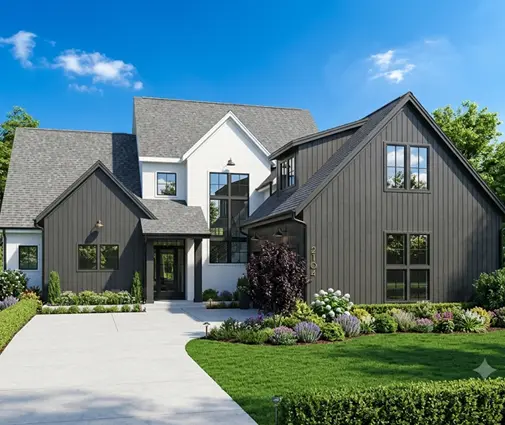
If you are still choosing a plan, let the roof be part of the decision. A clean two-storey shape like the 3625 sq ft modern farmhouse makes standing seam affordable, while a roof full of hips and dormers almost always points to shingles. Price both options on the actual roof plan, check local code and snow load with your designer, and choose the roof you will be happy to look at, and live under, for decades.