The site supervisor greets you at the door with a clipboard. The floors are freshly swept, the house smells of paint, and the moving truck is booked for next week. You have about an hour to walk through the home you have been waiting a year or more for. Most buyers spend that hour admiring the finishes. The ones who come out ahead spend it looking for problems and writing everything down.
The pre-delivery inspection, or PDI, is your formal walkthrough with the builder before possession. Here are the myths that trip people up most often, and what to do instead.
Myth 1: The PDI is a formality, so just sign and take the keys
Fact: The PDI form is a record of the condition of the home on the day you received it, and it carries weight later. In Ontario, the builder completes the PDI with you on a form tied to the Tarion warranty, and that record is what both sides look back on if a dispute comes up. In other provinces the paperwork differs. BC homes are covered under the Homeowner Protection Act framework, Alberta under its new home warranty legislation, and Quebec has its own process for formally accepting the building. The principle is the same everywhere: what is written down and signed on day one is much easier to claim than what you remember later. Read the form before you sign it. If an item is missing, ask for it to be added in your words, not a vague "touch-ups as needed."
Myth 2: If I miss something, the warranty will cover it anyway
Fact: Warranties cover defects in materials and workmanship, but scratches, chips and dents are another matter. Once you move in, it is hard to prove that a gouge in the countertop was not made by your movers, and builders generally will not fix cosmetic damage that was not noted at the PDI. Hidden defects that show up later are a different story. Those go through the warranty claim process. In Ontario that means the 30-Day Form within the first 30 days of possession and the Year-End Form in the last 30 days of the first year. Other provinces have their own deadlines. Put those dates in your calendar the day you get the keys, and check the current rules with your provincial warranty provider.
Myth 3: Every flaw is a deficiency the builder must fix
Fact: It helps to separate two kinds of items. One is cosmetic damage, which you must note now. The other is a deficiency, meaning something that does not work, does not meet code, or does not match your agreement of purchase and sale.
| Usually cosmetic (note at PDI) | Usually a deficiency (note and follow up) |
|---|---|
| Scratched window frame or appliance | Window that will not lock or has a fogged sealed unit |
| Paint drips, missed touch-ups | Water stains on drywall or ceiling |
| Chipped tile or vanity edge | Tile lippage you can trip on, loose or hollow tiles |
| Small dents in trim | Missing handrail, guard or smoke alarm |
| Wrong cabinet hardware colour | Upgrades you paid for that were not installed |
Bring your list of upgrades and your floor plan. A plan like this three-storey Craftsman with 5 bedrooms and 2186 sq ft has many rooms to cross-check. A wrong vanity or a missing basement rough-in is easy to miss when you are rushing.
Myth 4: Drywall and flooring are only about looks
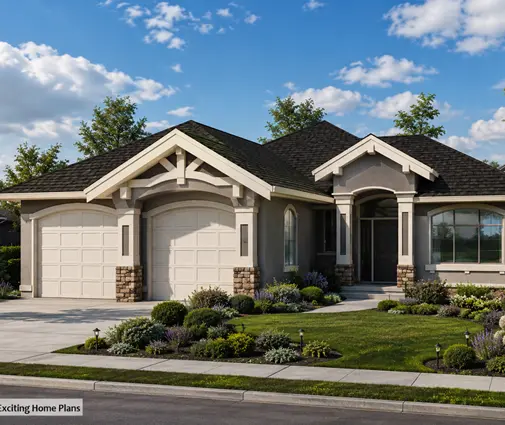
Fact: They often tell you about problems underneath. Go room by room and look along the walls with a flashlight held flat against the surface. Raking light shows seams, bulges and patches. Some nail pops in the first year are normal as wood framing dries, but cracks above door frames or long diagonal cracks deserve a note. On the floors, walk every room and listen for squeaks. Check hardwood and vinyl plank for gaps and raised edges, and look for cracked tiles. In bungalows such as this 4-bedroom one-storey plan of 1813 sq ft, check the main-floor subfloor over the basement especially carefully, since one floor carries most of the daily traffic.


Myth 5: Windows and doors are fine as long as they open
Fact: In a Canadian winter, a window that opens but does not seal costs you every month. Open, close and lock every window and every exterior door. Look for fog or moisture between the panes, which means a failed seal. Check for torn screens and missing weatherstripping, and look for daylight around closed doors. Check the door from the garage into the house too: it should close tightly and be properly weatherstripped, since it separates your living space from exhaust fumes. Homes with large glass areas, like this modern mountain bungalow with 4 bedrooms and 1588 sq ft, simply have more seals to inspect.
Myth 6: The mechanical room is the builder's business, not mine
Fact: You will live with these systems for decades, so ask the builder to show you each one running.
- Furnace or heat pump: confirm it starts and air comes out of every register. Ask where the filter is and how often to change it.
- HRV or ERV: make sure it is running, find the controls, and ask whether it was balanced and who did the commissioning. Locate the core and filters you will need to clean.
- Water heater: check for leaks at the fittings, and confirm whether it is owned or rented. That matters more than many buyers realize.
- Sump pump: pour a bucket of water into the pit and watch it switch on. Then trace where it discharges. It should drain well away from the foundation, not onto your neighbour's lot.
- Electrical panel: check that the circuits are labelled, and test the GFCI outlets in the bathrooms, kitchen and outside.
Ask for the manuals and warranty cards, and register the equipment yourself. A full basement is standard across most of the country, and it is where most of these systems live. Browse house plans with a basement and you will see how much of the home depends on that level staying dry.
Myth 7: You can't judge grading or exterior work in winter
Fact: You can see more than you think, and what you can't see should be written down. Look at whether the ground slopes away from the foundation, where the downspouts empty, and whether there are low spots near window wells. Check whether the siding and flashing are complete. Many closings between November and March leave sod, final grading, driveway paving or exterior paint until spring. Ask these questions and get the answers in writing:
- Which exterior items are outstanding, and by what date will each be finished?
- Who decides the final lot grading, and will the municipality or an engineer approve it?
- Is any part of my deposit or holdback tied to these seasonal items?
- How will I be notified before crews come onto the property?
- What should I avoid doing, such as building a fence or deck, until grading is approved?
On larger lots with long driveways, like the ones typical for this 5-bedroom one-storey home of 2299 sq ft with a 3-car garage, unfinished exterior work can be a long list. Treat each item as its own line on the form.
Myth 8: Any crack in the garage slab is a disaster
Fact: Hairline shrinkage cracks in concrete are common and usually harmless. Note them anyway, photograph them with a coin or tape measure for scale, and watch them through the first winter. What deserves more attention are cracks that widen, edges that sit at different heights, a slab that slopes toward the house instead of the overhead door, and spalling or flaking near the entrance. The same goes for an attached garage on a compact home, such as this Modern Farmhouse with 4 bedrooms, three storeys and a single-car garage. Check that the overhead door reverses when it hits an obstruction, and that the opener's safety sensors work.



Myth 9: You don't need to bring anything but a pen
Fact: Come prepared. Ask the builder ahead of time whether you can bring a relative or a third-party inspector. A professional PDI inspection usually costs a few hundred dollars, and many buyers find it worthwhile for a larger home like this two-storey Craftsman with 3 bedrooms and 2240 sq ft. Bring:
- A bright flashlight and a fully charged phone with a power bank
- Low-tack painter's tape to mark spots (ask permission first)
- An outlet tester, a small level and a tape measure
- A bucket for the sump pump test
- Your purchase agreement, upgrade list and floor plans
Photograph every item you write down, with one wide shot to show the room and one close-up. Then take a slow video walkthrough of the whole house. Keep the date stamps, and email yourself a copy of the signed PDI form the same day.
Before you sign
A good PDI is not about being difficult with your builder. It is about turning one hurried hour into a clear written record. Go slowly, check every room and system, separate the scratches from the real deficiencies, and get every seasonal promise in writing. Then mark your warranty deadlines in the calendar and enjoy the first night in your new home.