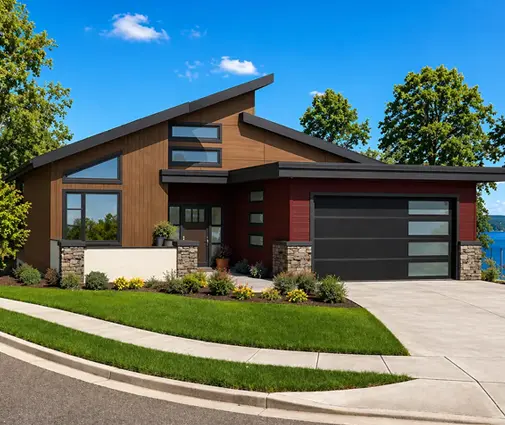
The builder's risk policy usually ends the day the house is substantially complete or the day you take possession, whichever the policy names. From that moment the home needs a regular homeowner's policy, and many first-time builders are surprised by the quote. Two families can build almost the same floor plan and pay very different premiums, because Canadian insurers price the lot, the basement, the heating and the finishes as much as the square footage.
The clearest way to see this is to put the two most common situations side by side: a house on a serviced suburban lot, with a hydrant on the street and municipal sewer, and the same house on a rural acreage with a well, a septic field and a volunteer fire department some distance away. Neither is "better". They are rated differently, and your plan can soften or sharpen those differences.
The comparison at a glance
| Rating factor | Serviced suburban lot | Rural acreage |
|---|---|---|
| Fire protection | Usually rated as protected: hydrant nearby, staffed hall close | Often semi-protected or unprotected, depending on hall distance and water supply |
| Basement water risk | Sewer backup is the main concern; backwater valve matters a lot | Groundwater and sump failure matter more; sewer backup is limited with septic |
| Overland flood | Depends on the mapped flood zone and lot grading | Depends on creeks, low ground and drainage; some rural addresses cannot get it |
| Wood stove or fireplace | Less common; still needs inspection paperwork | Very common; inspection and clearances checked closely |
| Replacement cost | Easier to estimate; trades close by | Often higher per sq ft because of distance, access and custom work |
| Overall premium tendency | Lower base, higher sensitivity to sewer backup claims in the area | Higher base, strongly affected by fire protection class |
Fire protection: hydrant and hall distance
This is the single biggest swing factor for rural builds. Insurers in Canada assign a fire protection grade to each address, based on how far the house is from a hydrant and from a responding fire hall, and on how well that department is equipped. A common rule of thumb is that a home within roughly 1,000 ft of a hydrant and within about 5 miles (8 km) of a hall counts as fully protected, but the exact cut-offs vary by insurer and by the municipality's own rating, so ask your broker how your address is graded before you finalize the lot.
On an acreage with no hydrant, the hall distance and road access take over. A long, unplowed driveway can be a problem in itself. Some rural municipalities have tanker shuttle arrangements that improve the grade; your broker or the fire department can tell you whether yours does. Inside the house, a monitored fire alarm connected to a central station often earns a discount, and so do interconnected smoke and CO alarms, which the building code already requires in new homes.
Verdict: the suburban lot wins clearly. On an acreage, check the fire protection grade before buying the land, not after the framing is up.
The basement: sump pumps and backwater valves
Because frost depth pushes most Canadian foundations well below grade, nearly every new house comes with a full basement, and water in that basement is the most frequent claim insurers pay. A finished lower level raises the stakes: drywall, flooring, a bathroom and a media room all have to be replaced after a backup.
In town, the threat is the municipal sewer surcharging during a heavy rain. A backwater valve on the main drain is now required in many new builds, and insurers look for it. In the country, the threat is groundwater, so the sump pump does the work. A battery backup or a water-powered secondary pump, a high-water alarm and a sump pit that discharges well away from the foundation all help the underwriter feel better about your lower level.
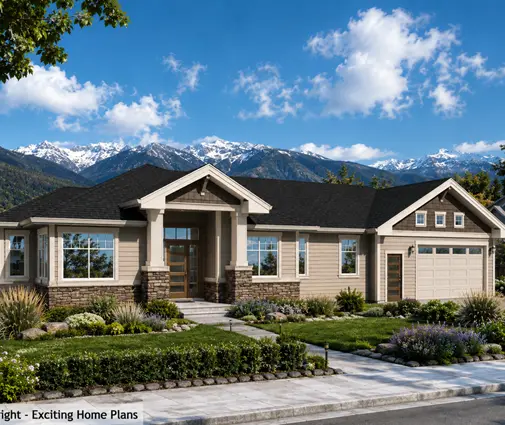
Modest bungalows are a good example of where this matters. A plan like this four-bedroom single-storey home fits a lot of living into about 1557 sq ft upstairs, and many owners later finish the basement below it for a rec room and guest rooms, effectively doubling the space an insurer has to rebuild after water damage. The same goes for a compact five-bedroom design where the extra bedrooms push family life downstairs. If you plan to finish later, rough in the backwater valve and the sump backup now. You can browse more house plans with a basement with this in mind.


Verdict: a draw, because both lots carry basement risk; the house with the right valve, pump and alarm wins on either.
Overland flood and sewer backup endorsements
A standard Canadian home policy does not cover water that enters from the surface, such as spring runoff or a river overflowing. That is the overland water endorsement, offered by most major insurers since the mid-2010s, and its price is driven by flood mapping at the address. Sewer backup coverage is a separate endorsement, often with its own sublimit, for example $25,000 to $50,000 or more.
On a suburban lot with municipal sewer, sewer backup coverage is close to essential, and insurers price it partly on the claims history of the neighbourhood. On an acreage with a septic system, the backup risk is smaller but not zero, while overland flood can be either cheap or unavailable, depending on whether there is a creek or low ground nearby. Lot grading shown on your site plan, with ground sloping away from the foundation, is a fair argument in either case.
Verdict: the acreage often has an edge on sewer backup, but the suburban lot is easier to insure for overland flood. Read both endorsements and their limits line by line.
Wood stoves, fireplaces and other solid-fuel heat
A wood stove is a natural choice on an acreage, especially as backup heat for an all-electric house with a heat pump. Insurers in Canada generally ask for a WETT inspection report confirming that the appliance, chimney and clearances were installed correctly, and a certified, modern low-emission unit is easier to place than an older stove. Some insurers add a surcharge for solid-fuel heat, others only want the paperwork, and a few will decline a wood stove used as the primary heat source.
Lodge-style plans with big hearths make this a real design question. A sprawling one-level mountain home of over 4,500 sq ft, for instance, suits a large masonry fireplace, but if you also want a stove in the basement, plan each chimney run, hearth extension and clearance so that the inspector signs off the first time. A gas insert or a sealed gas fireplace is usually rated more gently than open wood burning.
Verdict: the suburban lot is simpler to insure, but a properly installed and inspected stove is rarely a deal-breaker on an acreage.
Replacement cost and custom finishes
A homeowner's policy should cover the full cost of rebuilding the house, not its market value, and the insurer estimates that cost per square foot from the size, the number of storeys, the roof, the exterior cladding and the interior finish level. In 2025, rebuild estimates for new wood-frame houses in many parts of Canada fell roughly between $300 and $500 per sq ft, and well above that for high-end custom work, but the range depends heavily on the province and the trade market, so treat it as an order of magnitude only.
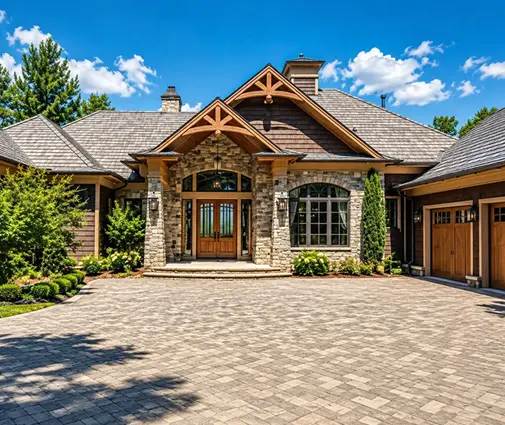
Large homes on rural acreages often land at the top of that range: crews have to travel, materials take longer to reach the site, and custom millwork or stone is costly to reproduce. This lake-country design with more than 5,400 sq ft and a three-car garage is the kind of home where a guaranteed replacement cost endorsement, or at least a generous extended limit, is worth asking about. A smaller plan such as this three-bedroom ranch on one floor is easier to estimate and less exposed to rebuild cost surprises. Larger homes in the mansion collection may also need an insurer that handles high-value properties.


Make sure the insurer's estimate reflects what you actually built. Quartz counters, engineered hardwood, triple-glazed windows, an HRV and a heat pump all raise the rebuild cost, and an underinsured house can leave you paying part of a claim yourself.
Verdict: the suburban lot wins on predictability; on an acreage, insure for a realistic custom rebuild figure and do not let the estimate default to a builder-grade house.
Who should choose what
- Families wanting the lowest premium should favour a serviced lot within the protected fire zone and a simple plan, such as a single-storey home with an unfinished or lightly finished basement.
- Buyers set on an acreage should check the fire protection grade and flood mapping before closing on the land, and budget for a higher base premium.
- Anyone finishing the basement should install a backwater valve, a backup sump pump and a water alarm, and buy sewer backup coverage with a limit that matches the finishes downstairs.
- Owners who want a wood stove should choose a certified appliance, follow the manufacturer's clearances in the plan and book the WETT inspection before move-in.
- Builders of large custom homes, like a two-storey family plan upgraded with premium finishes, should get a professional rebuild estimate rather than rely on a default figure.
Whichever lot you choose, gather these documents at handover; together they often lower the first quote:
- The occupancy permit or final inspection from the municipality.
- The new home warranty enrolment certificate, where your province requires one.
- The final plans and specifications, including the square footage of each level and the finish schedule.
- Receipts or the builder's confirmation for the backwater valve, sump pumps, backup power and water alarms.
- The WETT certificate for any wood stove or wood-burning fireplace.
- The monitoring contract for the fire and security alarm system.
- The electrical, plumbing and gas permits with their final sign-offs.
- The site plan showing lot grading, and any distances to the nearest hydrant or fire hall.
Rules, endorsements and discounts change, and they vary between provinces and insurers. Before you settle on a lot or finalize a plan, ask a broker for a sample quote on the actual address, and check the current permit and code requirements with your municipality or your designer.