Five per cent sounds small until you apply it to a house. On a custom build where $400,000 goes to lumber, concrete, windows and trades, the GST alone is $20,000. In Ontario and the Atlantic provinces, where HST applies, the tax on the same spending is closer to $52,000 to $60,000. When you buy from a developer, the builder usually handles the rebate paperwork and credits it on the purchase price. When you build on your own lot, you are the one who has to claim it, prove it and file it on time.
This guide covers the two federal rebates that matter for owner-built homes: the long-standing GST/HST new housing rebate for owner-built homes, and the First-Time Home Buyers' (FTHB) GST Rebate announced in 2025. It also covers how the Ontario provincial rebate fits in, and which receipts to keep from the day you break ground. The rules described here are as of 2025–2026. Tax rules change, so confirm the current forms and thresholds with the Canada Revenue Agency (CRA) or an accountant before you file.
Who counts as an owner-builder
For GST/HST purposes, you are an owner-builder if you build a new house, or have one built, on land you already own or lease, and you or a relation intend to live in it as your primary place of residence. You do not have to swing the hammer yourself. Hiring a general contractor to build on your lot still counts, and so does acting as your own general contractor and hiring the trades.
What does not count:
- a cottage or recreational property that will not be anyone's primary residence;
- a house built to rent out or sell (other rules apply);
- a house and lot bought together from a builder. In that case the builder usually claims the rebate for you through the purchase agreement.
The key date is when construction is substantially completed. The CRA generally treats this as 90% or more of the work being done. Your rebate deadline and the value test both hang on it, so note the date when the inspector signs off or you move in.
The owner-built GST/HST new housing rebate
This is the rebate that has existed for decades. It is claimed on form GST191 with the owner-built worksheet GST191-WS.
How much it is worth
The federal portion refunds 36% of the GST, or of the federal 5% part of the HST, that you paid on building materials and construction services. It is capped at $6,300. The cap is the problem:
- the full rebate applies only if the fair market value of the finished home, including the land, is under $350,000;
- between $350,000 and $450,000 it shrinks gradually;
- at $450,000 or more, there is no federal rebate at all.
These thresholds have not been raised in years. As a result, most new detached homes in Canadian cities and suburbs no longer qualify for the federal portion. A modest house on cheap rural land can still get under the line, but it is the exception.
The Ontario portion
Ontario's new housing rebate is much more generous. It refunds 75% of the provincial 8% part of the HST, up to $24,000, and it has no upper value limit. The maximum is reached at roughly $400,000 of taxable spending. Owner-builders in Ontario claim it on the same application as the federal rebate. Other provinces have their own rules, and some have none for owner-built homes, so check with your provincial finance ministry. British Columbia, for example, charges PST rather than HST, and the federal GST rebate is the only one that applies to most of your costs there.
The First-Time Home Buyers' GST Rebate
Announced by the federal government in 2025, the FTHB rebate removes up to the full GST on a new home for first-time buyers. It explicitly covers people who build their own home or hire someone to build it. Check the CRA for the current form and the final legislated wording, but the announced design works like this:
- it covers up to 100% of the GST, or the federal part of HST, to a maximum of $50,000;
- the full amount applies to homes valued up to $1 million, and it phases out in a straight line to zero at $1.5 million;
- for owner-built homes, construction must begin on or after May 27, 2025 and before 2031, and the home must be substantially completed before 2036;
- it does not touch the provincial part of the HST. Ontario has announced its own first-time buyer relief, so check whether you qualify there too.
Who is a first-time buyer
Under the announced rules, you must be at least 18 and a Canadian citizen or permanent resident. You must not have lived in a home that you, or your spouse or common-law partner, owned in the current year or the four previous calendar years. The rebate can be claimed once in a lifetime, and you or a relation must be the first to live in the home as a primary residence.
You claim one federal rebate on the same tax, not both. For a first-time owner-builder, the FTHB rebate will almost always be worth far more than the old $6,300 maximum.
Worked examples in CAD
The figures below are illustrations based on 2025–2026 cost ranges, not quotes. Your own numbers depend on your region, your finishes and how much of the work is taxable.
A 1,700 sq ft bungalow in Alberta
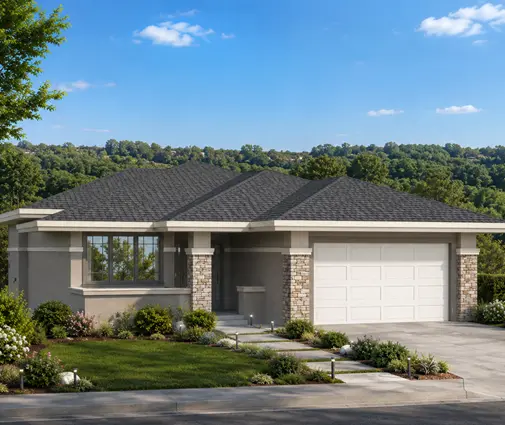
Take a single-storey home with a full basement, a common choice on the Prairies, where frost depth makes a basement nearly free space. An example is this 1,700 sq ft Craftsman bungalow with five bedrooms and a basement. The family buys a rural lot from a private seller for $150,000, with no GST on the land. Taxable materials and trades come to $380,000, so the GST paid is $19,000. The house and land are worth about $600,000 at completion.
Under the regular owner-built rebate, the value is over $450,000, so the federal rebate is $0. Alberta has no HST and no provincial rebate. If the owners are first-time buyers, the FTHB rebate refunds the full $19,000.
A 3,600 sq ft two-storey in Ontario
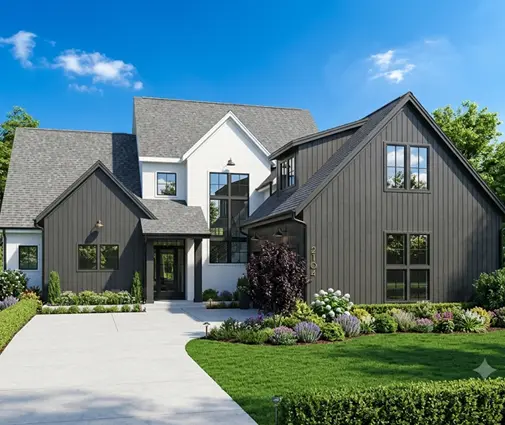
Now a larger family home, such as this 3,625 sq ft two-storey Modern Farmhouse with three bedrooms, built on a $350,000 suburban lot. Taxable construction spending is $900,000, so the HST paid is $117,000: $45,000 of federal part and $72,000 of provincial part. The finished house and land are worth about $1,350,000.
| Rebate | Bungalow, Alberta | Two-storey, Ontario |
|---|---|---|
| GST / federal part of HST paid | $19,000 | $45,000 |
| Provincial part of HST paid | none | $72,000 |
| Federal owner-built rebate | $0 (value over $450,000) | $0 (value over $450,000) |
| Ontario new housing rebate | not applicable | $24,000 |
| FTHB rebate (if first-time buyers) | about $19,000 | about $13,500 (30% left at $1.35M) |
| Total back, first-time buyers | about $19,000 | about $37,500 |
| Total back, not first-time | $0 | $24,000 |
In the Ontario case, the value sits 30% of the way up from the $1.35 million floor... more precisely, $150,000 below the $1.5 million cut-off, which leaves 30% of the federal amount. The lesson is plain. Under $1 million, a first-time buyer recovers essentially all the GST. Above it, every additional $50,000 of value costs about 10% of the federal rebate. Value here means market value of house plus land, not your cost, so an appraisal matters.


How house size and value change the result
Because the FTHB phase-out starts at $1 million, the design choices that push value up, such as square footage, the garage and high-end finishes, affect the rebate as well as the budget. A few practical points:
- A finished basement adds value and taxable cost. A plan like this 1,745 sq ft three-bedroom ranch with a basement keeps the footprint modest while leaving room to finish the lower level later. Work done after substantial completion is generally outside the rebate, so decide what to include up front. Browse more house plans with a basement or one-storey plans.
- Land is part of the value test. On an expensive lot near Toronto or Vancouver, a 2,000 sq ft house can cross $1 million on land alone. The same plan on an acreage two hours out may stay well under it.
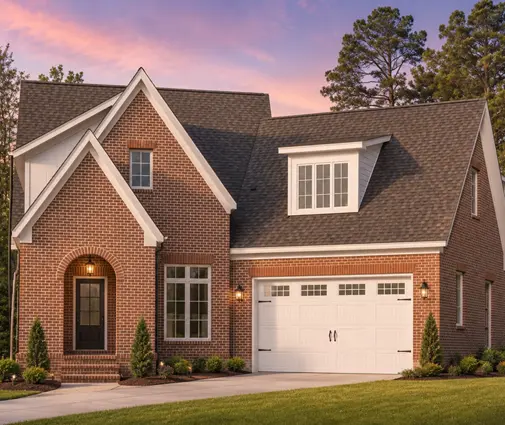
- Big homes lose the federal rebate quickly. A 3,847 sq ft four-bedroom Tudor two-storey or a 5,457 sq ft lake-style home with a basement will typically land above $1.5 million in most markets once land is included. At that point only the Ontario rebate, where it applies, is left. Compare options among two-storey house plans.
- A compact family layout can be the sweet spot. A 2,186 sq ft five-bedroom Craftsman with a basement gives a large family space while keeping the finished value within reach of the full first-time rebate in many regions.

Receipts and records to keep during the build
With an owner-built claim, you must be able to back up every dollar of tax you claim. Start a folder, physical or digital, before the excavator arrives.
- Every invoice showing GST/HST. It should show the supplier's name, date, amount, the tax charged and the supplier's GST/HST registration number. A total without the tax broken out is a weak receipt.
- Contracts with your general contractor and trades, plus proof of payment such as bank statements or cancelled cheques.
- The land purchase documents, including whether GST/HST was charged on the lot.
- The building permit and the occupancy or final inspection date, which support your substantial completion date.
- An appraisal of house and land at completion, to support the fair market value you report.
Some costs usually do not count. Your own labour carries no GST. Purchases from private sellers who are not registered carry no tax to recover. Municipal permit and development fees are generally not taxable. Loose furniture and freestanding appliances are typically excluded, while built-in items that become part of the house usually qualify. When in doubt, keep the receipt and ask.
Deadlines after completion
For owner-built homes, the application is generally due within two years after construction is substantially completed. Late filing can cost you the whole rebate, and an owner-builder has no builder to remind them. Good practice is to assemble the claim within a few months of moving in, while invoices are easy to find. Confirm the deadline that applies to the FTHB rebate when you file, as its forms and procedures are newer.
FAQ
Can I claim the rebate if I act as my own general contractor?
Yes. Owner-built rebates cover both hiring a builder and managing the trades yourself, as long as the home will be your or a relation's primary residence. You claim the tax you actually paid on materials and services, not on your own time.
Does GST on the land count?
Often there is none. A lot bought from a private individual is usually exempt. If you bought land from a developer and paid GST/HST on it, the treatment differs between the rebates, so ask the CRA or an accountant before you include it.
Can I get both the FTHB rebate and the regular federal rebate?
No, not on the same tax. A first-time owner-builder claims the FTHB rebate, which is far larger. In Ontario, the provincial rebate is separate and can be claimed alongside it.
What if the house is worth more than $1.5 million?
No federal rebate applies, under either program. In Ontario you can still claim up to $24,000 of the provincial part. Elsewhere, check whether your province offers anything for owner-built homes.