Ask a Canadian who just moved into a new house what surprised them most, and the answer is rarely the mortgage. It's the tax bill from the municipality, the insurance renewal, and the first January hydro bill. Running costs follow a house for decades, and many of them are fixed at the drawing stage. Comparing Canada with the United States, Germany and Poland shows which of our costs are unavoidable and which ones a well-chosen plan can shrink.
The figures below are rough 2025 ranges for a new 1,300 to 1,700 sq ft (about 120 to 160 m²) family home with a heat pump. Rates differ widely between municipalities, utilities and insurers, so check current numbers locally before you budget.
| Yearly cost (2025, approx.) | Canada (Ontario suburb), CAD | United States (suburb), USD | Germany, EUR | Poland, PLN |
|---|---|---|---|---|
| Heating and electricity | 2,400–3,600 | 1,800–3,000 | 900–1,800 (with solar) | 2,500–5,000 (with solar) |
| Property tax | 4,000–6,500 | 3,000–7,000 | 300–900 | 150–400 |
| Home insurance | 1,300–2,200 | 1,800–3,500 | 400–1,000 | 600–1,500 |
| Water and sewer | 900–1,400 | 700–1,200 | 700–1,200 | 1,500–3,000 |
| Waste | often in the tax bill | 200–500 | 200–400 | 1,000–2,500 |
| HOA or common fees | usually none | 0–3,600 | none | none |
Myth 1: Canada has the highest property taxes in the world
Fact: For a typical new house, Canadian and American property taxes are in the same range. US effective rates average around 1% of value, but they run from well under that to over 2% in some states. Germany's Grundsteuer, recalculated under the reform that took effect in 2025, usually comes to a few hundred euros a year for a single-family house. Poland taxes homes by usable floor area at roughly one złoty per square metre, so a family house there pays less in a year than many Canadians pay in a month. The difference is in what the tax pays for. Canadian municipalities fund roads, snow clearing, policing, libraries and often garbage pickup from the property tax bill. In Europe, much of that is paid through national taxes or separate fees.
Myth 2: A bigger finished basement is free living space
Fact: Frost depth makes a deep foundation necessary in most of Canada, so a full basement adds space at a low cost per square foot. Living in it is another matter. A finished basement raises your assessed value, which means a higher tax bill every year. It also adds conditioned volume that has to be heated, dehumidified and covered by insurance. German and Polish builders mostly skip basements and use slab foundations, and Polish tax is charged per m² of usable area, so extra space costs owners there very little. If you won't really use the basement, leave it unfinished or choose a smaller footprint.
Myth 3: A heat pump cuts the bills by the same amount everywhere
Fact: Savings depend on the price of electricity compared with gas. In Quebec and Manitoba, cheap hydroelectricity makes a cold-climate heat pump very economical. In Alberta, Saskatchewan or Nova Scotia, electricity costs more and the savings over a gas furnace are smaller. Germany pays among the highest electricity prices in Europe, often above EUR 0.30 per kWh in 2025. German houses are still efficient to run because their very tight envelopes need little heat. The same applies here: on a home built to the upper tiers of the BC Energy Step Code or beyond Ontario's SB-12 minimums, a heat pump has less work to do, and the brand of the unit matters far less than the walls around it.
Myth 4: A bungalow is always cheaper to run than a two-storey home
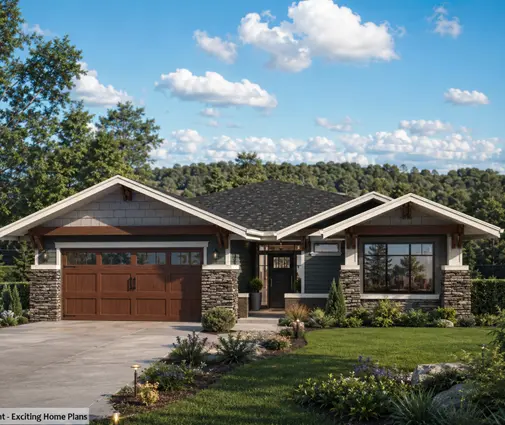
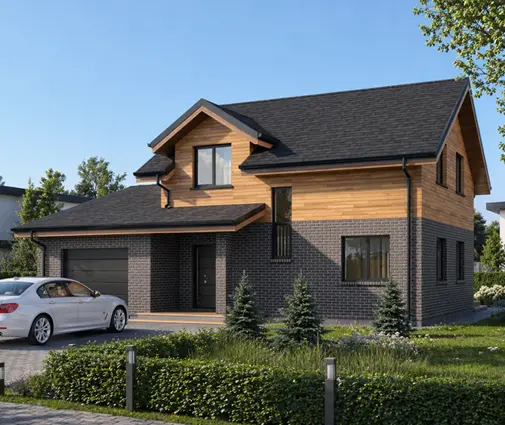
Fact: At equal floor area, a two-storey house has about half the roof and half the foundation of a bungalow. Those are the surfaces that lose the most heat in a Canadian winter. A compact plan such as this 1,330 sq ft two-storey cottage with three bedrooms or this 1,488 sq ft traditional two-storey has less exterior surface to insulate, shingle and maintain. Bungalows still have real advantages: no stairs, easy aging in place, and a simple roof for snow. A compact one like the 1,292 sq ft three-bedroom bungalow keeps the extra envelope small. German and Polish families often build a storey and a half for the same reason. For more options, see two-storey house plans and one-storey plans.


Myth 5: Solar panels wipe out the electricity bill in Canada
Fact: Rooftop solar in Canada produces most of its power from April to September, when heating demand is lowest. Net metering, available in most provinces, lets you bank summer credits against winter bills, but the rules and credit values differ by province and utility. Over a year, a well-sized system can offset a large share of the electricity used. It rarely covers January. Poland and Germany have moved to less generous net-billing schemes, which pushes owners to use their own solar power during the day. Wherever you build, a south-facing roof plane free of dormers and valleys is the cheapest way to keep the option open. Even if you install panels later, plan the roof for them now.
Myth 6: Home insurance is a small fixed line in the budget
Fact: Premiums have been rising across North America as claims for hail, wildfire, flooding and sewer backup grow. Calgary hail and BC wildfire zones are known examples in Canada. In parts of the US, insurance now costs more than property tax. German owners increasingly add flood and natural-hazard coverage to their building insurance. Your design can lower the risk your insurer sees: impact-resistant roofing, a backwater valve and sump pump for the basement, fire-resistant cladding on rural acreages, and keeping the house out of low spots on the lot. Ask an insurer for a quote while the plan is still on paper.
Myth 7: HOA fees are an American problem
Fact: Homeowners' associations are common in new US subdivisions, and fees can range from modest to several hundred dollars a month. They are rare for detached houses in Germany and Poland. Canada is not completely free of them. Some newer Ontario developments use common-element condominium arrangements, and they come with monthly fees for shared roads or amenities. Check the status of the lot before you buy it, because such a fee can add more to your yearly costs than a better heat pump would save.
Myth 8: Water and garbage are too small to matter
Fact: In most Canadian cities, water and sewer are metered and billed separately, often CAD 900 to 1,400 a year for a family. On an acreage you pay for a well and septic system instead, plus septic pumping every few years. Many German municipalities charge a separate stormwater fee based on paved and roofed area. Polish households pay a monthly waste fee, usually per person or per household. One lesson applies everywhere: efficient fixtures, a modest lawn, and less paving cost little at design time and save money every year.


Myth 9: Running costs depend on the house, not the plan
Fact: Most of these costs are decided before construction starts. They depend on floor area, the shape of the footprint, the number of storeys, window orientation, the insulation level, and whether the basement is finished. Compare a sprawling 1,706 sq ft one-storey ranch with the 1,583 sq ft four-bedroom two-storey: the floor areas are similar, but the roof, foundation and assessed value are not. Many Canadian families find a sweet spot in the 1,500 to 2,000 sq ft range, with simple rooflines and a well-insulated envelope. A compact design such as the 1,577 sq ft Craftsman bungalow also works well for downsizers.
What this means for building in Canada
Canadians will never pay Polish property tax or German insurance rates. Our municipal services are funded differently, our winters are longer, and our basements are deeper. We can still borrow the European habits: compact footprints, airtight walls, roofs planned for solar, and no space that has to be heated without being used. Choose the size and shape of the house carefully, check local tax rates and insurance quotes before you buy the lot, and ask your designer or energy advisor how the plan performs under your province's code. These decisions affect your costs for as long as you own the house.