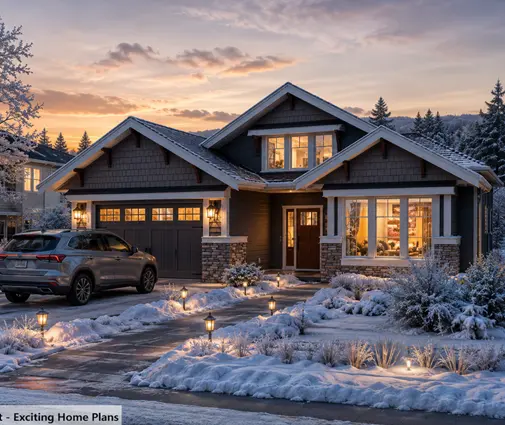
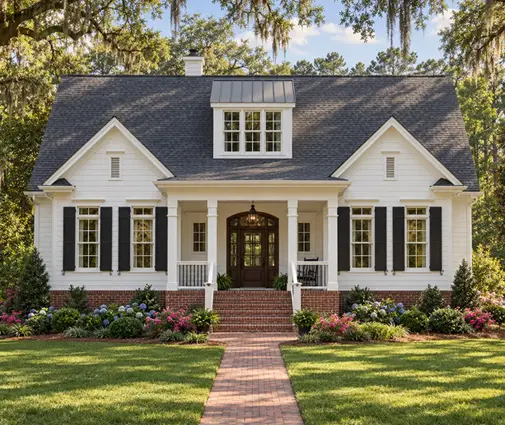
You ran the conduit to the attic, left room in the electrical panel and asked the framer for a clear, unbroken roof slope. Now comes the real question: will rooftop solar actually pay off on your new home in Canada, or is it a nice idea that never earns back its cost? Much of what neighbours, forums and sales pitches say about solar here is out of date or simply wrong. Below are seven common myths, and what is actually true for a family building in 2026.
Myth 1: Canada is too cold and too dark for solar to make sense
Fact: Cold is not the problem; panels are more efficient at low temperatures. What matters is annual sunshine, and much of southern Canada gets more of it than people assume. As a rough guide, a well-placed system in Canada produces about 1,000 to 1,400 kWh per year for every kW of panels. The Prairies, especially southern Alberta and Saskatchewan, sit at the top of that range; coastal BC and parts of the Maritimes sit closer to the bottom. Winter output is low everywhere, but long summer days make up for it over the year. Solar here is an annual game, not a monthly one, which is exactly why the billing rules in your province matter so much.
Myth 2: Snow covers the panels and makes them useless half the year
Fact: Snow does cost some production, but far less than most people fear. December and January are the darkest months anyway, so a few weeks of covered panels removes only a small slice of the yearly total, often estimated at a few percent in snowy regions. Pitch is your friend: on a roof of about 6/12 or steeper, snow tends to slide off the dark glass within a day or two of sunshine. Never climb onto a snowy roof to clear panels. Do think about where that sliding snow lands: keep panels away from the edge above entrances, decks and walkways, and plan snow guards below the array if your roof has a door underneath. Your structural design must also account for the panels plus the snow load set by the building code for your area, which a new build handles easily when it is planned from the start.
Myth 3: Bigger is better, so cover the whole roof
Fact: Size the system to your consumption, not to the roof. Start with the expected annual use of the house in kWh, then divide by the local yield per kW. A new, well-insulated all-electric home of 1,500 to 2,000 sq ft with a heat pump, HRV, induction cooking and an electric water heater might use somewhere around 12,000 to 18,000 kWh a year, depending heavily on the climate zone, the envelope and whether you charge an electric car. Example: 14,000 kWh a year divided by 1,200 kWh per kW gives roughly a 12 kW system. In most provinces, producing far more than you use earns little or nothing for the surplus, so an oversized array only stretches your payback. Ask your designer or energy advisor for a modelled consumption figure before you request quotes.
Myth 4: Solar is still far too expensive
Fact: Prices have dropped a lot over the past decade. In 2026, a typical residential installation in Canada costs roughly $2,500 to $3,500 per kW installed, before any incentives, with larger systems and simple roofs at the low end. A 10 kW system therefore lands somewhere around $25,000 to $35,000. Payback periods commonly fall in the range of 10 to 15 years, shorter where electricity is expensive and sunshine is strong, longer where power is cheap. A new build has a real advantage: no retrofit of the electrical service, wiring routed during framing, and a roof designed for the load. Federal and provincial incentives and green loans have changed several times in recent years, so check what is open in your province at the moment you sign, not what a friend received two years ago.
Myth 5: Net metering works the same way in every province
Fact: It does not, and this single point can make or break your payback. Rules change, so always confirm the current terms with your utility, but the broad picture in 2026 looks like this:
| Province | How exported power is credited (general approach) |
|---|---|
| Ontario | Net metering: exported kWh offset the electricity you draw, with surplus credits carried forward for up to 12 months. |
| Alberta | Micro-generation: exports are credited at your retailer's energy rate; some retailers offer higher summer export rates, so the plan you choose matters. |
| British Columbia | Net metering with BC Hydro: credits at the retail rate, with any yearly surplus paid out at a lower rate. |
| Saskatchewan | SaskPower credits exports at a rate below retail, so self-consumption is worth more than exporting. |
| Nova Scotia | Net metering with Nova Scotia Power: exports offset consumption over the billing cycle and year. |
| Quebec | Hydro-Québec offers a self-generation option with credits, but very low electricity rates mean long paybacks. |
Other provinces and the territories have their own programs, often with caps on system size, typically tied to your annual consumption. Where export credits are below retail, a smaller system matched to daytime use, or a battery, makes more sense than a large array.
Myth 6: Any roof works as long as it faces south
Fact: South is ideal, but east and west slopes still produce roughly 80 to 90 percent of a south-facing roof in most of Canada, and a split east-west array spreads production across the day. Pitch matters less than people think: anything from about 4/12 to 9/12 performs well, with steeper pitches helping in snow. What really limits the system is usable area. A simple gable roof with one long slope facing the sun gives the largest uninterrupted surface. A hip roof breaks the same footprint into four smaller triangles and trapezoids, and fire-code setbacks from ridges and edges eat into each one. Valleys, dormers, chimneys and plumbing vents all steal panel spots, so group vents on the north slope at the design stage. Shade from mature trees on an acreage or a taller neighbour on a suburban lot can cut output more than a less-than-perfect orientation.
Myth 7: A bungalow roof cannot power an all-electric house with a heat pump
Fact: Often it can, and a single-storey home is actually well placed for it: the roof is large compared with the living space, and there is no second floor using electricity above a small roof. Take a modern panel of about 400 W covering roughly 21 sq ft. A bungalow with a 1,700 sq ft footprint and a gable roof has close to 1,000 sq ft on each main slope; after setbacks, 28 to 35 panels on the sunny side is realistic, or about 11 to 14 kW. In much of southern Ontario and the Prairies, that is enough to offset the yearly needs of a tight, all-electric home. A plan such as this 3-bedroom modern farmhouse ranch of 1706 sq ft or this Craftsman bungalow of 1899 sq ft with a basement shows the kind of wide, simple footprint that leaves room for a serious array. A full basement adds heated volume but not roof area, so a strong envelope matters even more there.


Mid-size layouts work too. This 4-bedroom Prairie-style home of 1655 sq ft and this modern mountain bungalow of 1492 sq ft with 5 bedrooms keep a compact, efficient shape on one level. A larger plan like this 4-bedroom modern farmhouse of 2742 sq ft uses more energy but also offers a bigger roof. At the small end, a 975 sq ft two-bedroom cottage needs only a modest system, which can make solar realistic for a lakeside cabin-style home or a downsizing project.
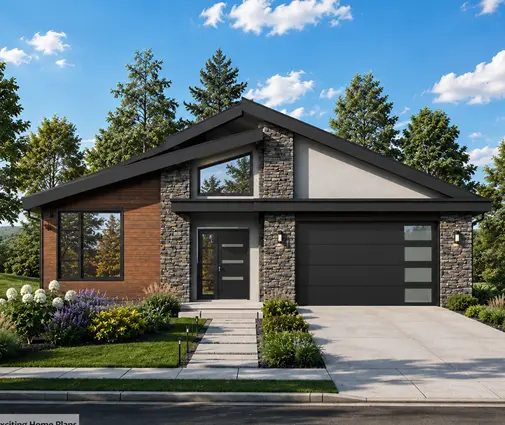

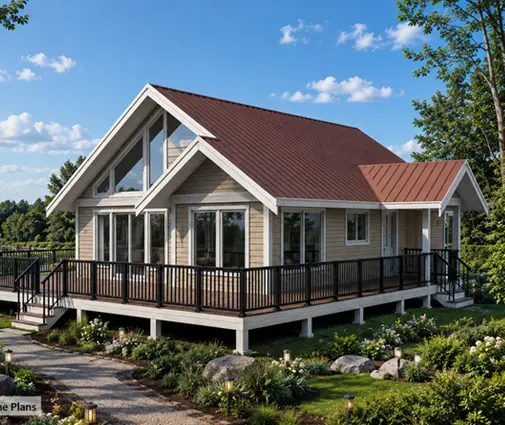
Conclusion: decide with numbers, not hopes
Rooftop solar on a new Canadian home pays off when three things line up: a system sized to your real annual consumption, a roof with enough clear, sunny area, and a provincial crediting scheme that values what you export. Get a modelled energy estimate for the house, read your utility's current net metering or micro-generation terms, and collect at least two quotes priced per kW. If you are still choosing a design, browse one-storey house plans with simple rooflines, and ask your architect or designer to keep the sunniest slope free of vents and dormers. That small decision on paper can be worth thousands of kilowatt-hours a year.