It is January, minus 25 outside, and someone fires up the new 900 CFM island hood to sear steaks. Within a minute the wood stove in the family room puffs smoke into the house, the basement door whistles, and the hood sounds like a jet engine while barely pulling anything. Nothing is broken. The house is simply too airtight for the fan that was put in it.
New Canadian homes are built far tighter than homes from twenty years ago, and airtightness testing is now standard on many energy-efficient builds. That is good for heating bills, but it means every cubic foot of air your hood pushes outside has to come back in somewhere. If you do not plan where, the house decides for you: down a chimney, up through a basement slab, or through the flue of a gas water heater. This article breaks down what a properly planned kitchen exhaust costs, which items take the biggest share, and where you can save.
The cost items at a glance
The ranges below are typical installed prices in Canada in 2025 and 2026 for a new build. They vary a lot between regions and trades, so treat them as a budget guide, not a quote.
| Item | Typical range (CAD, installed) | Notes |
|---|---|---|
| Wall-mount chimney hood, 300 to 600 CFM | $500 to $2,500 | Most common choice for a cooktop on an exterior wall |
| Island hood, 400 to 900 CFM | $1,500 to $6,000+ | Needs more airflow and a wider canopy |
| Hood insert for a custom cabinet | $600 to $3,000 | Plus the cost of the millwork around it |
| Recirculating hood with carbon filters | $300 to $2,000 | Filters roughly $50 to $150 a year |
| Rigid exhaust duct, 6 to 10 inch, with wall or roof cap | $400 to $1,500 | More for long runs, roof penetrations or insulated duct |
| Passive make-up air duct with motorized damper, interlocked | $600 to $1,800 | Damper opens when the hood runs |
| Make-up air tied into a forced-air system | $1,200 to $3,500 | Uses the furnace or air handler to temper the air |
| Dedicated tempered make-up air unit with heater | $3,000 to $8,000+ | Heats incoming air before it reaches the kitchen |
| Dedicated electrical circuit for heater or hood | $250 to $800 | Depends on panel capacity |
| Ventilation design and depressurization check | $300 to $1,000 | Often bundled with the HVAC design |
A modest wall hood with a short duct can come in under $1,500 all in. A big island hood with heated make-up air can pass $12,000. The difference is almost entirely driven by one number: the airflow you choose.
The biggest item: how many CFM you actually need
Hood marketing pushes airflow, but capture matters more than raw power. A canopy that is wide enough and hung at the right height catches smoke at a much lower fan speed. A few rules of thumb designers use:
- For an electric or induction cooktop against a wall, about 100 CFM per linear foot of cooktop width is usually plenty, so 250 to 400 CFM for a standard 30 or 36 inch unit.
- An island hood has no wall to guide the plume, so plan roughly 50 percent more airflow and a canopy at least 3 inches wider than the cooktop on each side.
- Gas ranges are often sized at about 100 CFM per 10,000 BTU of burner output, which is how pro-style gas ranges end up with 600 to 1,200 CFM hoods.
The make-up air question starts above roughly 400 CFM. That figure appears in many North American codes and manufacturer manuals as the point where replacement air is expected. In Canada, the national and provincial codes approach it through limits on house depressurization, and the rules tighten when there is a fireplace, wood stove or naturally vented gas appliance. Requirements differ between provinces and even municipalities, so confirm with your HVAC designer and the building department before you buy the hood.
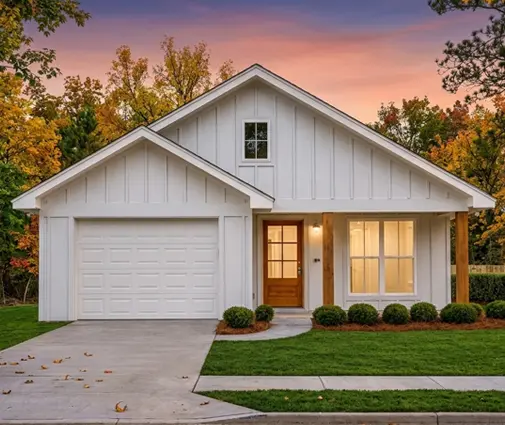
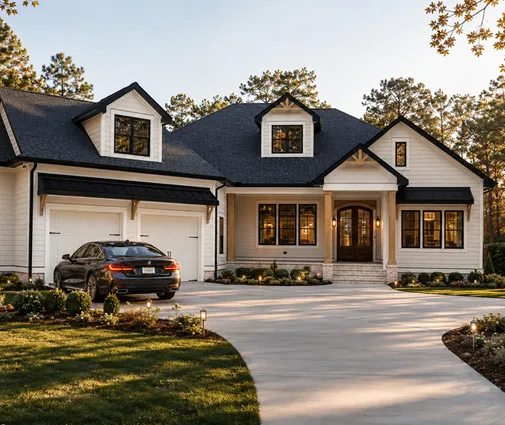
Layout shapes the decision too. A compact single-storey home like this modern one-level plan with a clean, minimalist kitchen can often vent a wall hood straight out with a short run, keeping it under the threshold. A family farmhouse kitchen with a long island, as in this two-storey farmhouse built around a big gathering kitchen, tends to push buyers toward a larger island canopy, and the costs climb with it.
The second biggest item: make-up air, from damper to heated supply
Once you go past the threshold, there are three realistic ways to bring air back in.
Passive duct with a motorized damper
An insulated duct from outside ends near the kitchen or in a mechanical room, with a damper that opens only when the hood runs. It is the cheapest option, but in a Canadian winter it dumps air at outdoor temperature into the house. Near the cooktop that is uncomfortable; dropped into a basement mechanical room, it is more tolerable and can be mixed with house air.
Make-up air into the forced-air system
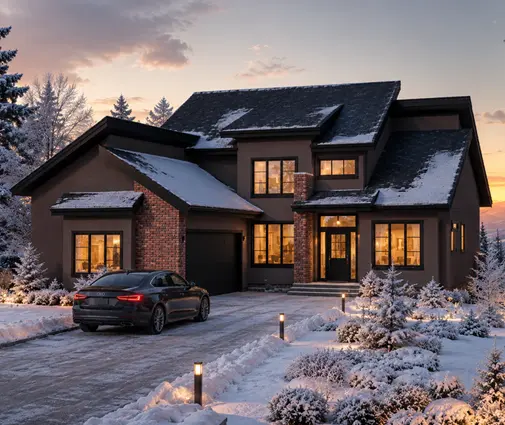
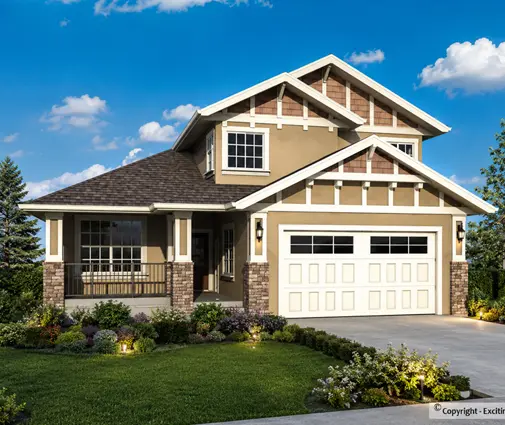
If the house has a furnace or air handler, the outdoor air can be ducted into its return so it is warmed and spread before it reaches anyone. The fan must be interlocked to run with the hood. This middle option suits most two-storey homes with a full basement, such as this compact Craftsman with a finished basement level, where the mechanical room sits right below the kitchen.
Tempered make-up air unit
A dedicated unit with its own electric or hydronic heater brings air to near room temperature before releasing it. It is the most comfortable and the most expensive, and it uses real energy on cold days. It makes sense with very large hoods, all-electric homes without ductwork, or houses heated with ductless heat pumps.
Note that the HRV or ERV does not solve this. It is balanced by design, so it does not replace the air a hood removes, and a greasy kitchen exhaust must never be connected to it.
Why depressurization is a safety issue, not only a comfort one
When a hood pulls the house negative, air comes in through the easiest path. With a naturally vented water heater or a fireplace, that path can be the flue, carrying combustion gases inside. A basement under negative pressure also draws more soil gas through the slab and cracks, and in much of Canada that includes radon. A carbon monoxide alarm is required near sleeping areas, but the better fix is design: choose sealed, direct-vent or all-electric appliances, and the hood problem shrinks to a performance issue.
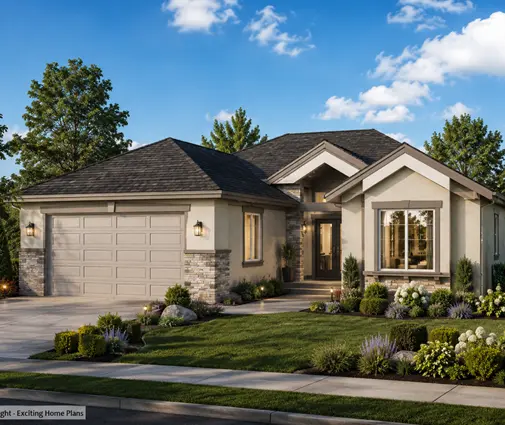
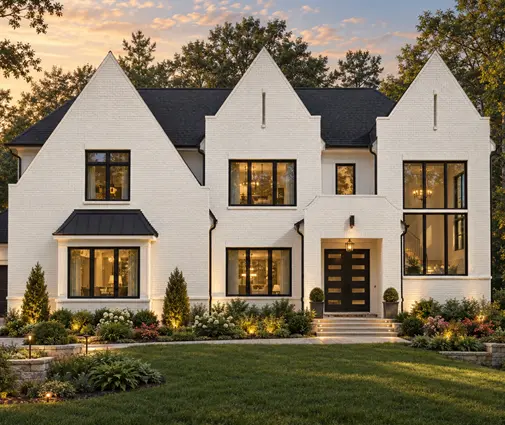
This matters most in large homes with several fuel-burning appliances. A house like this European estate with a full lower level may have a fireplace, a large range and a basement mechanical room all interacting, which is exactly where a proper pressure calculation pays for itself.
Spice kitchens and second kitchens
In many Canadian suburbs, especially for families who cook with a lot of heat and spice, a separate enclosed spice kitchen behind the main one has become a common request. It keeps strong smells and grease away from the open-plan living area, but it also means two hoods. If both can run at once, their airflow adds up for make-up air purposes. A practical approach is to give the spice kitchen the serious exhaust, with a powerful wall hood and short duct to the exterior, and keep the showpiece hood in the main kitchen modest. Browse plans with two kitchens with this in mind, and check that the second kitchen sits on an exterior wall.
Ducting: where good hoods quietly fail
A 600 CFM fan on a long, twisting duct may deliver half its rating. To get what you pay for:
- Use smooth rigid metal duct of the size the manufacturer specifies, typically 6 inch for smaller hoods and 8 to 10 inch for larger ones. No flexible foil duct.
- Keep the run as short and straight as possible; each elbow costs airflow.
- Seal the joints with foil tape and insulate any section that passes through unheated space to prevent condensation dripping back into the hood.
- Use a tight-closing backdraft damper at the exterior cap so cold air does not pour in when the hood is off.
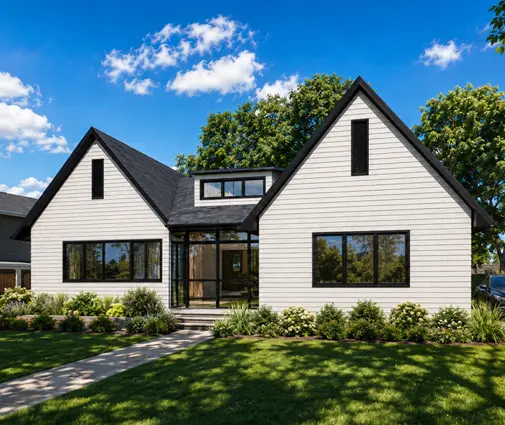
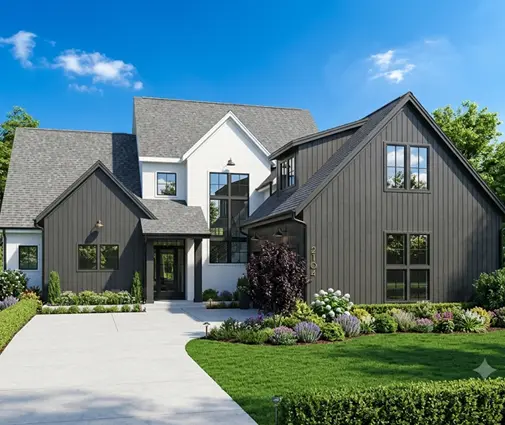
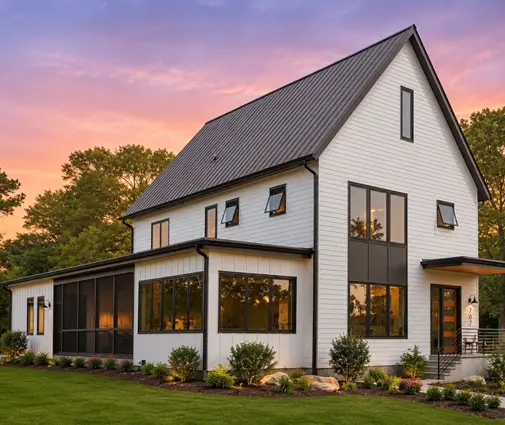
Island hoods are the hardest case because the duct has to travel through floor framing or a ceiling. In this modern farmhouse with a wide-open kitchen and great room, planning the joist direction and the duct path at the design stage costs nothing; fixing it after drywall costs a lot. The same goes for multi-level layouts such as this three-storey Scandinavian-style home, where a roof vent may be far above the kitchen and a side wall exit is usually the better route. If you like the look, our open concept plans are worth reviewing with the hood location in mind.
Recirculating hoods with induction cooktops
Induction produces no combustion gases, which takes away the main safety reason for big airflow. That has made recirculating hoods with carbon filters a popular way to avoid ducts and make-up air entirely. They catch grease and reduce odour, but they do not remove moisture or heat, and they capture fine particles less well than a ducted hood. In an airtight house that extra humidity can show up as condensation on windows in winter. A recirculating hood can work for a light-cooking household with a well-sized HRV; for regular frying and searing, a modest ducted hood of 300 to 400 CFM is usually the smarter buy.
How to save without cutting corners
- Size to the cooktop, not the brochure. Staying under the make-up air threshold can save several thousand dollars.
- Go electric with sealed appliances. Induction, a heat pump and a heat pump water heater remove the backdrafting risk.
- Put the range on an exterior wall. A short duct is cheaper, quieter and more effective.
- Pick a wider canopy over a stronger fan. Better capture lets you run lower speeds.
- Decide during design. Duct routes, damper locations and panel capacity are almost free on paper.
Summary
- Airtight new homes need a plan for every cubic foot of air a hood removes.
- Around 400 CFM is the common point where make-up air comes into play; check your provincial and municipal rules.
- Make-up air ranges from about $600 for a damper to $8,000 or more for a heated unit.
- Fireplaces and naturally vented gas appliances raise the safety stakes; sealed or electric appliances lower them.
- Short, rigid, sealed ducting matters as much as the fan.
- With induction, a modest ducted hood often beats both a huge fan and a recirculating one.