It is a February evening, minus fifteen outside, and a sixty-pound retriever has just come back from the ravine with slush between its toes and road salt on its belly. Where it walks next shows whether the house was planned for the family that actually lives in it. Most floor plans never show a dog or a cat, yet a few decisions made at the design stage cost little and save years of mopping. Below are the questions Canadian pet owners ask most often, with a look at how the same problems are solved in the United States, Germany, Poland and Romania.
What does a pet-friendly floor plan need, no matter where you build?
Five things: a dirty entrance away from the front door, a place to wash the animal, hard-wearing floors on its daily route, a fixed spot for food, water and a crate, and a safe, fenced way out to the yard. These ideas work in every country covered here; what changes is the climate, the size of the lot and the local rules.
In Canada, the climate decides the priorities. Snow, mud season and de-icing salt mean the entrance and the wash area matter more than anywhere else, and a house built to modern energy standards makes every hole in the envelope, including a pet door, a design decision rather than an afterthought.
Should the dog come in through the garage, the back door or the front?
Through a mudroom, ideally one reached from both the attached garage and the back yard. That gives you one zone for boots, leashes, towels and wet fur, and keeps the front hall clean for guests.
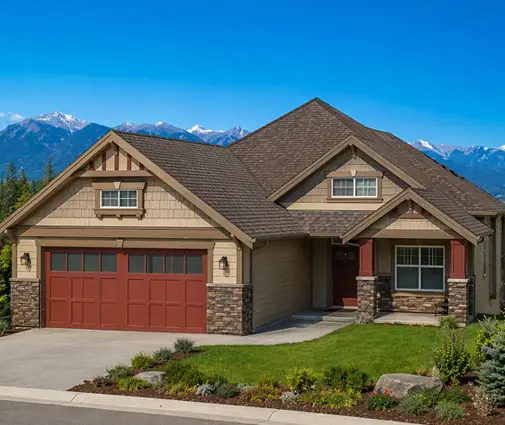
Many bungalows already have this sequence of garage, mudroom and kitchen. In this compact Craftsman bungalow the garage entry leads into a utility area before reaching the main living space, and that is exactly where a small dog-wash corner fits. If you are browsing, start with plans that have an attached garage and look for a laundry or mudroom right behind the garage door.
One caution specific to Canada: codes require the door between an attached garage and the house to be tight against exhaust gases, and in many cases to close by itself. Cutting a pet flap into it is usually not acceptable, so put the pet door on an exterior wall instead and confirm the details with your municipality.
Is a dog wash station worth it, and what does it cost in Canada?
For a medium or large dog in a snowy climate, yes: it is one of the few pet features owners say they use every week. A raised shower basin about waist height, a handheld sprayer, a tiled splash wall and a floor drain are enough.
As a rough guide for 2025, a simple tiled dog shower built during construction ran about $2,000 to $5,000 CAD, while a raised stainless or custom tiled station with its own hot-water line could reach $6,000 or more. Adding it later costs much more because of the plumbing. In a home with a full basement, the drain and supply lines are easy to run from below, which is another reason to plan the station over the basement rather than over a slab.
In the US, where many new homes sit on slabs in mild climates, owners often place a dog shower in the garage or outdoors instead. In Germany and Poland, compact homes more often use a deep shower tray in a ground-floor washroom.
Which floors stand up to claws, slush and road salt?
Porcelain tile and quality luxury vinyl plank are the safest choices for the entrance, mudroom and kitchen. Tile shrugs off salt and water; vinyl is warmer, quieter and less slippery for older dogs. Soft site-finished hardwood scratches quickly, and carpet in the hallway holds both moisture and odour.
A Canadian upgrade worth considering is in-floor heating in the mudroom. It dries paws and boots, keeps the tile pleasant underfoot, and works well with a heat-pump or boiler system. Pick a matte, textured tile so a running dog does not slide into the wall.
Where do the bowls, the crate and the litter box go?
Bowls belong in a recessed niche in the kitchen or mudroom, out of the main walkway, ideally with a water-resistant floor and a backsplash. A crate fits well under a mudroom bench or in a nook beside the kitchen, where the dog can see the family without being underfoot.
For cats, the litter box needs a ventilated spot away from food: a cabinet in the laundry room with a cat-sized opening is a classic solution. The basement works too, provided the cat can always reach it. Since every Canadian house already has mechanical ventilation, ask your designer to put an exhaust point near the litter area.
Will a pet door ruin the energy performance of a Canadian house?
It does not have to, but a cheap single-flap door will leak air and frost up in January. Choose an insulated, double- or triple-flap model with a magnetic or locking seal, and set it in a wall rather than in a glass patio door.
This matters more where energy rules are stricter. Under BC's Energy Step Code, for example, the house is tested for air leakage, and a poorly sealed pet door can show up in the result. The simplest fix is to put the pet door in the mudroom, which can be closed off from the rest of the house, so any cold draft stays in one room. Germans building to passive-house standards face the same issue and often skip the pet door entirely in favour of a garden door with a sensor-controlled flap.
Why do so many dog owners choose a bungalow?
Because dogs age faster than mortgages. A twelve-year-old Labrador with sore hips struggles on stairs, and carrying it up to a bedroom every night gets old quickly. A single-storey plan keeps the bedrooms, kitchen, back door and yard on one level.
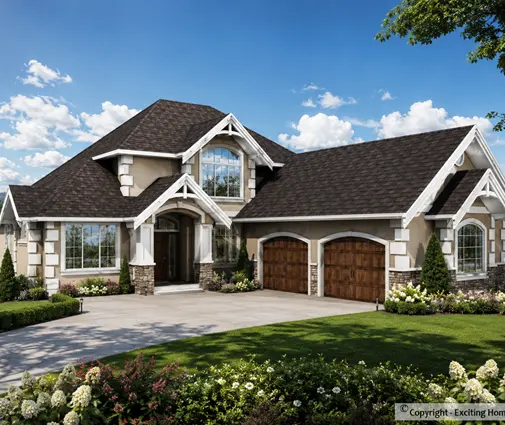
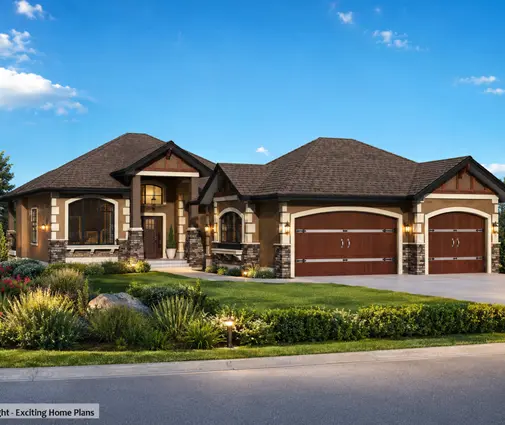
A Canadian bungalow can still have a full basement for storage and a rec room; just keep the daily routine of eating, sleeping and going outside on the main floor. This bungalow with a full basement keeps all three bedrooms on the main level, and a larger ranch-style home adds a fourth bedroom and room for a generous mudroom off the garage. For a smaller footprint, a cozy cottage of 1292 sq ft puts everything on one floor with a short path to the back door. You can browse more one-storey house plans with the same advantage.



How high can my fence be, and what does it cost?
In most Canadian municipalities the answer is roughly 6 to 6.5 feet in the back and side yards and much lower, often about 3 to 4 feet, in the front yard, but the exact numbers come from your local fence bylaw. Pools trigger separate, stricter fencing rules. Check with the municipality before you order materials.
In 2025, a pressure-treated wood privacy fence typically cost around $40 to $80 CAD per linear foot installed, chain-link about half that, and composite or ornamental metal considerably more. A typical suburban back yard might need 150 to 200 feet of fence. On an acreage, many families fence only a dog run of a quarter-acre or so near the house rather than the whole property. Whatever the material, bury the bottom edge or add a gravel strip if your dog digs.
Are there limits on how many pets I can keep?
Often, yes. Many Canadian cities cap the number of dogs and cats per household, and most require an annual dog licence; limits and fees differ from one municipality to the next, and rural areas are usually more relaxed. If you plan to foster or breed, read the bylaw before you buy the lot.
In the US, the extra layer is the homeowners' association: in many subdivisions the HOA can restrict fence materials and height, and sometimes pet numbers or breeds. In Canada, HOAs are less common in freehold neighbourhoods, but new subdivisions can carry builder covenants on fence style and colour, and condominium developments have their own pet rules. Ask for these documents before closing.
What do families in Germany, Poland and Romania do differently?
In Germany, owners pay a municipal dog tax, the Hundesteuer, every year; it commonly runs on the order of one to two hundred euros for a first dog in a city and much more for breeds classed as dangerous. Lots are small, and local development plans often limit fence and hedge heights, so many German gardens rely on lower fences combined with hedges.
In Poland, Lithuania and Latvia, families typically fence the entire plot as soon as they build, with solid posts and panels around 1.5 to 2 metres high; in Poland, fences up to about 2.2 metres generally need no permit, though local zoning plans can set their own limits. In Romania, on the suburban edges of cities where stray dogs still roam, families favour solid fences set on a concrete base so nothing can dig in or out, and the gate is planned as carefully as the house.
The lesson for Canadians: the fence is part of the house, not a later project. Budget for it in the construction loan, just as Polish and Romanian families do.
So what does this mean for my build in Canada?
Pick a plan with a mudroom between the garage and the kitchen, put a dog wash over the basement where plumbing is easy, use tile or vinyl along the pet's route, add an insulated pet door to the mudroom, and keep daily life on one floor. Then check two local documents: the fence bylaw and the animal control bylaw.
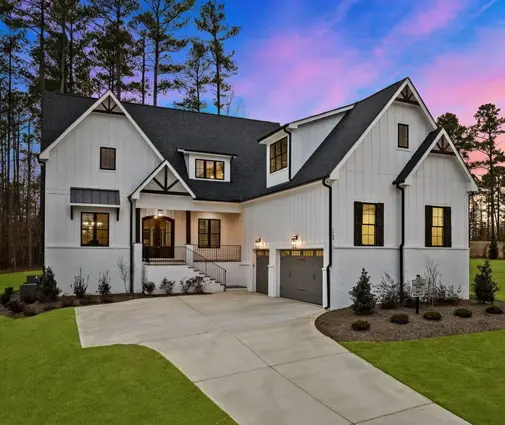
Plans with a full basement and a main-floor routine give you the most flexibility. This lake-style home fits five bedrooms on a single level over a basement, while a farmhouse ranch without a basement offers a long, wide footprint where a large mudroom and dog run fit naturally on an acreage.

Plan for the dog now, and that February evening will end with a quick rinse, a towel and a warm floor instead of a trail across the living room.