If the Americans are slapping heavy duties on Canadian lumber, shouldn't framing a house here be cheaper than ever? Many people planning a build in 2026 assume so, and many are surprised when the quotes come in. The trade dispute has moved prices, but not in one direction and not for every material. Some costs have eased at home, some have climbed, and a few swing from one month to the next.
This checklist walks you through the trade picture in five stages: understanding what changed, finding where your own budget is exposed, and making the moves that actually save money. The figures below are ranges, not promises. Prices differ between a yard in Kelowna and one in Moncton, so confirm every number with your local suppliers and builder.
Stage 1: Understand what has actually changed
- US duties on softwood: through 2025 the combined US anti-dumping and countervailing duties on most Canadian softwood rose to roughly a third of shipment value, and a separate US tariff on lumber was added on top in the fall. Rates are reviewed regularly, so check the current figure rather than relying on a headline you read last year.
- Canadian counter-tariffs: Ottawa put counter-tariffs on a long list of US goods in 2025, then removed most of them that September while keeping those on steel, aluminum and vehicles. Find out what is in force on the day you order.
- Mill curtailments: when US sales get harder, some BC and Quebec mills cut shifts or close. That shrinks supply at home too, which is why domestic lumber has not simply collapsed in price.
- The dollar: a weaker loonie makes anything priced in US dollars dearer, from engineered beams to faucets.
The short answer to "is lumber cheaper at home now?" is sometimes, a little. Lumber that can't easily go south is offered more keenly to Canadian buyers, but lost production keeps a floor under prices. In 2025 and 2026, dimensional framing lumber has mostly stayed well below the 2021 spike. Materials that depend on US steel or aluminum, or on cross-border supply chains, have generally risen the most.
Stage 2: Map how much of your budget is exposed
- Framing package: studs, joists, plates, trusses and sheathing typically make up somewhere around 10 to 20 percent of the hard construction cost of a wood-frame house. The share is higher for large, complex homes.
- OSB and plywood: panel prices react faster than studs. Ask your yard how much its sheathing price has moved over the last six months.
- Steel: rebar for footings and the basement, steel beams, posts, joist hangers, fasteners, flashing and metal roofing. US-origin steel carries the counter-tariff, so ask your supplier where it comes from.
- Windows and doors: many are built in Canada, but frames, hardware and glass components often cross the border at least once.
- Appliances and mechanical: heat pumps, HRVs, water heaters and kitchen appliances are largely imported. Their prices follow the dollar and whatever trade rules apply at the time.
Make a simple table with these five lines and put a dollar figure next to each from your builder's estimate. In most builds, the trade-sensitive items together come to somewhere between a quarter and a third of hard costs. A 10 percent swing on that portion moves a $500,000 build by roughly $12,000 to $17,000, which is enough to matter but not enough to panic over. Knowing where your exposure sits tells you which quotes to lock first.
Stage 3: Lock in the framing package
- Complete drawings first: a supplier can only give a firm price on a full takeoff, and that needs final plans with truss and joist layouts.
- Quote validity: ask how many days the price holds. Thirty days is common, and longer holds usually need a deposit.
- Escalation clause: read your builder contract for wording that passes material increases on to you, and negotiate a cap or a shared split.
- Delivery schedule: staged deliveries protect material from snow and theft, but confirm the locked price covers every drop.
- Two or three quotes: compare at least one independent yard with the big-box contractor desk. The gap is often larger than people expect.
Timing matters as much as the price. If your permit is likely to arrive in late winter, start the takeoff while the municipality is still reviewing, so you can lock a price the week the permit lands. Builders who order early and store under cover rarely regret it in a rising market. In a falling one, a short hold and a willingness to re-quote serves you better.
Stage 4: Choose Canadian-made where it pays
- Dimensional lumber and trusses: almost always Canadian already, but ask for local truss plants to save on freight.
- Windows: Canadian manufacturers make triple-glazed units suited to our climate. Compare their lead times as well as their prices.
- Steel products: ask specifically for Canadian-rolled rebar and beams, and get the origin written on the quote.
- Insulation and drywall: mostly produced here and largely outside the tariff fight, which makes them good places to keep your spec high.
- Appliances: check where each model is actually assembled, not where the brand is based.
Buying Canadian is not automatically cheaper, but it removes one layer of uncertainty. Remember that your R-values and energy targets come from the building code, not from the tariff schedule. Don't swap a better window for a cheaper import that just meets the minimum. Over a Canadian winter, you'll pay the difference back in heating bills.
Stage 5: Simplify the plan to cut material
- Compact footprint: a rectangle with few jogs uses less lumber, sheathing and foundation per square foot.
- Simple roof: a plain gable needs fewer truss types and less flashing than a roof with many valleys and hips.
- Two storeys over a basement: stacking floors shares one roof and one foundation between more living space.
- Standard spans: spans that dimensional joists can handle avoid steel beams and engineered lumber.
- Fewer, larger windows: each opening means headers, flashing and labour, so group glazing where you get the view.
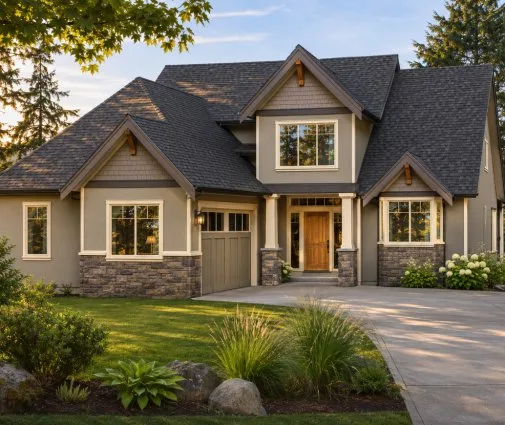
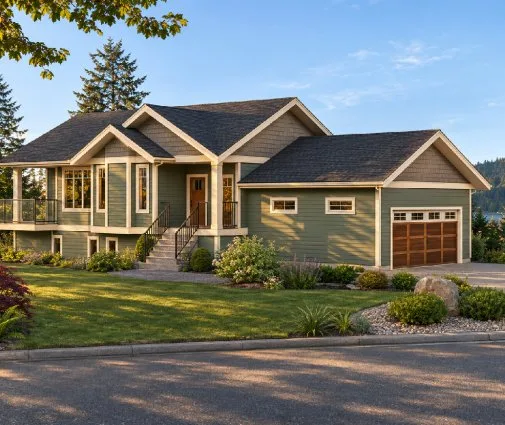
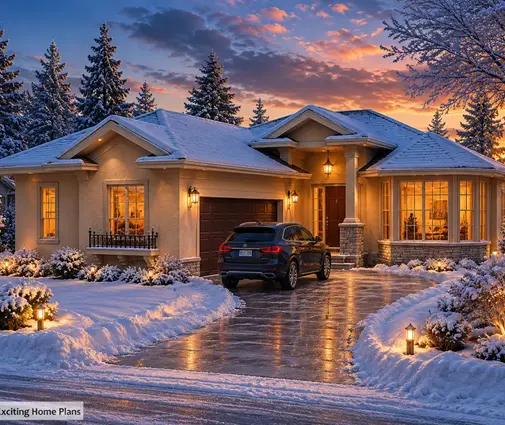
The plan you pick decides most of your material bill before any supplier gets involved. A tidy bungalow like this 1,661 sq ft one-storey with a full basement fits four bedrooms under one simple roof. The Prairie-style bungalow at 1,655 sq ft does the same with a low-pitched roof. If you need room for a big family, a 1,568 sq ft design with six bedrooms reaches that count by finishing the basement rather than spreading out on the lot. Compare those with a sprawling single-level home like this 4,167 sq ft mountain ranch: its long roofline and large foundation multiply exactly the materials that trade swings affect most. Browsing plans with a basement or the 1,500 to 2,000 sq ft range is a good place to start.
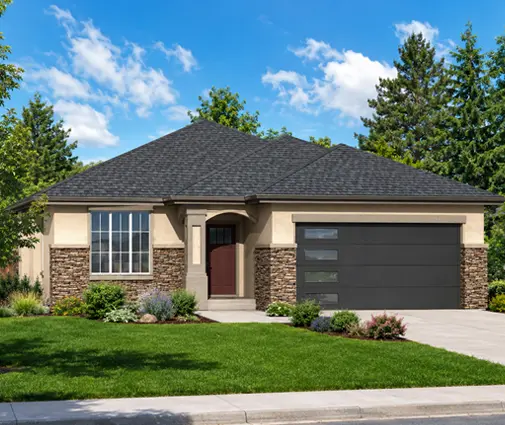
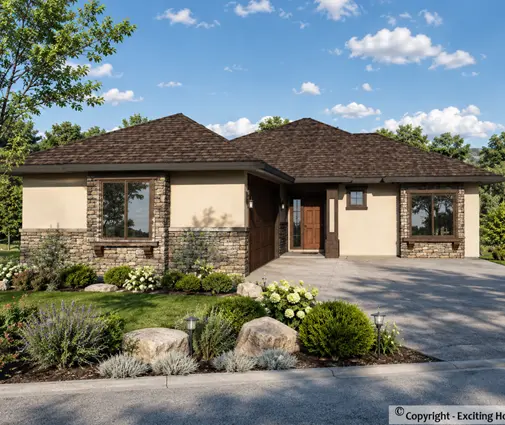
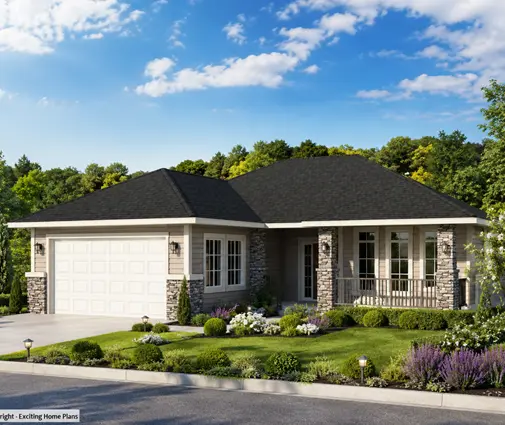
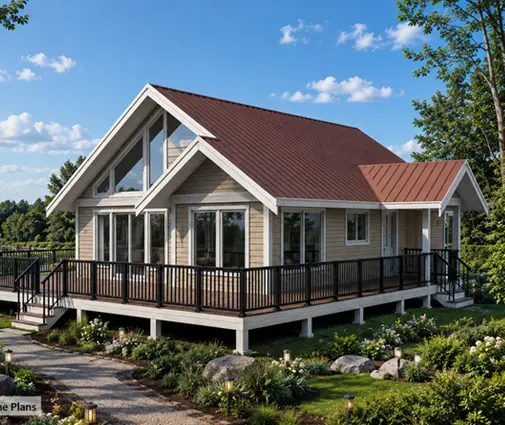
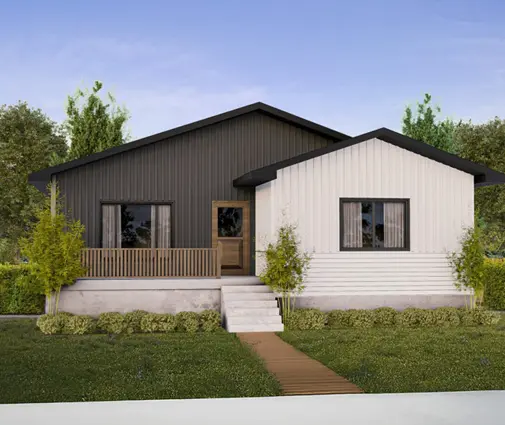
For a cottage or a first home on an acreage, a small, plain shape keeps the framing package modest. The 975 sq ft two-bedroom cabin and this 1,384 sq ft three-bedroom both rely on a simple box and roof. If you need more space, a two-storey plan usually beats a wider bungalow on material per square foot.
The most common mistakes
- Budgeting from old headlines: duty rates and counter-tariffs have changed several times since 2025, so check them at the time you order.
- Accepting a takeoff from incomplete drawings: it gets re-priced later, usually upward.
- Ignoring the escalation clause in the builder contract until the invoice arrives.
- Cutting insulation or window quality to save on materials, then paying more to heat the house for decades.
- Choosing a complex plan and expecting supplier discounts to make up for the extra lumber, steel and roofing.