Can you put up a 500 sq ft cabin on your lake lot without a building permit? In Canada, almost never. People still ask, partly because friends in Poland or Lithuania tell stories about simple paperwork for small recreational houses. Some of those stories are true, and comparing countries shows what makes a getaway home simple or hard: land designation, size limits, and whether you are allowed to live in it year-round.
This guide walks through the project step by step. Each step starts with Canada and then compares it with the United States, Poland, Germany and Lithuania.
Step 1: Decide between a seasonal cottage and a four-season home
Decide this first, because it drives almost every cost that follows. A three-season cottage can sit on piers, use a simple water line that you drain in fall, and get by with modest insulation. A four-season home needs frost protection under the house and for the plumbing, insulation that meets your provincial code for a dwelling, real heating, and a road that is plowed in winter.
Many Canadian municipalities treat both as a dwelling under the building code. Zoning can still limit how you use the property. Some shoreline or limited-service zones allow only seasonal occupancy, or warn owners that the municipality will not maintain a private road.
Germany draws the line more strictly. A house in a designated weekend-house area generally cannot be used as a permanent residence. Poland separates recreational buildings from single-family houses in its permit rules. In both countries, as in Canada, the category you choose limits what you may do later.
Time: a few evenings of thinking, plus one call to the planning department. Cost: nothing yet.
Step 2: Check the zoning and land designation before you buy
In Canada, ask the municipality for the zoning of the parcel and whether a conservation authority or another agency regulates it. Lakefront lots often come with shoreline setbacks, frequently in the range of 20 to 30 metres from the water, plus floodplain limits and rules on removing trees. Water-access lots, unopened road allowances and Crown land raise questions of their own. Get answers in writing.
The pattern abroad is similar but sharper:
- United States: rules are set by the county or town. Some rural counties have little zoning, while lake and mountain towns can be stricter than Canada.
- Poland: the local zoning plan, or a decision on development conditions, decides whether you can build at all. Agricultural land usually needs to be rezoned first.
- Germany: building outside a settled area is heavily restricted. A holiday house generally belongs in a designated holiday or weekend-house area.
- Lithuania: the land's purpose matters most. Building a sodyba on farmland or near forest can require a change of designation, and forests are strongly protected.
Time: 1 to 4 weeks. Cost: often free. A zoning certificate or lawyer review may cost a few hundred dollars.
Step 3: Understand the permit threshold for small houses
This is where the countries differ most. In Canada, permit exemptions under the building codes generally cover only very small accessory buildings without plumbing or sleeping space. Once a building has a bed, a kitchen or a toilet, expect to need:
- a building permit,
- a septic permit,
- possibly a shoreline or conservation permit.
Poland is the famous exception. Small recreational houses can be built on a notification instead of a full building permit, with footprint thresholds of 35 m² and 70 m² under rules introduced in recent years. The details have changed several times, and a notification still requires drawings and compliance with local zoning. Germany, in most states, requires a regular permit for a holiday house. The US varies by county. Lithuania classifies small buildings by category, but anything habitable still goes through the municipality.
For Canadians, the comparison shows that a smaller footprint mostly speeds up the review, not the paperwork itself. A plan just under 70 m², such as this 750 sq ft lake cabin with two full baths, still needs a full permit at home, but it is quicker to check and cheaper to service.
Time in Canada: usually a few weeks to a few months, depending on the municipality and the season. Cost: permit fees typically run from several hundred to a few thousand dollars.
Step 4: Choose a compact plan that works on a small footprint
Small getaway homes in all five countries tend to follow the same idea: a small ground floor with a sleeping loft or attic above it. Polish and German owners use this to stay under footprint limits. Canadians use it because every square foot of foundation and roof costs more when materials arrive by barge or on a winter road.
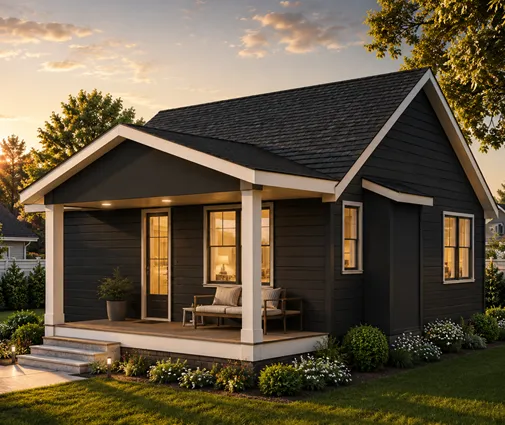
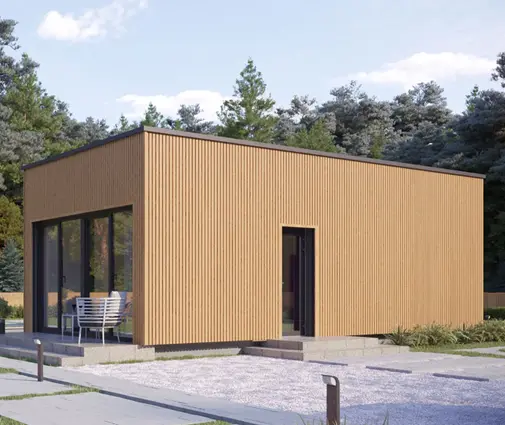
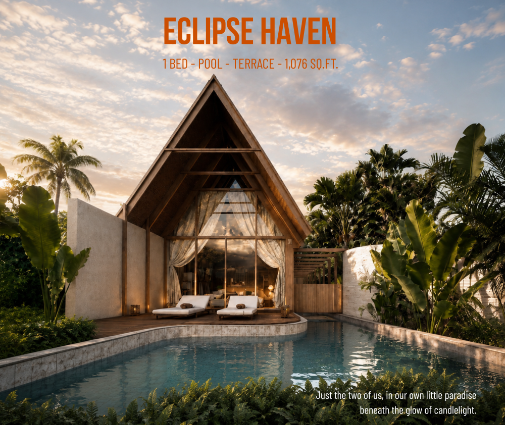
For one or two people, a 373 sq ft tiny cabin sits close to the 35 m² line. The 455 sq ft A-frame sheds snow well, which matters under Canadian snow loads. The 421 sq ft cottage with one bedroom keeps everything on one level. More ideas are in the tiny house collection.

For families, a second level does the work. The 689 sq ft two-storey lake house fits two bedrooms and a half bath on a small footprint. The 573 sq ft cottage with an upper floor adds a modern gable profile. See also the two-storey plans and plans with a vaulted ceiling for the open cabin feel.


Time: 2 to 6 weeks, including adapting the plan to your provincial code and snow load with a designer or engineer. Cost: stock plans plus local adaptation commonly total a few thousand dollars.
Step 5: Plan water and wastewater
Off a municipal system, Canadians usually rely on three things:
- Drinking water: a drilled well, or a lake intake with treatment.
- Wastewater: a septic system designed to provincial rules.
- Testing: a site evaluation and a soil or percolation assessment before the septic design.
In 2025, owners commonly reported:
- a drilled well at roughly CAD 15,000 to 35,000,
- a conventional septic system at CAD 20,000 to 45,000,
- more on rock or for water-access lots.
European cottage regions often have village water lines nearby, and holding tanks or small treatment units are more common there. Composting toilets appear everywhere, but in Canada you should confirm that the municipality and health unit accept one before you rely on it.
Time: 2 to 8 weeks for design and approval. Installation takes about a week once the ground is open.
Step 6: Decide on power and heat
If the grid is far away, a utility extension can cost more than a solar system. A cabin-scale solar system with batteries runs about CAD 20,000 to 60,000 in 2025, depending on whether you only need lights or want a full four-season electrical load.
For heat:
- A wood stove is the classic cottage choice everywhere, and its installation must meet code and satisfy your insurer.
- Cold-climate heat pumps now handle most southern Canadian winters.
- A tight four-season home also needs an HRV.
German and Polish holiday houses lean the same way, with heat pumps and wood stoves rather than oil or gas.
Time: 1 to 3 months for a utility connection quote. Cost: see above. Get the grid quote first and compare.
Step 7: Pick the foundation and the building season
Full basements are standard for Canadian family homes, but a cottage often sits on piers, helical piles or an insulated slab. That works for seasonal use. For a four-season cottage, the foundation, floor and plumbing must stay protected from frost.
Plan the schedule around access. Lake lots are often built over two seasons:
- Foundation and shell in summer or fall.
- Interior work over winter, if the road allows.
A shell in wood frame, or a prefab panel package, can go up in a few weeks. Finishing a compact cottage usually takes 3 to 6 months. Northern Europe has the same constraint, which is why prefab is popular for holiday houses in Germany and the Baltics.
Step 8: Build a realistic budget
For a 430 to 860 sq ft cottage (roughly 40 to 80 m²) in Canada, total costs in 2025–2026 commonly fall well above suburban per-foot rates. Expect roughly CAD 300 to 550 per sq ft for the house itself on accessible lots, and more for water-access, remote or high-end builds. Wells, septic, power and the driveway come on top of that.
A 750 to 850 sq ft plan such as the 850 sq ft one-storey cottage can therefore land at CAD 300,000 or more before land. Poland and Lithuania are generally cheaper for labour and land. Germany is comparable to or higher than Canada.
The cheapest route in every country is the same: a simple shape, a compact footprint, a loft instead of a second foundation, and services planned before the first truck arrives.
Timeline at a glance
| Stage | Typical time in Canada | How it compares abroad |
|---|---|---|
| Seasonal or four-season decision | 1–2 weeks | Germany ties permanent residence more strictly to zoning |
| Zoning and land checks | 1–4 weeks | Poland and Lithuania often need land rezoning first |
| Plan selection and adaptation | 2–6 weeks | Similar everywhere |
| Building, septic and shoreline permits | 1–4 months | Poland can be faster for small recreational houses |
| Well, septic and power | 1–3 months | Europe more often has water and power lines nearby |
| Foundation and shell | 3–8 weeks | Prefab common in Germany and the Baltics |
| Finishing and occupancy inspection | 3–6 months | Similar |
Rules change often, and they differ between municipalities in the same province. Confirm your zoning, setbacks and permit needs with your municipality and a local designer before you buy the lot or commit to a plan.