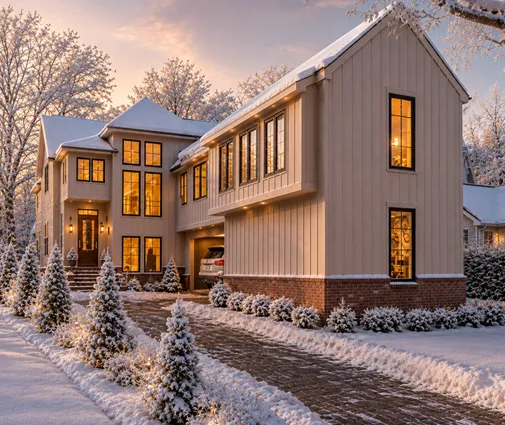
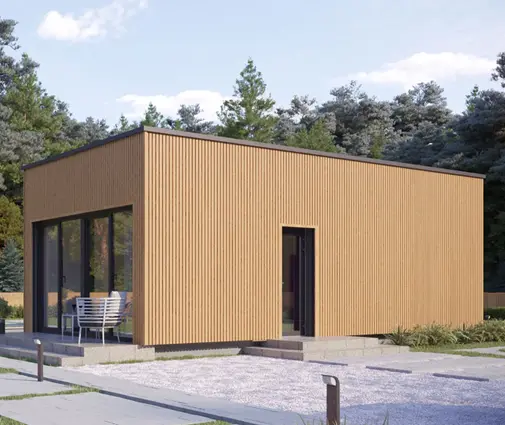
The most common mistake owners make when building a new home is setting the closing date on their current house to match the builder's original completion date. Custom builds in Canada slip because of permit queues, trades and winter, and a firm closing date does not move with them. If your equity has to fund the build, the order of decisions matters as much as the decisions themselves. The steps below follow the order that works for most families, with typical durations and 2025–2026 cost ranges. Confirm the specifics with your lender, your lawyer or notary, and your builder.
Step 1: Know your numbers before you choose a plan
Start with three figures: the realistic sale price of your current home after commission and legal fees, the balance and prepayment penalty on your current mortgage, and the full cost of the build, including the lot, permits, development charges, servicing and a contingency of 10 to 15 percent. On a variable-rate mortgage, the penalty is usually three months' interest. On a fixed rate, it can be the interest rate differential, which is sometimes far higher. Ask your lender for the exact payout figure in writing.
The size and complexity of the house you choose also drive the budget and the schedule. A compact bungalow such as this 1,649 sq ft Craftsman bungalow with four bedrooms and a full basement has fewer stages that can go wrong than a large two-storey home with a three-car garage.
Time: 1 to 2 weeks. Cost: a mortgage broker is usually free to you; an appraisal of your current home typically costs $300 to $600.
Step 2: Choose your strategy: sell first, carry both, or bridge
There are three realistic paths:
- Sell first and rent. Your equity is in hand and you take no market risk, but you pay rent, storage and two moves. This is the safest option when the market is soft or your build has not started.
- Carry both homes. You stay put until the new house is ready, then sell. You move once, but you pay two sets of mortgage interest, property tax, insurance and utilities, and you carry the risk of selling into a weaker market. Lenders will qualify you on both payments, which many households cannot do.
- Sell with a timed closing, using bridge financing if needed. You sell during the build and set the closing date close to occupancy. A short bridge loan covers any gap. This option usually offers the best balance, provided the build is far enough along.
Time: a few days of discussion. Cost: none yet, but this choice sets every cost that follows.
Step 3: Arrange the construction mortgage and understand how it meets your current one
A construction (draw) mortgage releases money in stages after the lender's inspector confirms progress. Typical stages are foundation, framing and lock-up, drywall, and completion. Many lenders also want you to put in your own money first, often the land plus a share of the early costs. That is exactly why your equity matters.
Your current mortgage stays in place until you sell. A bridge loan lends against the equity in your current home once you have a firm sale. Most lenders want an unconditional agreement of purchase and sale before they approve one. Bridge loans are usually short: many lenders cap them at roughly 90 to 120 days, and longer terms are harder to find. They are typically priced at prime plus a few points, plus an administration fee of a few hundred dollars. Ask your lender whether your existing mortgage can be ported or blended into the construction financing. Doing so can reduce or eliminate the prepayment penalty.
Time: 3 to 6 weeks for approval. Cost: appraisal and inspection fees, often $500 to $1,500 over the build, plus interest on each draw.
Step 4: Negotiate the builder contract with your sale in mind
Your builder's schedule is the foundation of your sale date, so get it in writing. Before you sign, negotiate:
- A written schedule with target dates for each stage, not just a completion date.
- A duty to notify you promptly of delays, with a revised date.
- Delay compensation or a per-day credit after a grace period, where the builder will agree to it.
- A fixed price, or a clear allowance schedule, so cost overruns do not eat the equity you planned to bridge.
- A draw schedule that matches your lender's stages, so you are never asked to pay for work the lender has not yet released funds for.
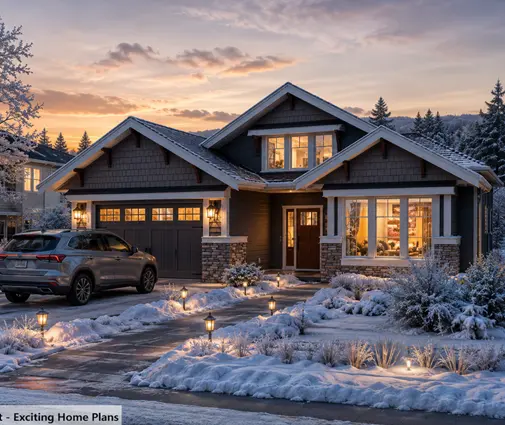
Simpler plans make schedule promises more credible. Single-storey homes like this 1,813 sq ft bungalow with four bedrooms, four bathrooms and a basement or this 2,508 sq ft modern farmhouse ranch with a three-car garage keep the work on one level.


Time: 2 to 4 weeks. Cost: a lawyer's review of the contract, often $500 to $1,500.
Step 5: Track the milestones that actually predict completion
Not every stage tells you much. Excavation and the foundation depend on weather and inspections. In most of Canada, getting the basement in before the ground freezes can save weeks. The useful milestones are:
- Lock-up: roof, windows and exterior doors are in. The house is weathertight, and winter matters less from here.
- Insulation and drywall: rough-in plumbing, electrical and HRV ductwork have passed inspection. From drywall to completion is usually 8 to 14 weeks for a typical custom home.
- Final inspection and occupancy permit: the municipality allows you to move in. Your lender's final draw usually depends on it.
Visit the site at each stage, or ask for dated photos. A builder who is behind at lock-up is rarely ahead at drywall.
Time: ongoing through the build, usually 8 to 14 months after the permit. Cost: none.
Step 6: List your home at the right stage and set a realistic closing
For most families, the right moment to list is after drywall passes inspection, not at groundbreaking. Count forward from that date: the builder's remaining weeks, plus a buffer of 4 to 8 weeks for the occupancy permit and deficiencies. That gives your target closing date. Closings of 90 to 120 days are common and acceptable to many buyers, especially families timing a school year.
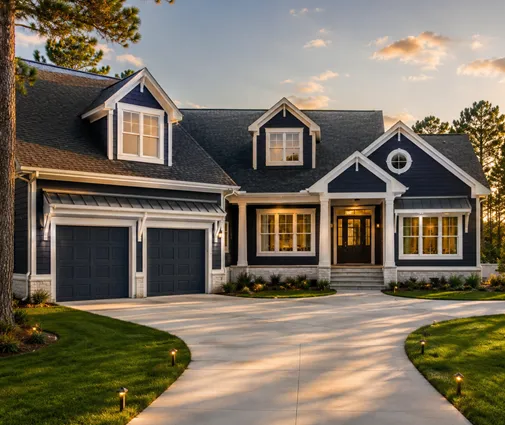
If you list earlier because the market is hot, assume you will rent in between, and price that into your decision. Larger two-storey homes such as this 2,827 sq ft Craftsman two-storey with four bedrooms or this 3,030 sq ft modern farmhouse with a three-car garage have more finishing work after drywall. Allow a longer buffer for them.
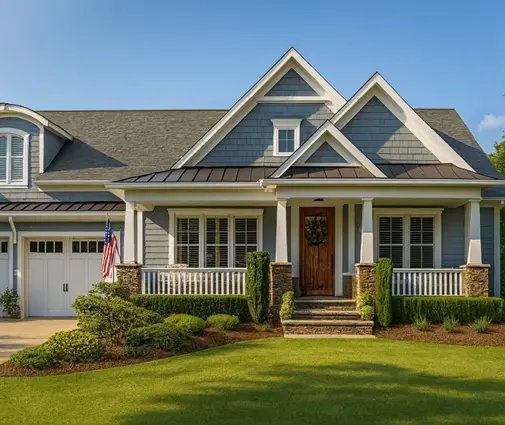
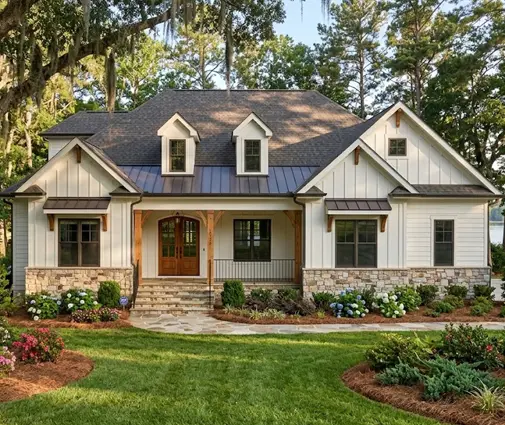
Time: 2 to 8 weeks to a firm sale, depending on your market. Cost: real estate commission, usually several percent of the sale price, plus legal fees on the sale, often $1,000 to $2,000.
Step 7: Negotiate flexibility into the sale agreement
Your sale agreement can protect you as much as the builder contract. Ask your agent and lawyer about:
- A longer or flexible closing: a closing window, or a seller's right to extend once by a set number of days, sometimes in exchange for a small price concession.
- A rent-back (leaseback): you close on schedule, receive your money, and rent the house back from the buyer for one to three months at an agreed rate. This often costs less than a short-term rental and spares you one move.
- Clear possession terms: what condition the home must be in and what happens if you need a few extra days.
Buyers with their own firm dates may refuse, so include these in the first offer conversation, not at the last minute.
Time: part of the offer negotiation. Cost: possibly a modest price concession; leaseback rent at market rates.
Step 8: Plan and budget for the gap
Even with good timing, plan for one to three months between homes. In 2025 and 2026, typical ranges in many Canadian markets are:
- Furnished short-term rental: about $2,500 to $5,500 per month, higher in Vancouver and Toronto.
- Portable storage container or storage unit: about $200 to $500 per month, plus delivery.
- Professional local move of a family home: about $1,500 to $5,000 each time. Moving twice doubles this.
- Pet boarding, extra commuting and eating out: easy to overlook, often several hundred dollars a month.
If you end up carrying both homes instead, tell your insurer. Many home policies limit coverage when a house is vacant for more than a set number of days. Keep the heat on through the winter, too. Bungalows on a full basement, like those in our house plans with a basement, leave a frozen pipe a long way to travel.
Time: 1 to 3 months, sometimes longer. Cost: often $5,000 to $20,000 in total for a family.
Step 9: Close, move in, and finish the paperwork
Book your final inspection with the municipality as soon as the builder is ready, and do a deficiency walk-through with the builder before the final payment. Provincial lien legislation generally requires the owner to hold back a percentage of each payment, often 10 percent, for a set period after completion. Ask your lawyer how that affects the timing of your final draw and your cash needs. Once the occupancy permit is issued, the lender releases the final draw, the construction loan converts to a regular mortgage, and any bridge loan is repaid from your sale proceeds.
Time: 2 to 6 weeks around completion. Cost: legal fees on the mortgage conversion, often $1,000 to $2,000, plus moving costs.
A typical timeline
This example assumes a custom single-family home on an owned lot with a building permit in hand. Your timeline will vary with the size of the house, the season and your municipality. A home from our one-storey plans often moves faster than a large two-storey home.
| Month | Build stage | Sale and financing actions |
|---|---|---|
| 0 | Permit issued, contract signed | Construction mortgage approved; get the payout figure on your current mortgage |
| 1–2 | Excavation and foundation | First draw; prepare your home for sale, declutter, and do minor repairs |
| 3–4 | Framing and lock-up | Second draw; compare the builder's progress with the schedule |
| 5–6 | Rough-ins, insulation, drywall | List your home once drywall passes inspection; negotiate the closing and leaseback |
| 6–7 | Interior finishes | Firm sale; arrange a bridge loan if needed; book movers |
| 8–10 | Final inspection, occupancy permit | Close your sale; final draw; holdback period begins; move in |
Treat these months as a planning frame, not a promise. The safest plan is one where a delay of six weeks costs you some rent, not a forced sale or an expired bridge loan.