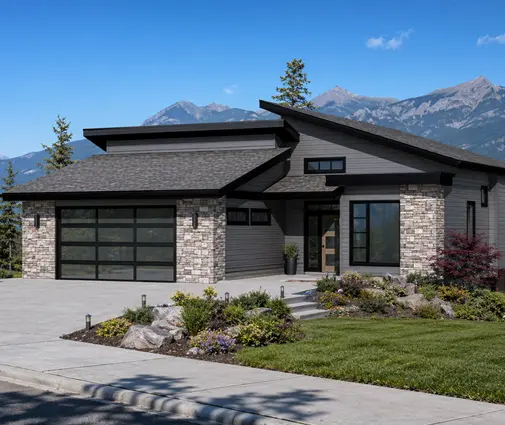
You have found the acreage. It has ten acres of mixed bush, a south-facing clearing and a gravel road along the front. You have picked a bungalow plan and lined up a builder. Then the township says it cannot issue a building permit yet. There is no approved entrance, no civic number, and the road out front turns out to be "seasonally maintained." This happens to rural buyers across Canada every year. In nearly every case, a few weeks of homework before the offer would have caught it.
This guide covers the approvals that come before the house permit on a rural or acreage lot. These include the driveway entrance, the culvert, sight lines, the civic (911) address, and the harder question of building on a private road or an unopened road allowance. The rules differ by province and often by township, so treat this as a map of what to ask, not a substitute for the bylaw.
Why access comes before the house
A municipality issues a building permit for a lot it can reach. Fire trucks, ambulances, school buses, snowplows and the building inspector all need a legal, safe way in. Many zoning bylaws in Ontario townships, Alberta counties and BC regional districts require a lot to have frontage on a public road that is maintained year-round before a new dwelling is allowed. Where that frontage exists, the next requirement is usually an approved entrance from the road onto the property.
In practice, the permit sequence on a rural lot often looks like this:
- Confirm the zoning permits a dwelling and the lot fronts on an assumed, year-round road.
- Apply for the entrance (driveway or road approach) permit from whoever owns the road.
- Get the civic address assigned.
- Get the septic permit (in Ontario, often through the local health unit or conservation authority, depending on the area) and any conservation authority permit if the lot has wetlands, floodplain or steep slopes.
- Apply for the building permit, often with proof of the first three items attached.
Some municipalities let you run these in parallel, and others will not accept a building permit application until the entrance is approved. Ask the building department which order they want.
Entrance permits: who owns the road decides
The first question is simple: who owns the road in front of the lot? The answer tells you who issues the entrance permit.
Municipal roads
On a township, county or rural municipality road, the public works or roads department handles entrance permits. In Ontario these are usually called entrance permits. In Alberta counties and municipal districts the term is "road approach." The application usually asks for a sketch showing the proposed driveway location, distances to the lot lines and to neighbouring entrances, and any ditch. A roads superintendent may visit the site and stake the approved spot. In 2025, fees for a residential entrance commonly ran from roughly $100 to $500 CAD. Some municipalities also took a refundable deposit until the culvert and gravel were inspected.
Provincial highways
If the lot fronts a provincial highway, the province controls the access, and the rules are stricter.
- Ontario: the Ministry of Transportation (MTO) issues entrance permits along provincial highways, and its corridor management rules can limit new entrances or require you to share an existing one. MTO permits may also be needed for buildings within a set distance of the highway, so the setback can affect where the house sits.
- Alberta: development close to a provincial highway generally needs a roadside development permit from the province, in addition to the county's approvals. The province may require access from a side road rather than the highway itself.
- British Columbia: outside municipalities, most rural roads are provincial. The Ministry of Transportation and Infrastructure handles highway access permits, and the regional district handles zoning and building permits where it provides building inspection.
Plan extra time for a provincial access permit. A few weeks is common for a municipal entrance. A highway access can take months, especially if the ministry asks for a revised location.
Sight distance
The most common reason an entrance is moved or refused is sight distance. A driver pulling out of your lane must be able to see oncoming traffic far enough away to stop or merge safely. The required distance grows with the posted speed. On an 80 km/h rural road it is often well over 100 metres (330 feet) in each direction, but the exact figure depends on the municipality's standard. Hills, curves and tree lines all cut sight lines. A lane at the crest of a hill or on the inside of a bend may simply not be allowed. In that case the house may need to move to suit the only workable entrance, which is a good reason to settle the driveway before you fix the house position on a sloped or wooded lot.
Culverts: sizing, installation and who pays
Where a ditch runs along the road, the entrance needs a culvert so water can keep flowing under the driveway. The road authority sets the requirements, and the owner almost always pays.
| Item | What is typical | Who usually decides or pays |
|---|---|---|
| Diameter | Often 400 to 600 mm (16 to 24 in), larger in heavy-flow ditches | Roads department sets it; owner pays |
| Length | Often 20 to 30 feet (6 to 9 m), enough for the lane width plus side slopes | Municipal standard |
| Material | Corrugated steel or HDPE plastic, as specified | Municipal standard |
| Installation | By the owner's contractor or by municipal crews for a fee | Varies by municipality |
| Cost, 2025 | Roughly $2,000 to $6,000 CAD supplied and installed, more for long or large pipes | Owner |
Some townships install the culvert themselves and bill you, which guarantees it is set at the right grade. Others want your contractor to do it and then inspect it. A culvert that is too small or set too high will back water up the ditch. That can flood your lane in spring and leave you responsible for the damage. If the roads superintendent says no culvert is needed because the ditch is shallow, get that in writing with the permit.
The lane itself
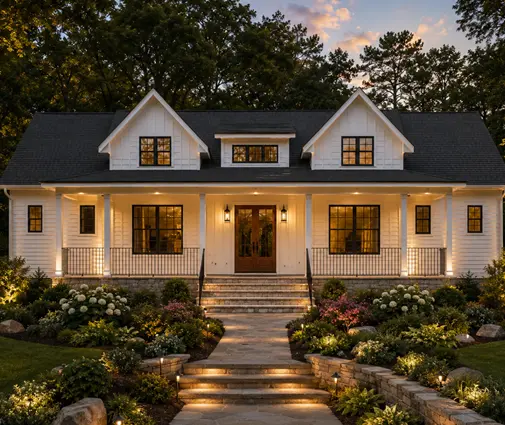
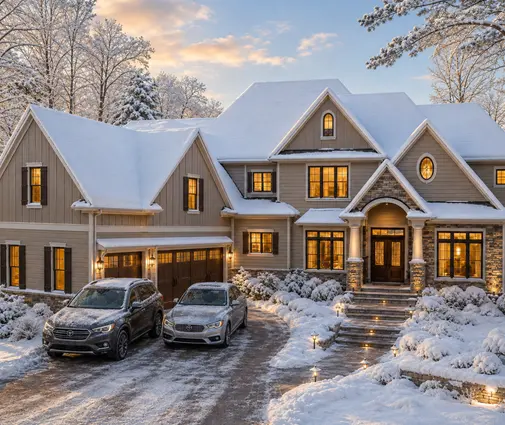
The entrance permit usually covers only the part in the road allowance. Past the property line, the lane is yours, but fire departments in many areas expect a long lane to carry a pumper truck. That can mean a gravel base, a width of around 20 feet (6 m), and a turnaround near the house. Remember the house end of the lane too. A plan like this four-bedroom, two-storey farmhouse with a three-car garage needs a generous apron and turning space, and on a long winter lane that also means room to pile snow. For more layouts in this vein, browse the homes with a three-car garage.
The civic address: your 911 number
A civic address is not paperwork for its own sake. Dispatchers use it to find your house in an emergency, and many building departments will not issue a permit without one. In Ontario townships the address comes with the familiar blue or green numbered sign at the end of the lane. Alberta counties and BC regional districts run similar rural addressing systems.
Usually the municipality assigns the number from the location of the approved entrance, not the lot frontage. That is another reason the entrance comes first. Fees for the number and sign were commonly in the range of $50 to $250 CAD in 2025, sometimes with installation included. Once you have the address, use it everywhere: the building permit, the hydro connection, internet service, insurance and Canada Post. If the house is far back from the road, ask whether the sign must sit at the entrance or at a fork in a shared lane so responders can find the right house.
Private roads, seasonal roads and unopened road allowances
This is where rural lot purchases most often go wrong. A road with a sign and a mailbox is not necessarily a public road that the municipality maintains.
The three problem cases
- Private roads are owned by individuals, a cottage association or a condominium corporation. The municipality does not plow, grade or repair them. They are common around lakes in Ontario's cottage country and in parts of BC.
- Seasonal roads are public but maintained only part of the year, often with no winter plowing. Many townships do not allow a new year-round dwelling on them, or allow one only under conditions.
- Unopened (unassumed) road allowances are strips of public land surveyed for roads that were never built, common across the old survey grids of Ontario and the Prairies. On paper the lot touches a "road." On the ground there may be a field or a bush trail.
Why townships say no
Municipalities refuse building permits on these roads mainly over liability and emergency services. If a fire truck cannot reach a house in February, or a school bus will not go down the lane, the township does not want to be blamed. It also does not want to be pressured later into taking over and maintaining a road it never planned for. Many official plans state outright that new development should front on assumed, year-round public roads.
What they may ask for instead
A refusal is not always the end. Depending on the municipality, you may be offered one of these routes. Have a real estate lawyer review any agreement before you sign it, because most of them are registered on title and bind future owners.
- A limited-service or acknowledgement agreement, in which you accept that the township will not maintain the road and that emergency response may be delayed or impossible at certain times of year.
- A road upgrade or road-use agreement, under which you build or upgrade a section of road allowance to the municipality's standard, at your cost, sometimes with financial security posted. Opening an allowance can easily cost tens of thousands of dollars per kilometre, so get a contractor's estimate before you commit.
- A registered right-of-way or easement over a neighbour's land or a private road. Lenders and insurers often insist on this before they will finance a house reached by a private road.
- A road association or maintenance agreement that shows who plows and repairs a shared private road and how costs are split.
Even with an agreement in place, some lenders still will not finance a house on a seasonal road. Check with your bank before you remove financing conditions on the purchase.
Choosing a plan that suits a rural lot
Access decisions shape the house. A difficult entrance may push the building envelope to one corner of the lot, and a long lane makes a compact footprint more practical to service. Many rural builders in Canada settle on a bungalow over a full basement. It suits frost depth, keeps mechanicals and storage below grade, and is simple to reach from a single lane. A good example is this three-bedroom Prairie-style bungalow of 1634 sq ft with a basement. Similar options include a three-bedroom, one-storey mountain-style plan of 1675 sq ft and, for a larger family, a five-bedroom single-storey plan of 1669 sq ft with a basement, which uses the lower level for extra bedrooms.
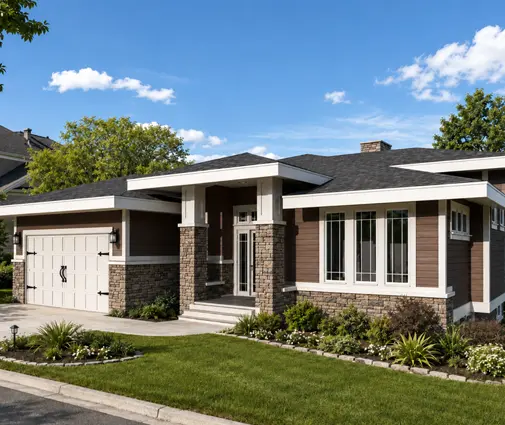

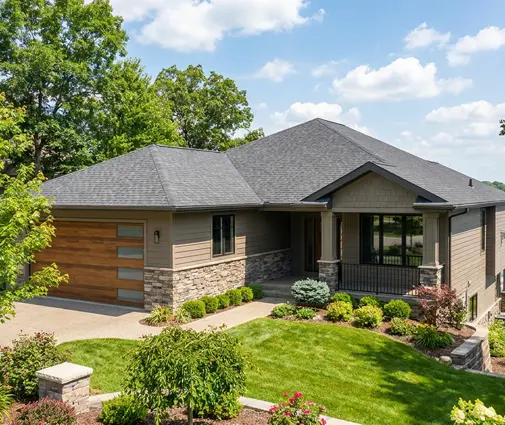
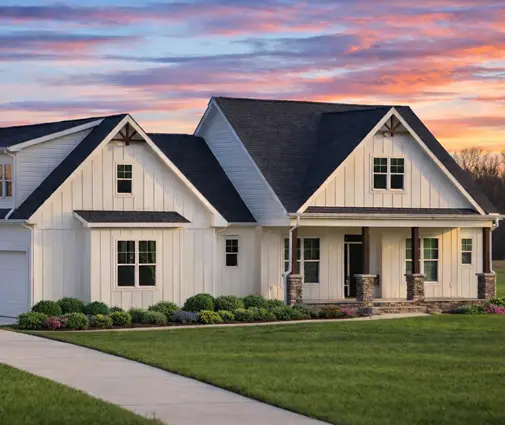
On a lake lot reached by a private road, a modest footprint also means smaller delivery trucks and less heavy equipment on a road you may be responsible for repairing. This four-bedroom, 1584 sq ft lake-style bungalow with a basement fits that situation. If you prefer the classic acreage look, a two-bedroom, two-storey modern farmhouse of 1928 sq ft sits well at the end of a long gravel lane. More options are in the house plans with a basement and the farmhouse collection.
FAQ
Can I start building while my entrance permit is pending?
Usually not. Many municipalities require the approved entrance, and often the civic address, before they issue the building permit. Some allow a temporary construction entrance. Ask the building department and the roads department directly.
Do I need a new entrance permit if there is already a field gate?
Often yes. A farm or field entrance may not meet the standard for a residential driveway in width, culvert size or sight lines, and changing its use usually needs approval. The township may let you upgrade it rather than build a new one.
Who maintains the culvert after it is installed?
It depends on the municipality. Some take over culverts in the road allowance once inspected. Others leave replacement and clearing to the owner. Ask when you get the permit, and keep a copy.
Can I buy a lot on an unopened road allowance and build later?
You can buy it, but a building permit is not guaranteed. Before you buy, ask the municipality in writing whether a dwelling would be allowed, under what conditions, and roughly what it would cost to bring the road up to standard. Make the purchase conditional on that answer.