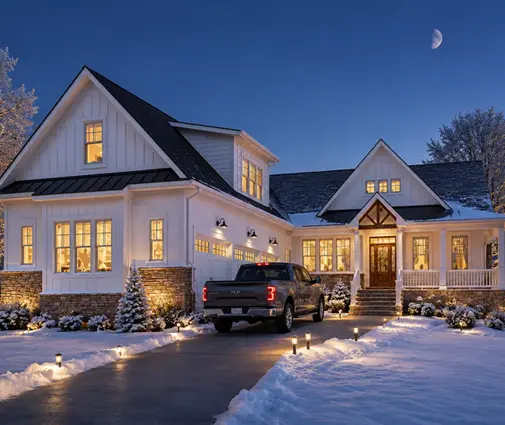
The envelope arrived on a grey morning in March, almost ten months after the moving truck had left. The family had been in their new house through a full winter. The heat pump had done its job, the kids had chosen their rooms, and the mortgage payment had settled into a routine. The envelope held a property tax bill for several thousand dollars, due in two instalments. It wasn't a mistake. It was the supplementary assessment, and it arrives for almost everyone who builds a house in Canada.
This is the story of a typical couple with two children who built a family home on a serviced lot at the edge of a growing town in southern Ontario. Their path from buying the land to the first full year of tax shows how a new build is assessed and taxed, and what they would do differently with the knowledge they have now.
Chapter 1: The lot and a small first bill
They bought a roughly half-acre lot in a new subdivision in 2024. Their first tax bill as landowners was pleasantly small. MPAC, the agency that assesses property in Ontario, had valued the lot as vacant residential land. The municipality multiplied that value by its residential tax rate.
The arithmetic is the same across the country: assessed value × tax rate = annual tax. Some places publish the rate as a percentage. Others use a mill rate, which is dollars per thousand of assessed value. A mill rate of 12 is the same as 1.2 percent. In 2025, total residential rates in Ontario municipalities ranged from well under 1 percent in the largest cities to around 1.5 percent or more in many smaller towns. Their town sat near 1.2 percent. Their lot was assessed at about $150,000, so the land cost them roughly $1,800 a year.
One quirk caught their attention early. At the time of writing, Ontario assessments were still tied to a January 1, 2016 valuation date because the provincial reassessment had been postponed repeatedly. MPAC values a brand-new house as if it had existed on that date. Its assessment can therefore look low compared with today's construction costs. The town's tax rate is set against those same values, though, so the tax itself is not a bargain.
Lessons: Find your municipality's current residential tax rate on its website before you buy land. Ask the seller or your lawyer for the lot's current assessment. In Ontario, remember that assessed values and market prices are on different timelines, so compare your house with the neighbours' assessments rather than with what you paid.
Chapter 2: Choosing a plan with the tax in mind
When they started browsing plans, property tax was not on their list. It became part of the conversation once they understood what an assessor actually looks at: finished floor area, the number of bathrooms, the quality of finishes, fireplaces, the size of the garage, and whether the basement is finished.
A full basement was never in question, because footings have to go below the frost line anyway. Their first serious candidate was a 3-bedroom Craftsman bungalow of 1745 sq ft with a basement and a 2-car garage. It suited a family that wanted to stay on one level as they aged. The second was a 5-bedroom Modern Craftsman of 2244 sq ft, also with a basement. It gave more bedrooms on a similar footprint. They also looked at the 4-bedroom Craftsman of 1984 sq ft with a 2-car garage as a middle option.


A bigger plan tempted them too: a single-storey rustic Craftsman of 3237 sq ft with four bedrooms. Their builder pointed out that every finished square foot, every extra bathroom and every additional garage bay shows up twice. It shows up once in the construction budget and again, every year, in the assessment. A three-car garage, a finished lower level with a wet bar and a fourth bathroom all count. A house that is 50 percent larger will not necessarily be assessed 50 percent higher, but it will move the number.
They settled on the bungalow. They planned to leave the basement unfinished at first and finish it later with a permit. When they do, the new rec room and bathroom will be picked up through the permit and added to the assessment, usually with a supplementary bill for the year the work is done.
Lessons: Treat property tax as a running cost of the plan you choose, along with heating and insurance. A finished basement, extra bathrooms and a bigger garage all raise the assessment. Finishing the basement later spreads out the cost, but it does not avoid the tax.
Chapter 3: Building years, taxed as land
The permit was issued in early spring 2025, and the framing crew arrived soon after. Through the whole build the family kept paying tax on the land only. They were not surprised to learn that the municipality sends building permit information to MPAC. The assessor knew a house was coming and was simply waiting for it to be habitable.
This is how it generally works across Canada. While a house is under construction, it is usually assessed as land, or land plus a partially built structure, depending on the province and the stage of the work. The full house is added once it can be occupied. In Ontario, that usually means the date of occupancy or substantial completion.
Their construction mortgage released money in draws as the work progressed. During this period the lender did not collect property tax. The land-only bills came straight to them, and they paid them directly to the town.
Lessons: Budget for land tax every year of the build, especially if the work stretches over two seasons. Keep copies of your occupancy permit and the date you moved in. The supplementary assessment will be based on a date, and you want to be able to check it.
Chapter 4: Moving in, then the quiet months
The final inspection passed in May 2025, and they moved in the same week. Nothing changed on the tax side for months. The regular interim and final bills for 2025 still showed the land assessment only. It is easy to read that silence as good news.
Before move-in, their builder had walked them through a rough estimate:
- Expected total assessment once the house was added: about $650,000. That figure was based on similar recent bungalows on the street.
- Increase over the land-only value: about $500,000.
- Annual tax on that increase at 1.2 percent: about $6,000.
- Portion owed for 2025, from mid-May to December: roughly seven and a half months, or about $3,750.
The real bill arrived the following March and was close to that estimate. It covered the 2025 supplementary amount. A separate notice adjusted the 2026 interim bills. In Ontario, an assessment missed in the current year can be added later as an omitted assessment. That can reach back into previous years, so a delay does not mean the tax disappears.
Other provinces handle the same moment in their own ways. BC Assessment values a property based on its physical condition near the end of October. A house finished in the fall may appear on the next roll, and many BC municipalities can also issue supplementary assessments. On the Prairies, assessment is done either by municipal assessors or by a provincial agency, depending on where you build. In Alberta, a municipality issues supplementary assessments only if it has passed a bylaw to do so. In a town without one, a new house may simply appear on next year's roll. If you are building outside Ontario, ask your municipality's tax office which approach applies.
Lessons: Estimate your full-year tax by multiplying a realistic total assessment by the local rate. Prorate it from your move-in date. Then set that money aside every month from the day you get the keys. The bill can take 6 to 12 months to arrive, sometimes longer, and it lands as one lump sum.
Chapter 5: The lender, the instalments and the first full year
When the construction loan converted to a regular mortgage, the lender offered to collect property tax with each payment and pay the town directly. The family accepted. The lender set the monthly tax portion using the bills it could see, and those were still for the land only.
That gap explains why so many new homeowners are caught off guard. The supplementary bill went to the family, not the bank. When the lender later received the new assessment, it recalculated the account. It found a shortfall and raised the monthly payment to recover the shortfall and cover the higher ongoing tax. Their payment went up by several hundred dollars a month for a year.
They could have avoided the jump. Some lenders let you set the tax portion from an estimate rather than the last bill, so ask for that at closing. You can also tell the lender as soon as the supplementary notice arrives and confirm which bills it will pay and which are yours. Some families prefer to pay the town directly through its pre-authorized monthly plan. Their own savings then absorb the catch-up bill.
In 2026, their first full year, the bills matched their estimate of about $7,800. When the assessment notice came, they checked the details against their house: the floor area, the unfinished basement, two garage bays and the number of bathrooms. The province has a deadline for filing a Request for Reconsideration if something is wrong, so they read the notice as soon as it arrived.
Lessons: If your lender collects tax, give it a realistic estimate at closing and send it the supplementary notice the day you receive it. Check every new assessment notice against the actual house, and note the deadline for disputing it. Plan your basement finishing, and the tax that comes with it, the same way.
The family's experience was not unusual, and it was not unfair. The tax simply arrived later than the house. If you are comparing plans now, browse house plans with a basement or one-storey layouts. Do the tax math alongside the floor plan, and keep the supplementary bill in your budget from the start.