Look closely at a builder's quote and you may find one short line: "site services by owner." That line can hide anywhere from $10,000 to $30,000 or more on a typical Canadian custom home, before a single footing is poured. Temporary hydro, water for the trades, the porta-potty, bin swaps, fencing, mud control and winter heat are not glamorous. They run every month the job is open, though, and they are the costs owners most often forget to budget.
This guide breaks these items down with typical 2025–2026 ranges in Canadian dollars. Prices vary a lot between a suburban lot in Ottawa, an acreage outside Red Deer and an infill lot in Vancouver. Use the numbers to build your budget, then confirm them with local suppliers, your utility and your municipality.
The cost table: one-time setup and monthly items
| Item | One-time cost (CAD) | Monthly cost (CAD) | Notes |
|---|---|---|---|
| Temporary hydro service (pole or pedestal, panel, electrician) | $1,500 – $4,500 | $50 – $300 in power use | Utility connection fees are extra; rural line extensions can cost much more |
| Electrical permit and inspection for the temporary service | $150 – $600 | – | Issued through the provincial electrical safety authority |
| Generator (if no hydro yet) | – | $400 – $1,200 plus fuel | A common stopgap on rural lots |
| Water for the trades | $0 – $1,500 (meter, hydrant permit or tank) | $50 – $250 | Municipal hookup, hydrant meter or hauled water |
| Portable toilet, weekly service | – | $150 – $350 | Winterized or heated units cost more |
| Waste bins (14–40 yard) | – | $400 – $900 per swap | Typically 6 to 12 swaps for a whole build |
| Temporary fence panels | $300 – $1,000 delivery and setup | $200 – $800 | Required on many urban infill sites |
| Security (cellular cameras, lockable storage container) | $0 – $500 | $150 – $500 | Insurance may ask for it |
| Mud mat (gravel construction entrance) and silt fence | $2,000 – $7,000 | Maintenance as needed | Erosion and sediment control is often a permit condition |
| Street cleaning and damage deposits | $1,000 – $10,000+ deposit (refundable) | $0 – $500 for sweeping | Varies widely by municipality |
| Winter heat (propane heaters, tank, fuel, blankets) | $300 – $1,000 setup | $500 – $3,500 in cold months | Depends on enclosure, temperatures and schedule |
For a 9 to 12 month build, the monthly items alone often total $1,000 to $2,500 per month in the warm season, before bins and winter heat. Add the one-time setup and a typical total lands somewhere between $12,000 and $35,000. Size, schedule and season move that number more than anything else.
Temporary hydro: the first thing to order
Nothing on site works without power: saws, compressors, lights, the sump pump in the excavation and later the heaters. The usual setup is a temporary service: a pole or a pedestal with a meter base, a small panel and GFCI receptacles, installed by a licensed electrician. Before your utility will connect it, it must pass an electrical inspection by the provincial authority, for example the ESA in Ontario or Technical Safety BC in British Columbia.
Order it early. In many areas the utility needs several weeks to schedule a connection, and longer in spring when every builder in town asks at once. On an acreage, the distance from the road matters a lot. A short drop from an existing line is simple. A new line extension of several hundred feet can cost many thousands of dollars, and it is often cheaper to plan the permanent service route from day one so the temporary pole sits where the permanent one will go.
If hydro is not ready when excavation starts, a rented generator bridges the gap. Count $400 to $1,200 a month plus fuel, and expect your framers to grumble about it.
Water, toilets and bins: small monthly lines that add up
Water for the trades
Masons, drywall tapers, concrete finishers and landscapers all need water. In town, the municipality may install the water service and meter early, or issue a hydrant permit with a rented meter and a deposit. On rural lots, many owners drill the well before construction so it doubles as the site supply. Otherwise water gets hauled in a tank, usually at $50 to $250 a month for a house-sized job.
The porta-potty
Provincial occupational health and safety rules require toilet facilities for workers, so this is not optional. A standard unit with weekly pumping runs about $150 to $350 a month. In January in Winnipeg or Sudbury, a unit with a heater or winterizing costs more, and crews notice when it is missing.
Waste bins
Bins are where budgets slip. A single swap of a 20-yard bin costs $400 to $900 depending on the region and the landfill tipping fees. A modest build may need six swaps; a large custom home with a lot of framing offcuts, drywall and packaging can need twelve or more. If the bin has to sit on the street, many municipalities require a road occupancy permit as well.
How the size of the house changes the site costs
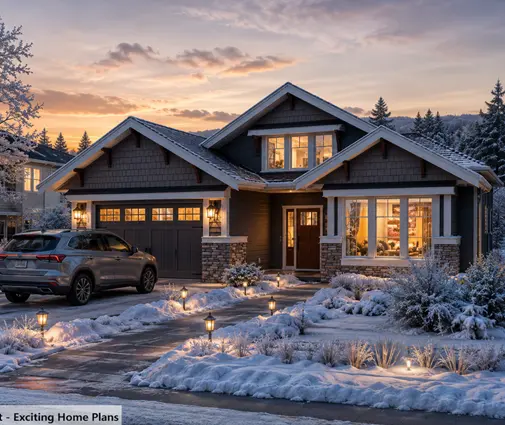
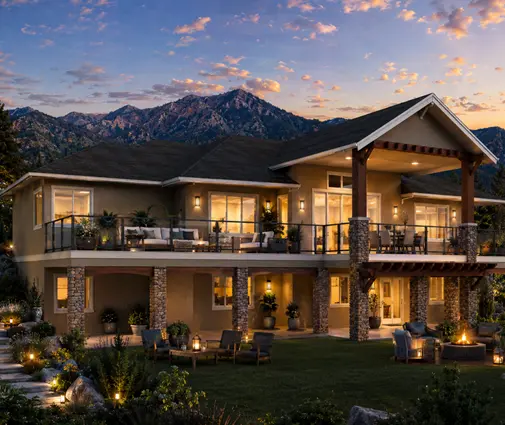
Site costs scale with time on site and with the footprint. A compact bungalow with a full basement, like this 1,692 sq ft Craftsman bungalow with 5 bedrooms and a basement, can often be closed in before the first hard frost if it starts in spring. That keeps winter heating to a minimum and the bin count low. The same is true of a 1,714 sq ft one-storey plan with 4 bedrooms over a full basement or a 1,607 sq ft Mountain-style bungalow with a basement. More bungalows in this size range are in the one-storey plans.


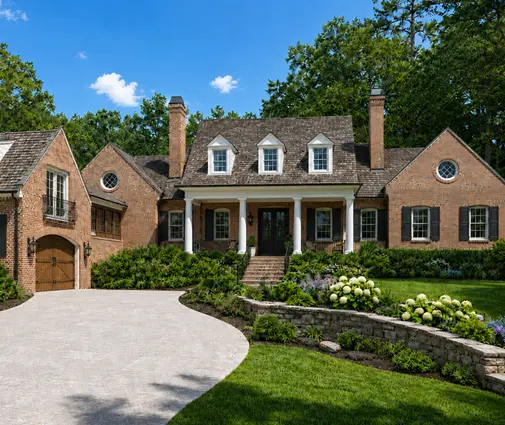
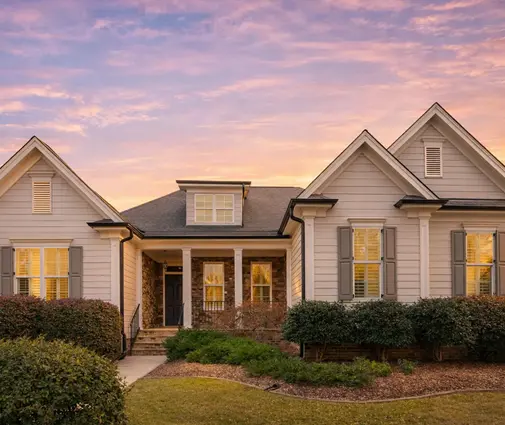
A large two-storey home is a different budget. A 4,907 sq ft two-storey with 4 bedrooms and a full basement has a longer framing and finishing phase, a bigger perimeter to fence and far more waste. Even a 3,783 sq ft two-storey Craftsman with 3 bedrooms typically adds several months of rentals compared with a bungalow. At $1,500 a month, three extra months mean $4,500 more, before winter heat. Browse the two-storey plans with that in mind.

Fencing, theft and mud: what the municipality expects
Theft of copper, tools and even lumber packages from open sites is a real problem in many Canadian suburbs. Temporary fence panels cost about $200 to $800 a month, and many urban municipalities require them on infill lots next to sidewalks. A lockable storage container ("sea can") and a couple of cellular cameras add $150 to $500 a month. Check with your builder's risk insurer: some policies set conditions on site security, and a claim can be refused if the site was left open.
Mud is the other item that surprises owners. Most municipalities have bylaws against tracking mud and debris onto public roads, and many make erosion and sediment control a condition of the building permit. A gravel construction entrance (a mud mat) and silt fence around the lot are the usual answer, at roughly $2,000 to $7,000 depending on the lot. If the city has to clean the street, it can bill you or draw on the deposit. Those deposits, often called lot grading or damage deposits, vary from a few thousand to over ten thousand dollars; ask your municipality for the exact amount when you apply for the permit.
Winter heat: keeping the job moving below zero
Concrete must not freeze while it cures, and footings must not be poured on frozen ground. That is why a project that reaches the foundation in November needs heat. The usual kit is propane construction heaters, a rented tank, insulated concrete blankets and sometimes ground thaw equipment before the pour. Ready-mix suppliers also charge winter surcharges for heated concrete and accelerators.
Once the house is framed and wrapped, heaters keep the drywall and paint crews working. Depending on how tight the enclosure is and how cold the month, propane alone can cost $500 to $3,500 a month. A basement poured in October and a shell closed in by December may need far less than a project that stalls through February. Whatever you plan, put the fuel in writing: decide in the contract whether the builder or the owner pays for it.
How to save on site setup
- Start in spring. Getting the foundation in and the roof on before freeze-up is the single biggest saving on heat and blankets.
- Choose a compact footprint. A smaller or simpler plan means a shorter schedule, a smaller fence and fewer bin swaps. The plans with a basement that stay under 2,000 sq ft are a good place to start.
- Order hydro and water early. A month of generator rental can cost more than the temporary service itself.
- Sort the waste. Clean wood, metal and cardboard bins are often cheaper than mixed waste, and some regions require separation anyway.
- Bundle rentals. Some suppliers discount toilet, fence and bin packages for the length of the job.
- Keep the mud mat in shape. Topping up gravel is cheaper than a street cleaning bill or a lost deposit.
Summary: your site setup checklist
- Temporary hydro and inspection: $1,700 – $5,000 one-time, plus $50 – $300 a month in power
- Water for the trades: $50 – $250 a month, plus any meter or hydrant permit
- Portable toilet: $150 – $350 a month
- Waste bins: $400 – $900 per swap, 6 to 12 swaps per house
- Fencing and security: $350 – $1,300 a month
- Mud mat, silt fence and deposits: $2,000 – $7,000 plus a refundable deposit
- Winter heat: $500 – $3,500 a month in the cold season
- Before you sign: ask who pays for each line, and confirm local rules with your municipality and the provincial authorities