It is a hot July evening and a thunderstorm drops a month of rain in an hour. Across the subdivision, the municipal sewer fills faster than it can drain, and the pressure has to go somewhere. In a house without protection, it goes up the main drain and out of the lowest opening, usually the basement floor drain. A few inches of sewage on a finished floor can mean tens of thousands of dollars in drywall, flooring and furniture.
That is why Toronto, Calgary, Winnipeg and many other Canadian municipalities now require a backwater valve on new houses, and why more insurers ask about one before they offer sewer backup coverage. If you are building, the question is not whether to install a valve but which type, where it goes and how you will reach it once the basement is finished. The main choice is between a normally open valve and a normally closed valve.
The two valves side by side
| Criterion | Normally open valve | Normally closed valve |
|---|---|---|
| Resting position | Flap hangs open, closes only when sewage flows backward | Flap or gate stays shut, opens when water from the house pushes it |
| Protection during a surcharge | Good, if the flap seals and is kept clean | Good, closed before the surge arrives |
| Flow and venting of the drain | Full flow, air moves freely through the building drain | Partial restriction, blocks air movement |
| Risk of debris holding it open or shut | Debris can keep the flap from sealing | Debris and grease can build up behind a closed flap |
| Usual place in a new house | Main building drain, protecting the whole house | Individual branch or fixture where local rules allow it |
| Code acceptance on the main drain | Widely expected on the main building drain | Often restricted; check with your municipality |
| Maintenance | Annual inspection and cleaning of the flap | Annual inspection, more attention to buildup |
| Installed cost at rough-in (2025) | Roughly $400 to $1,000 | Roughly $300 to $900 |
The figures in the table are approximate ranges seen in 2025 for valve plus labour during new construction. Retrofitting either type into an existing slab is a different job, often $1,500 to $4,000 or more because the concrete has to be cut and patched.
How each valve works
A normally open valve is a short body set into the main drain with a hinged flap inside. Wastewater flows under or past the open flap toward the street. When the city sewer backs up, the reverse flow lifts the flap against its seat and seals the line. Many models add a float to help the flap close.
A normally closed valve works the other way. The flap rests against its seat, and outgoing wastewater has to push it open. When flow stops, it falls shut again, so it is already closed when a surge arrives.
Verdict: both stop backflow, but they behave very differently the rest of the year.
Protection during a surcharge
The normally closed valve wins on paper because it never has to react. In practice, a well-maintained normally open valve closes within seconds of reverse flow, and that is fast enough for a sewer that rises over minutes. The real weak point of both is a flap that cannot seat properly because of a wipe, a clump of grease or a broken hinge.
Keep in mind that a closed valve also stops your own wastewater. While it is shut, every toilet, shower and washing machine in the house drains into the space between the valve and the fixtures. If the household keeps using water during a storm, the basement floor drain becomes the overflow. Nobody should run the dishwasher during a heavy storm in a house with a backwater valve.
Verdict: a slight edge to normally closed, but maintenance matters more than design.
Flow, venting and clogging
This is where the normally open valve pulls ahead. Because the flap stays out of the way, the building drain keeps its full capacity, and air moves freely through the drain and venting system. A normally closed flap sits in the path of every flush, slowing flow, catching solids and interrupting air movement in the drain. That is the main reason many Canadian codes and municipalities expect a normally open valve on the main building drain, and keep normally closed valves for single branches.
Verdict: normally open is the better choice for the main drain of a new house.
Where the valve sits in the drain layout
The valve is only one part of a system, and the layout around it matters just as much. In a typical new Canadian house, three separate flows leave the property:
- The sanitary lateral carries toilets, sinks, showers and laundry to the municipal sanitary sewer. The backwater valve goes on this line, inside the basement, downstream of every fixture it protects and upstream of the point where the drain leaves the foundation wall.
- The foundation drain, the weeping tile around the footings, collects groundwater. In newer subdivisions it usually drains to a sump pit. Some municipalities allow a gravity connection to a storm sewer or foundation drain collector, which then needs its own protection against backflow. Connecting weeping tile to the sanitary sewer is generally no longer allowed for new homes.
- The sump discharge is pumped up and out, either onto the lot well away from the foundation or into a storm connection where the municipality permits it. A check valve on the discharge line keeps pumped water from falling back into the pit.
Downspouts should discharge onto the surface and drain away from the house, not into the sanitary sewer. Ask your designer to show all three flows on the site plan before construction begins, because local rules vary a lot.
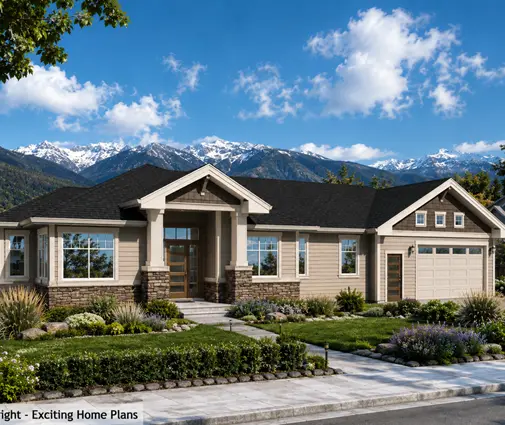
The size and shape of the house affect the layout too. A compact bungalow such as this Craftsman with a full basement and three bedrooms keeps its plumbing close together, so one valve on a short main drain covers everything. A tall house like this three-storey plan with five bedrooms has fixtures on several floors feeding one stack. That is a lot of wastewater that can back up behind a closed valve if someone upstairs keeps using water during a storm.



Verdict: a tie, because a good layout matters more than the valve type.
Code acceptance and what inspectors check before backfill
Underground plumbing is inspected before the basement slab is poured, and the foundation drain is usually checked before the trench is backfilled. Requirements differ by province and municipality, but inspectors typically look at:
- The valve type and model, and whether it is allowed on that line.
- The flow arrow on the valve body pointing toward the street, which sounds obvious but is a common mistake.
- The valve sitting level, so the flap seats properly.
- Drain slope, pipe material, bedding and cleanouts.
- A water or air test showing the underground drain holds without leaks.
- Correct connections: sanitary to sanitary, foundation drain and sump to their permitted destination.
- An access opening planned at slab level over the valve.
Under the Ontario Building Code, the BC Building Code, Quebec's rules or the National Plumbing Code that most other provinces adopt, details such as valve placement and which fixtures must be protected can differ. Confirm with your municipal building department before the plumber orders parts.
Verdict: normally open is the safer bet for the main drain; get any normally closed valve approved in writing.
Access in a finished basement
A backwater valve needs to be inspected and cleaned at least once a year, and it must be reachable quickly when something goes wrong. Many problems start when the basement is finished: the access lid ends up under laminate, inside a closet or behind a built-in cabinet.
Plan for access from the start. Put the valve in the mechanical room or an unfinished storage area, and keep enough clear floor around the lid to kneel and work. If it must sit in a finished room, use a flush access cover that can be lifted without tools, and do not put fixed furniture over it.
Plans with many bedrooms below grade need extra care here. This six-bedroom layout on a modest footprint and a five-bedroom Mountain-style home both rely on a developed lower level. Locate the valve before you decide where the walls go. Browse the house plans with a basement with the mechanical room in mind, not just the rec room.
Verdict: same for both valves. Access is about layout, and it has to be decided before framing.
Cost and maintenance over time
At rough-in, the difference in price is small, usually a few hundred dollars either way, and either valve costs far less than one insurance claim. Over time, a normally open valve usually needs less attention: inspect the flap, clean off any buildup, check that the float moves freely and replace the seal when it wears. A normally closed valve needs the same checks, done more carefully, because debris collects against the closed flap.
In a large house such as this three-storey Tudor with a walkout-ready basement, the valve protects a lot of finished space, and good maintenance pays off.


Verdict: the price is close, and normally open is easier to live with.
Who should choose what
- Most new houses with a basement: a normally open valve on the main building drain, placed where it can be reached, with clear rules for the household about water use during storms.
- Bungalows with a compact plumbing layout, such as many one-storey plans: a single normally open valve near the mechanical room is usually all you need.
- Two- and three-storey homes with many fixtures above grade, such as this four-bedroom two-storey Modern Mountain design: discuss with the designer whether the basement fixtures should drain on a separate protected branch, so the upper floors can still drain when the valve is closed.
- A single basement fixture in an otherwise safe layout: a normally closed valve on that branch can make sense, but only with written approval from your municipality.
- Lots with a storm or foundation drain connection: ask what backflow protection the municipality requires on that line, and plan the sump discharge so it never reaches the sanitary sewer.
- Anyone planning to finish the basement: mark the valve location on the drawings before framing, and keep it out from under flooring and fixed furniture.