Day three of an ice storm. The roads are glazed, the hydro crews are working through a list of downed lines, and the house is getting colder. The heat pump is silent because it has no power, the sump pit in the basement is filling, and on an acreage the well pump has stopped too, so there is no water. Across Canada, long outages after ice storms, windstorms and heavy wet snow are common enough that backup power has become a normal line in the budget for a new house, especially an all-electric one.
The good news is that most of the cost of doing it badly comes from retrofitting. If you plan the generator pad, the sub-panel, the gas line and the wiring while the house is being framed, the backup system itself can be chosen and installed later without opening walls. This article breaks down the costs in CAD, explains how to size for the loads that matter, and lists the rough-ins worth paying for during construction.
What backup power costs in Canada
The ranges below are typical installed prices for a single-family home in 2025 and 2026. They vary a lot by province, by the distance from the panel to the equipment, and by what the electrician and gas fitter find on site. Use them to set a budget, then get quotes.
| Item | Typical range (CAD, 2025–2026) | Notes |
|---|---|---|
| Portable generator, 5 to 9 kW (gas, propane or dual fuel) | $1,000 – $3,500 | Inverter models are quieter and cost more |
| Generator inlet box plus interlock kit or manual transfer switch, installed | $800 – $2,000 | Cheaper at construction stage than as a retrofit |
| Whole-home standby generator, 14 to 26 kW, natural gas or propane | $12,000 – $25,000 installed | Includes automatic transfer switch in most quotes |
| Gas line from meter or propane tank to the pad | $500 – $2,500 | Depends on run length and meter capacity |
| Propane tank sized for a standby unit (if no natural gas) | $1,500 – $5,000 | Lease options exist in many rural areas |
| Generator pad (concrete or precast composite) | $300 – $1,200 | Simple if poured with the other flatwork |
| Critical-loads sub-panel | $1,000 – $2,500 | Groups heat, well, sump, fridge and a few circuits |
| Home battery, about 10 to 15 kWh, installed | $14,000 – $24,000 | Each extra battery roughly $9,000 – $15,000 |
| Rooftop solar, 6 to 10 kW, installed | $18,000 – $35,000 | Roughly $2.50 – $3.50 per watt in 2025 |
| Rough-in only (conduit, blocking, labelled spare breaker spaces) | $300 – $1,500 | The cheapest insurance on the list |
| Annual maintenance of a standby unit | $300 – $600 | Oil, filters, battery, test run |
Start with the critical loads, not the generator
The biggest mistake is shopping by kilowatts before listing what has to keep running. In most Canadian homes the list is short: heat, water, the sump pump, the fridge and freezer, some lights, the internet modem and outlets for phones. Approximate running loads look like this:
- Gas furnace blower and controls: about 0.5 to 0.8 kW. A gas-heated house is easy to back up.
- Cold-climate heat pump: often 2 to 5 kW while running, more when it defrosts in deep cold.
- Electric backup strips in an air handler: commonly 10 to 15 kW or more. This single item decides whether you need a large standby unit.
- Well pump (1/2 to 1 hp): about 1 to 2 kW running, with a starting surge two to three times higher.
- Sump pump: around 0.8 to 1 kW running, also with a surge.
- Fridge or freezer: a few hundred watts each, with a short start-up spike.
Ask your electrician or HVAC contractor for the real nameplate data of the equipment going into your house. The starting surges of motors matter as much as the running watts, and soft-start kits on the well pump or heat pump can let a smaller generator do the job.
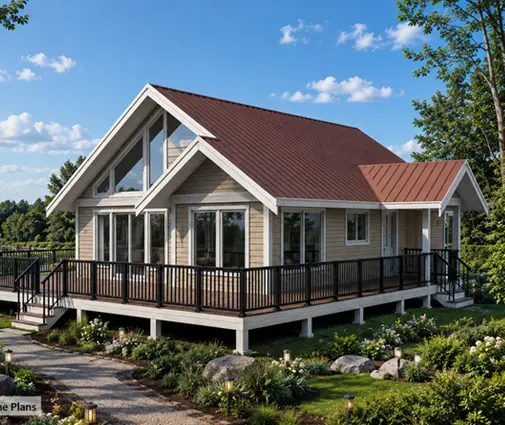
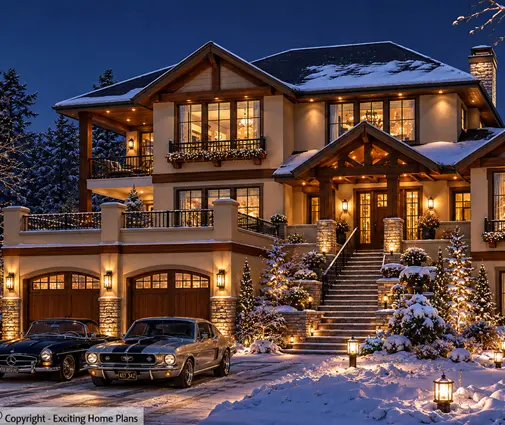
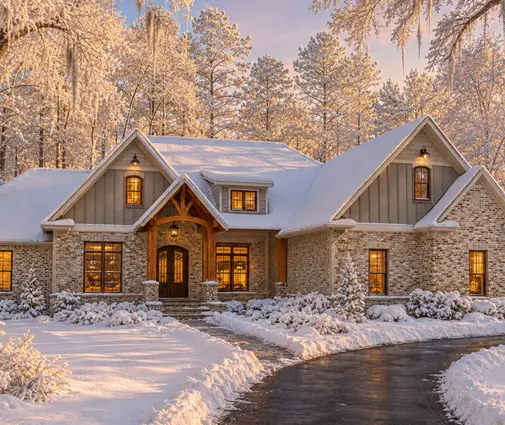
House size changes the numbers less than people expect. A compact bungalow like this 1603 sq ft three-bedroom with a full basement needs heat, sump and fridge just like a large home; the difference is how many kilowatts the heat source draws on a cold night. A larger two-storey such as this 3198 sq ft four-bedroom farmhouse with a three-car garage will usually have a bigger heat pump and more circuits that owners want on backup, which pushes toward a standby unit.

Portable generator with a transfer switch
This is the lowest-cost route and covers the critical loads of most gas-heated homes and many heat-pump homes without electric strips. A 7 to 9 kW dual-fuel generator can run a furnace, a sump pump, a fridge and some lights. The legal and safe way to connect it is through an inlet box on the outside wall and either a manual transfer switch or an interlock on the main panel, installed under an electrical permit. Never back-feed a dryer outlet: it is illegal and it can kill a line worker.
Limits to keep in mind: someone has to be home to start it, fuel has to be stored and rotated, and it must run outdoors well away from windows, doors and air intakes. A portable generator running in an attached garage is a serious carbon monoxide risk, even with the door open.
Whole-home standby on natural gas or propane
A permanently installed standby unit starts on its own within seconds of an outage and switches the house over through an automatic transfer switch. On natural gas it can run for days; on propane, the run time depends on the tank, so rural owners often size the tank for the generator rather than just for cooking or a fireplace. For an all-electric house with electric backup strips, a 20 to 26 kW unit is common; with a cold-climate heat pump and a load-management module, a smaller unit is often enough.
The cost is not only the unit. The gas meter may need upsizing, the gas fitter needs a permit, and the unit must respect clearances to openings and property lines set by the manufacturer and local rules. Check these early with your municipality and your gas utility, because they decide where the pad can go.
Batteries paired with solar
A home battery is silent, needs no fuel and switches over almost instantly. Paired with rooftop solar it can recharge during the day. The catch in Canada is winter: during a January ice storm solar production is minimal, and a single battery of 10 to 15 kWh will run a fridge, sump, lights and internet for a day or more, but a heat pump in deep cold can drain it in a few hours. Batteries make most sense where outages are short and frequent, where the house is very well insulated, or combined with a small generator or a wood stove for long events.
Battery systems are also limited in how much power they deliver at once, so a well pump or heat pump start can trip them. Discuss the continuous and surge ratings with the installer, and plan a critical-loads sub-panel rather than backing up the whole house. Rebates for solar and storage change often at the federal, provincial and utility level; check what is available the year you build.
Rough-ins to put in during construction
Whatever you choose, these items cost little while the house is open and a lot afterwards:
- Generator pad location. Pick a spot outside, close to the main panel and the gas meter, away from bedroom windows and the HRV and furnace intakes, and out of the path of snow sliding off the roof. Pour or set the pad with the other flatwork.
- Critical-loads sub-panel. Have the electrician group heat, well, sump, fridge, freezer, a few lighting circuits and the network on one sub-panel. It works for a portable generator, a standby unit or a battery.
- Conduit to the pad and to a battery wall. An empty conduit with a pull string from the panel to the pad, and another to a future battery location, saves drywall repairs later.
- Gas line stub. Ask the gas fitter to size the main line for a future generator and leave a capped tee near the pad.
- Solar-ready roof. Leave a conduit from the attic to the panel and keep one roof plane free of vents if it faces south.
- Panel capacity. A 200 A service with spare spaces leaves room for a transfer switch, an EV charger and a heat pump together.
The garage is usually the hinge of the whole plan. In plans with an attached garage, the main panel often sits on the garage wall shared with the house, which keeps runs to an outside pad short and gives a practical spot for a battery where local rules allow it. A plan like this 2589 sq ft two-storey with a two-car garage shows the typical layout: utility room, mudroom and garage grouped on one side, which is exactly where the backup equipment wants to be.
How to save without cutting corners
- Back up loads, not the house. A sub-panel with the essentials lets a portable generator or one battery do what would otherwise take a large standby unit.
- Choose the heat source with outages in mind. A cold-climate heat pump sized without large electric strips, or a gas furnace, cuts the generator size dramatically.
- Insulate and air-seal well. A tight envelope with high R-values loses heat slowly, so the house stays livable for longer, whatever backs it up.
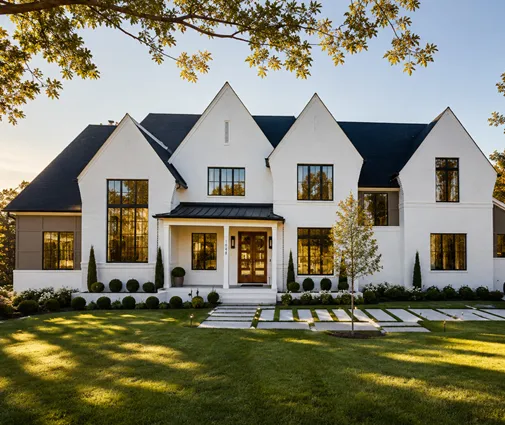
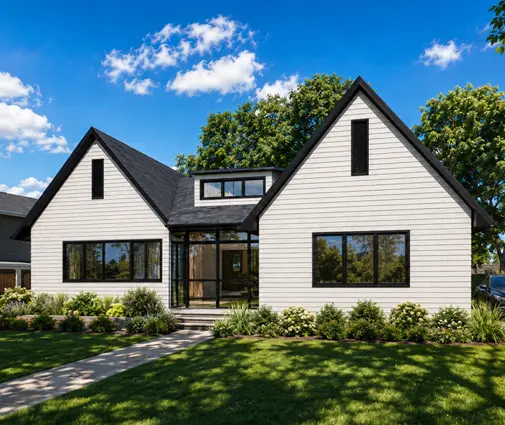
- Keep the house compact. A single-level plan such as this 2168 sq ft modern one-storey with three bedrooms has fewer circuits and a simpler heating system than a three-storey home.
- Do the rough-in now, the equipment later. If the budget is tight, spend a few hundred dollars on the pad, conduit and gas stub, and buy the generator or battery in a later year.
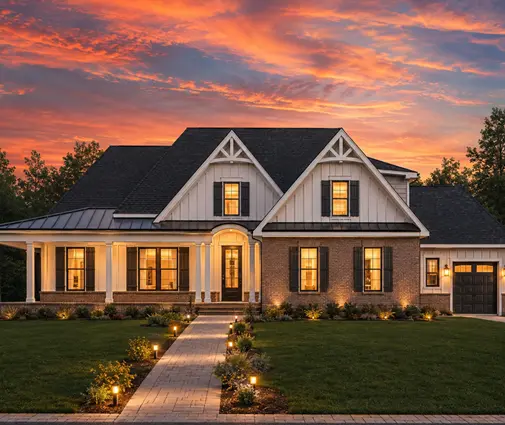
Basements raise the stakes, because the sump pump becomes non-negotiable. Homes in the basement plans collection, such as this 2519 sq ft four-bedroom craftsman on three levels, should always have the sump on the backed-up circuit, ideally with a battery backup pump in the same pit. At the large end, a 6800 sq ft five-bedroom luxury home with a basement almost always justifies a whole-home standby unit with load management.
Summary
- List the critical loads first: heat, well pump, sump pump, fridge, lights and internet.
- A portable generator with an inlet and interlock costs about $2,000 to $5,500 in total and suits most gas-heated homes.
- A natural gas or propane standby unit runs about $12,000 to $25,000 installed and suits all-electric and rural homes with long outages.
- A battery of 10 to 15 kWh costs about $14,000 to $24,000 installed and is best for short outages; in winter it rarely carries a heat pump for long.
- During construction, add the pad, a critical-loads sub-panel, conduit, a gas stub and a solar-ready roof.
- Confirm permits, clearances and electrical rules with your municipality, your provincial electrical and gas authorities, and your electrician before you build.