The keys are in your hand, the occupancy permit is signed, and the front yard is a field of clay ruts with a pile of leftover gravel where the driveway should be. This is the moment many Canadian owners discover that the construction budget was spent and the outside of the house was never really priced. Final grading, the lot grading certificate, the driveway, topsoil, sod, retaining walls and fencing can easily add tens of thousands of dollars, and the municipality may still be holding part of your money until the work is approved.
The good news: most of these costs are decided long before landscaping starts. The plan you choose, where the garage sits and how the house meets the ground all shape the final bill. Here are seven ideas to keep the last stage under control.
1. Treat the grading certificate as part of the house, not the yard
Most Canadian municipalities require an approved lot grading plan before they issue a building permit, and a certificate from an Ontario Land Surveyor, BC Land Surveyor or engineer once final grading is done. Many also hold a grading or lot security deposit, often a few thousand dollars and sometimes much more on larger or infill lots, until the inspector confirms that water drains away from your foundation and your neighbours. Amounts and timelines vary by city, so check the current figures with your municipality before you sign the permit application.
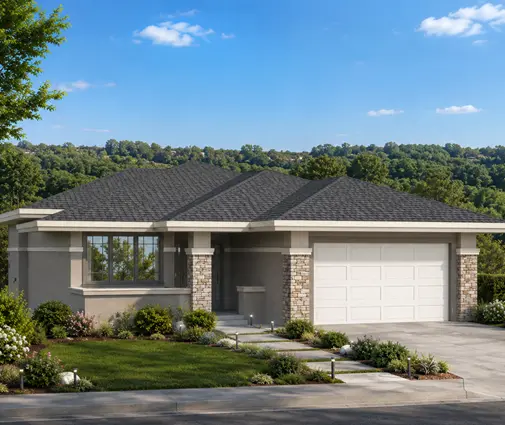
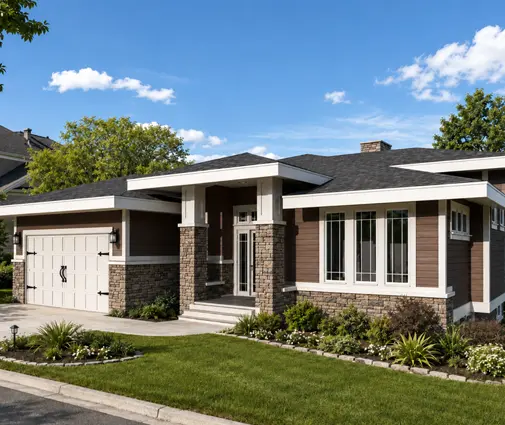
In 2025 and 2026, a final grading survey typically runs from about $1,000 to $3,000 CAD, and rough plus finish grading by an excavator from $3,000 to $10,000 or more, depending on the lot. A compact bungalow such as this four-bedroom one-storey Craftsman of 1813 sq ft with a full basement keeps the footprint simple, which means fewer corners where swales have to turn and less soil to move around the house.


2. Let the garage width set the driveway budget
The single biggest driver of driveway cost is not the material, it is the area. A single-car driveway is usually about 10 to 12 feet wide; a double runs about 18 to 22 feet, and a triple can reach 30 feet. On a typical suburban setback, going from one car to two can nearly double the surface you pay for.
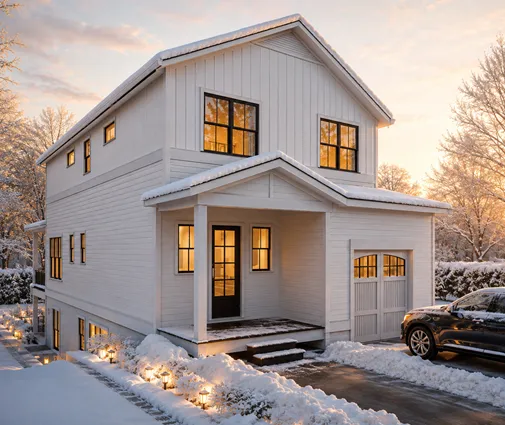
Compare this four-bedroom modern farmhouse of 2082 sq ft with a single-car garage and a basement with a 5-bedroom, 4295 sq ft two-storey home with a three-car garage. On the same 30-foot apron, the first needs roughly 330 sq ft of paving, the second around 900 sq ft. If you are browsing plans with a 2-car garage, measure the garage door wall: that number, times the distance to the street, is your driveway.
3. Choose the surface for the frost, not just the look
Every driveway in Canada lives through freeze-thaw cycles, road salt and snowplows. The base matters more than the top: a properly compacted granular base, typically 8 to 12 inches or more where soils are poor, is what keeps any surface from heaving. Realistic installed prices in 2025 and 2026, base included, run roughly:
- Gravel: about $2 to $6 per sq ft. Cheapest, forgiving with frost, but needs topping up and is hard to clear with a snowblower.
- Asphalt: about $5 to $10 per sq ft. Flexible in cold weather, easy to plow, needs sealing every few years and a resurface after roughly 15 to 25 years.
- Concrete: about $10 to $20 per sq ft. Long-lasting, but it needs air-entrained mix, good control joints and care with de-icing salt, especially in the first winter.
- Interlock pavers: about $18 to $35 per sq ft or more. The most expensive, but individual units move with the frost and can be lifted and reset instead of cracking.
Prices vary widely between the GTA, Metro Vancouver, the Prairies and rural Quebec, so get at least three local quotes.
4. On an acreage, live with gravel for a year
Rural lots bring long lanes, and a 300-foot laneway in asphalt is a budget of its own. A common and sensible approach is to build the lane in compacted gravel, let it settle through one winter, and pave the last stretch near the house later if you still want to. A modern mountain bungalow of 1588 sq ft with four bedrooms and a basement suits this strategy well: a modest footprint on a large lot leaves money for the lane, a culvert at the road if the township requires one, and the well and septic work that acreages also need.

5. Let the basement take up the slope
Retaining walls are where landscaping budgets quietly explode. Segmental block walls commonly cost about $40 to $100 or more per square foot of wall face installed, and in many municipalities a wall above roughly one metre, or one near a property line, needs an engineered design and its own permit. Confirm the exact threshold locally.
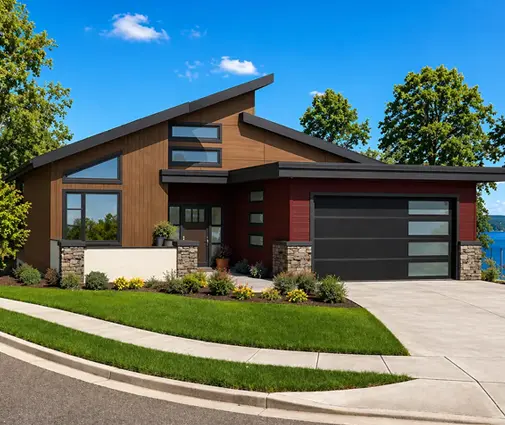
A better answer is often to design the house for the grade. This five-bedroom Modern Craftsman of 2244 sq ft with a basement level can be set so that the lower floor opens at the back, using the natural drop instead of fighting it with walls. If your lot falls more than a few feet, start with plans for a sloped lot rather than paying to flatten it.
6. A compact footprint means more lawn for less money
Once grading is approved, you still need topsoil and something growing on it. Expect to place about 4 to 6 inches of screened topsoil, at roughly $35 to $70 per cubic yard delivered in many markets, then sod at about $1.50 to $3.50 per sq ft installed, or hydroseeding at a lower price if you can wait a season for it to fill in. Some municipalities want the yard stabilized before they release the grading deposit, which makes sod the faster route.
A house that goes up instead of out leaves the yard in one usable piece. This five-bedroom Craftsman of 2186 sq ft on three levels, with a basement fits a large family on a modest footprint, and a simple rectangular backyard is far cheaper to grade, sod and fence than the scattered leftover strips around a sprawling plan. More options of this kind are in the house plans with a basement.
7. Price the fence by the linear foot before you buy the lot
Fencing is billed by length, so lot shape matters as much as the house. Typical installed ranges in 2025 and 2026: chain link around $25 to $50 per linear foot, pressure-treated wood privacy fencing around $45 to $90, and vinyl, composite or aluminum from about $60 to $120 or more. Fence posts must go below the frost line or they will heave, and pool enclosures, heights and corner-lot sightlines are regulated by local bylaws.
A wide house on a wide lot, like this four-bedroom farmhouse of 3750 sq ft on two storeys, looks wonderful from the road, but a 100-foot frontage and deep side yards can mean 300 linear feet of fence or more. Many owners fence only the back yard at first and leave the front open.
Finish the house on paper first
Add a separate line to your construction budget for the outside, before the first footing is poured: grading and the certificate, the driveway sized to your garage, topsoil, sod, any retaining walls and fencing. Even a basic finish on a suburban lot often reaches $20,000 to $50,000 CAD in 2026, and more on sloped or rural sites. Ask your builder exactly what "final grade" includes in the contract, confirm the deposit and deadlines with your municipality, and pick a plan whose footprint and garage fit the lot you actually have. The yard is the last thing you build, but it should be the first thing you price.