The footings are poured, the lumber package is stacked on the lot, and the first progress draw is waiting at the bank. Then the lender asks for a certificate of insurance, and you find out that nobody has one. Your current home policy covers the house you live in, not the one going up on an empty acreage. The general contractor thought you were arranging it, and you thought the GC was.
Builder's risk insurance, called course-of-construction insurance in BC and by many brokers elsewhere, covers the gap between buying land and moving in. Use this checklist to make sure that gap is closed before anything valuable arrives on site.
Stage 1: Before you buy the lot or sign the build contract
- Vacant land liability: once you own the lot, you are responsible if someone gets hurt on it. Ask your broker whether your current home policy extends liability to vacant land you own, or whether you need a separate policy until construction starts.
- Who insures: the build contract should say in writing whether the owner or the general contractor buys the course-of-construction policy. Leaving it out is the most common source of gaps.
- Contractor's liability: ask every GC you consider for proof of commercial general liability (CGL) coverage. Many lenders and owners expect at least $2 million, but check what your lender requires.
- Workers' compensation: confirm the GC is registered and in good standing with the provincial board (WSIB in Ontario, WorkSafeBC, CNESST in Quebec, and so on). A clearance letter is easy to request.
- Home warranty: provincial new home warranty rules differ, and some provinces require registration or an authorization before an owner-builder can get a permit. Check this before you decide who will run the project.
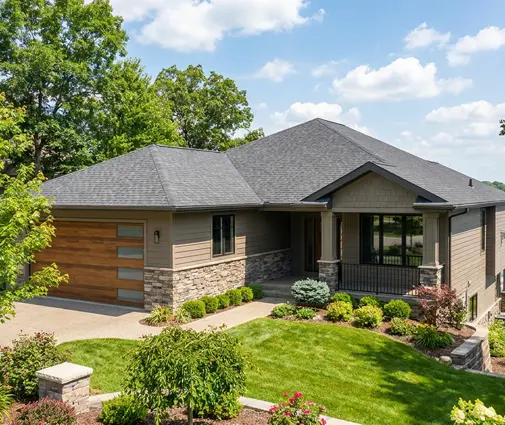
The size and complexity of the house you choose affects the premium, so think about it early. A compact bungalow such as this 1,584 sq ft one-storey Craftsman with four bedrooms and a full basement has a lower replacement value, a shorter build schedule and less material on site than a large two-storey home. It costs less to insure for every month it is under construction.
Stage 2: Choosing the policy and setting the value
- Completed value: most policies insure the finished construction cost of the house, not what is in place today. Use the full contract price including HST or GST, and leave out the land.
- Term: policies are usually written for 6, 12 or 18 months. Canadian builds often run past schedule over a winter, so ask what an extension costs before you need one.
- Materials on site and in transit: check the theft limit for uninstalled materials such as windows, appliances, copper and the heat pump unit. There is often a separate sublimit and a requirement to store them locked.
- Soft costs: some policies can add permit fees, extra interest and rental costs if a loss delays the project. That matters if you are paying rent while you build.
- Deductible: deductibles of $1,000 to $5,000 are common. A higher deductible lowers the premium, but you must be able to pay it in the middle of a build.
As a rough 2025–2026 guide, a 12-month course-of-construction policy for a new single-family home is often quoted in the range of about $2,000 to $6,000 for a build valued at $500,000 to $800,000. Rural sites far from a fire hall, wildfire-prone areas and owner-builders usually pay more. Treat these as ballpark numbers and get at least two quotes through a broker.

Stage 3: What the lender wants before the first draw
- Certificate of insurance: lenders that fund through progress draws usually want proof of builder's risk coverage before releasing the first advance, sometimes before the foundation draw.
- Mortgagee clause: the lender must be named as loss payee or mortgagee on the policy. A certificate without that wording is often rejected.
- Coverage amount: the limit must match or exceed the construction budget the lender approved. If you add a finished basement or upgrade the windows partway through, update the policy.
- Liability proof: some lenders also ask for evidence of the GC's CGL, or of your own liability coverage if you are the owner-builder.
- Renewal dates: if the term expires before the final draw, the lender can hold the funds. Put the expiry date in your project calendar.
Send your broker the lender's insurance requirements letter word for word. Brokers write certificates every day, but they can only meet conditions they have actually seen. Doing this a few weeks before the excavator arrives saves a delayed draw and an unpaid framing crew.
Stage 4: During construction, especially in winter
- Freeze damage: many policies exclude or limit burst pipe damage unless heat is maintained or the water is shut off and lines are drained. Read the clause before the first cold night after the plumbing is roughed in.
- Heat and monitoring: if you run temporary heat to cure drywall or protect a newly poured basement slab, find out whether the insurer requires regular site checks or a monitored temperature alarm.
- Fire: wood frame is most exposed between framing and drywall. Keep temporary heaters, generators and roofing torches in line with the policy conditions and the contractor's safety plan.
- Site security: fencing, lighting and a locked container for materials are often policy conditions for theft claims, not just good advice.
- Snow and wind: a partly sheathed roof or an unbraced wall can fail under snow load or a storm. Make sure collapse during construction is covered, not only collapse of the finished house.
Winter builds are normal in most of Canada, and insurers know it. Most problems come from policy conditions, not from the coverage itself. Write down what the policy requires about heat, inspections and vacancy, and give a copy to whoever is on site. On a larger home, such as a 3,669 sq ft two-storey farmhouse with four bedrooms and a three-car garage, the plumbing and heating run longer before the house is closed in, so these conditions matter for more weeks.
Stage 5: Owner-builder versus general contractor, and the handover
- With a GC: the contractor often carries the course-of-construction policy and their CGL, and the owner is added as an insured. Ask for the policy itself, not just a summary.
- As owner-builder: you usually buy the builder's risk policy yourself and need your own liability coverage, because you are the one coordinating trades on site. Expect fewer insurers to quote and higher premiums.
- Each trade: as owner-builder, collect proof of liability insurance and workers' compensation clearance from every subcontractor before they start. Without it, a claim from an injured worker can land on you.
- Occupancy: builder's risk usually ends when the house is occupied or the permit is closed. Moving in early, even into the basement, can void coverage.
- Switch to homeowner's: arrange your new home insurance to start the day the builder's risk ends, with no gap, and tell the lender.
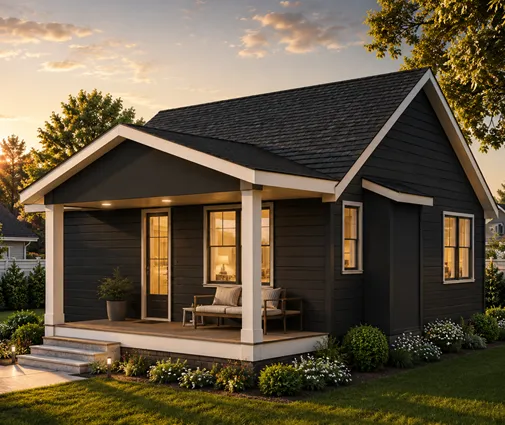
Owner-builders save on the GC's markup but take on insurance work that a contractor would otherwise handle. Choosing a design that is simple to frame and close in reduces both the build time and the risk. A one-storey modern mountain home of 1,669 sq ft with five bedrooms and a basement or a small 750 sq ft two-bedroom cabin-style cottage is far easier to manage on your own than a three-storey home. You can browse more one-storey house plans and plans with a basement that suit Canadian frost depths.

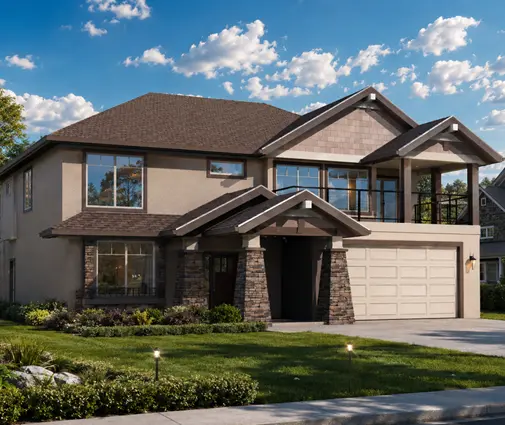

If you hire a GC for a larger home, such as a 2,359 sq ft three-storey Craftsman with four bedrooms or a 2,664 sq ft Craftsman with five bedrooms over three storeys, agree on the insurance clauses before you sign. A good starting point for this size is the 2,000–2,500 sq ft collection.
The most common mistakes
- Assuming the GC or the existing home policy covers the new build.
- Underinsuring by using today's value instead of the completed construction cost.
- Missing the lender's mortgagee clause and delaying the first draw.
- Ignoring freeze and vacancy conditions over the first winter.
- Moving in before the homeowner's policy starts, or letting the term expire before the final inspection.
Rules, warranty requirements and premiums change from province to province and year to year. Confirm the details with an insurance broker, your lender and your municipality's building department before construction starts.